
And honestly, that’s what I love about Kumamoto. You can come for one famous landmark, then end up spending the day wandering, learning a few new words, and getting happily distracted by the smaller details.
Historic Kumamoto spots are spread out in a way that makes the city feel easy to explore, but still full of layers. If you’re the kind of traveller who likes places with memory, not just photo ops, Kumamoto is very kind to you. Kumamoto Castle sits at the centre of it all, and from there you can walk into old merchant streets, shrine grounds, and a garden that feels almost like a miniature landscape poem. There’s plenty to see.
Kumamoto Castle: the heart of the city
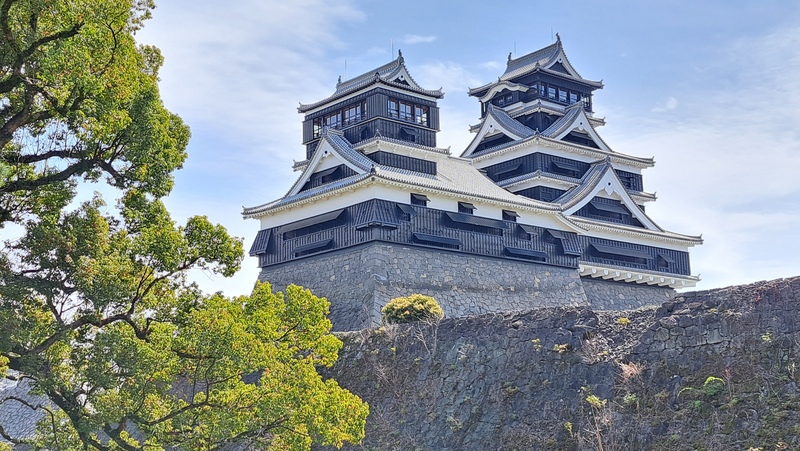
Kumamoto Castle is the obvious starting point, and for good reason. Built in the early 1600s under Kato Kiyomasa, it became one of Japan’s most impressive feudal castles, known for its massive stone walls, defensive design, and elegant black exterior. The main keep was damaged in the 2016 Kumamoto earthquakes, and restoration has been ongoing ever since, so what you see now is both a historic site and a living recovery story.
What I especially like is how the castle feels powerful without being cold. You can stand near the towering stone foundations, look up at the black-and-white keep, and really sense why this place shaped the city. The best way to visit is slowly, asking questions, reading the signs, and taking a moment to notice the details of the walls and gates. Classic Japan, isn’t it?
Why it matters for language learners
If you’re learning Japanese, this is a lovely place to pick up practical words. Look for words like 城 (jyou, castle), 天守閣 (tenshukaku, main keep), 石垣 (ishigaki, stone wall), and 復興 (fukko, reconstruction), which often appear around castle sites and restoration notices. That mix of old history and modern repair vocabulary gives you a tiny real-world lesson while you walk.
Sakura-no-baba Josaien and the old castle town feel
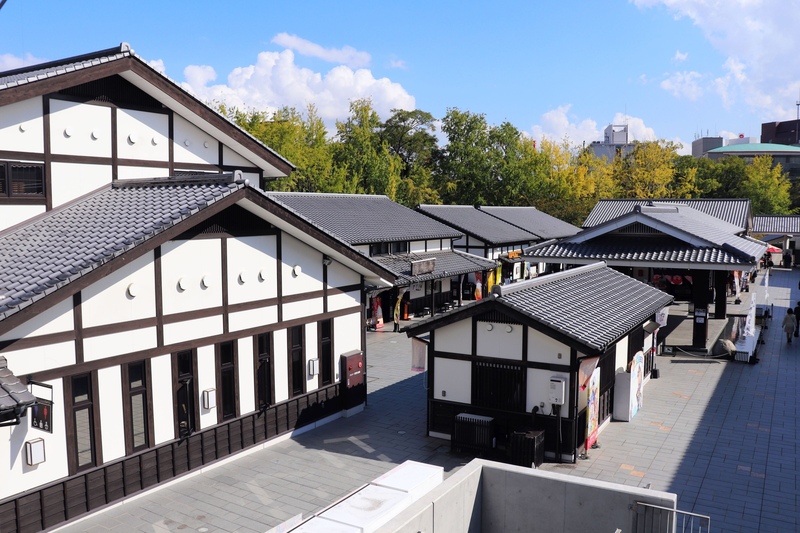
Just south of the castle, Sakura-no-baba Josaien brings the castle town atmosphere back to life in a very approachable way. It opened in 2011 as a visitor area with reconstructed streets, food stalls, souvenir shops, and exhibits about Kumamoto’s history. And while some people see it as a tourist stop, I think it works best as a bridge between the castle and the everyday city around it.
Here you can try local food, browse crafts, and get a feel for what a castle town used to do beyond defence. No wonder, because the whole point of a castle area was never just the keep itself, it was the people, trade, and movement around it. My tip: visit before or after the castle, not instead of it. The two places make much more sense together.
Food, souvenirs, and small discoveries
What many overlook: Josaien is also a good place to take a breather. You can sit down with a snack, check a few signs in Japanese, and pick up useful travel vocabulary like お土産 (omiyage, souvenir), 市場 (ichiba, market), and yatai. It sounds small, but those little words stick fast when you actually use them in context.
Shinmachi and the city centre history trail
Compared with back home, one thing that always surprises me in Japanese cities is how old and new can sit so neatly beside each other. In Kumamoto’s city centre, the Shinmachi area and nearby streets show that mix clearly, with shopping arcades, tram lines, and traces of older merchant life still shaping the layout. If you wander with curiosity, you start noticing how the modern city grew around the castle rather than replacing it.
Speaking of which... this is the kind of place where you should leave room for getting a little lost. I once spent far too long following a side street because I thought I had spotted an old signboard, and, well, I had. Those accidental turns are often where the best history lives. From my experience...

Kato Shrine and the samurai legacy
Kato Shrine sits right inside the castle grounds area and is dedicated to Kato Kiyomasa, the 大名 (daimyo, feudal lord) who built Kumamoto Castle. It is a compact stop, but an important one, because it ties the architecture, the politics, and the local memory together in one place. The shrine was rebuilt after wartime destruction, and today it gives visitors a quieter, more reflective corner amid the larger castle complex.
Hand on heart: I always think shrines like this are where a historic district starts to feel personal. You’re no longer just reading dates and names, you’re standing where local reverence is still very alive. If you like the history of 侍 (samurai, samurai warrior) culture, this stop makes the whole Kumamoto Castle area feel richer. But that's not all.
Suizenji Jojuen Garden and the slower side of Kumamoto
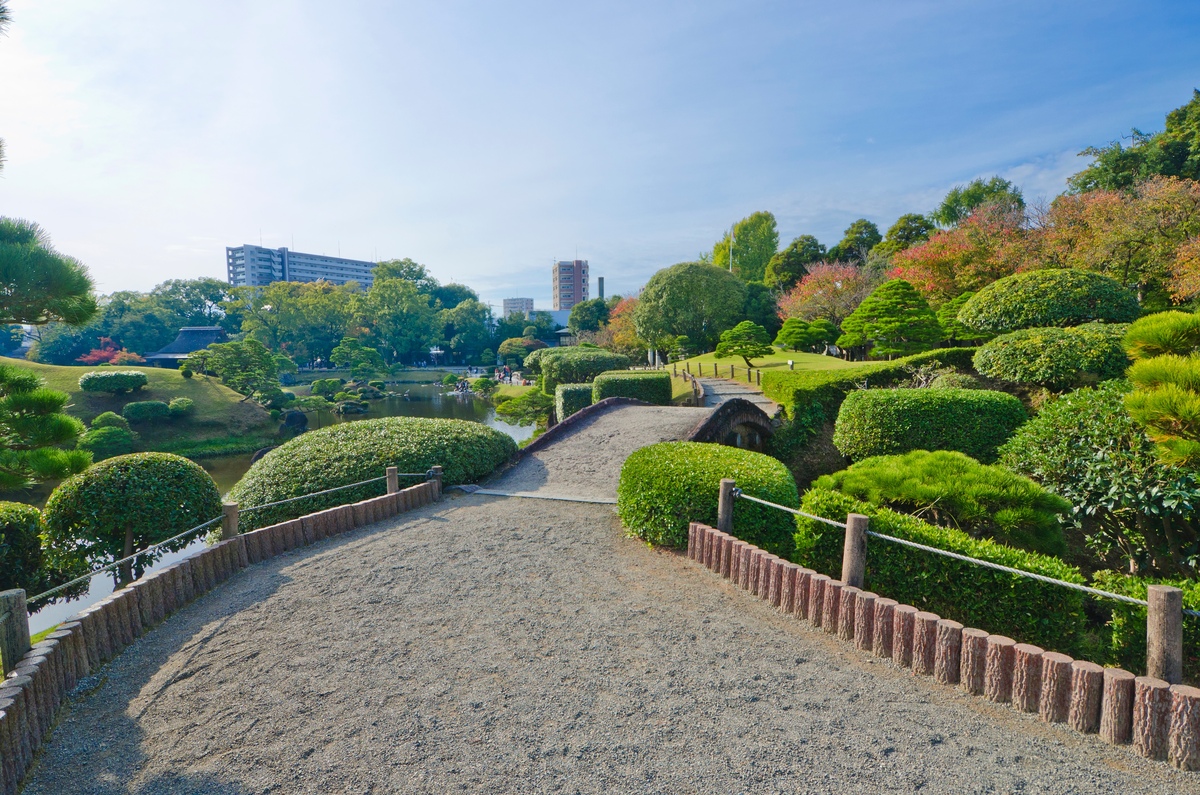
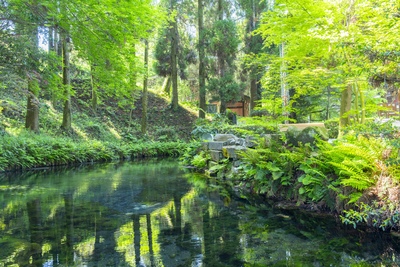
Suizenji Jojuen Garden is a little east of the castle area, and it changes the rhythm completely. Built by the Hosokawa clan in the 17th century, it is a strolling garden with a central pond, carefully shaped hills, and a famous miniature route that symbolises the Tokaido road. Sounds weird, but it’s true. The garden is peaceful, precise, and very much about the beauty of controlled space.
I like this stop because it balances the heavy stone feeling of the castle with something softer. You can walk the paths, watch the reflections on the water, and see why the garden has remained a favourite for generations. If you’re learning Japanese, you may notice how often garden descriptions use words like teien, chisen, and fukei, all of which make much more sense after you’ve actually stood in a place like this. But that's not all.
Three more historic Kumamoto spots worth your time
Plot twist: the castle area is only the beginning. Kumamoto has several other historic places that reward a half-day detour, especially if you like quieter corners and lesser-known stops. I’d add these to your list if you have the time.
Honmyo-ji Temple
Located on the hills northwest of the castle, Honmyo-ji is associated with Kato Kiyomasa and offers views over the city. The approach is calm, with temple buildings and a hillside setting that feel very different from the busy centre. It is one of those places where the walk up becomes part of the visit.
Former Hosokawa Residence
This preserved samurai residence gives you a more domestic look at elite life in Kumamoto. Instead of grand walls and dramatic keeps, you get tatami rooms, garden views, and a sense of scale that helps the castle-era world feel more human. For learners, terms like zashiki and niwa are easy to remember here because the space makes them concrete.
Kumamoto Prefectural Museum of Art
It may not sound historic at first, but the museum sits within the wider castle park area and helps round out the cultural picture. You can see works connected to regional history and enjoy a quieter break between outdoor stops. If your legs are tired [mine usually are by this point], this is a very civilised pause.
In pictures
Frequently Asked Questions
How much time do I need for the Kumamoto Castle area?
Plan at least half a day, and a full day is better if you want to include the garden and nearby shrine stops.
Is Kumamoto Castle fully restored?
No, restoration is still ongoing, but that is part of the experience. You can clearly see the recovery work and how the site continues to evolve.
Which stop is best for first-time visitors?
Kumamoto Castle first, then Sakura-no-baba Josaien and Kato Shrine. That route gives you the best historical context in one walkable area.
If you enjoy Japan through places that still feel lived-in, Kumamoto is a very good city to spend time with. Start with the castle, wander a little wider, and let the smaller details catch you. You’ll eventually find your own Japan.


