
I like this kind of route because it’s practical, but never dull. You get history, shopping arcades, and enough local snacks to keep you going, which is the real job when you’re covering kilometres in the heat or the cold.
Know that feeling when a city only starts to make sense after you’ve walked it? Kumamoto does that. The castle sits as a hard anchor, the surrounding streets unfold in layers, and the day becomes a neat loop: stone walls, souvenir lanes, covered arcades, then a final meal that feels earned. Simple enough. Better than simple, actually.
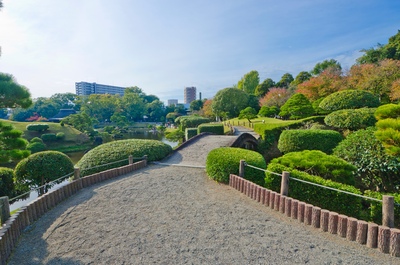
This route is ideal if you want one solid day in Kumamoto without wasting time on long transfers. You can do it on foot from the castle district into Josaien, then down towards Shinmachi-Furumachi and the Kamitori-Shimotori arcades, with plenty of pauses for food, shade, and the odd sit-down. Wear the lightest shoes possible. Keep your load light. Your knees will thank you later.
Kumamoto Castle: the city’s stone heart
The first time I went to Kumamoto Castle, what stuck with me was the scale before the details. The black walls rise in layers, the grounds spread wider than they first appear, and the rebuilt sections still carry the weight of the 2016 earthquakes, when major damage hit the castle complex and restoration work became a long project. That matters. You’re not looking at a decorative postcard ruin, but a place with a living repair story.
Take Kumamoto Castle, for instance. The main keep reopened in 2021 after restoration, and the approach from the outer areas gives you a real sense of the defensive design, with stone ramparts, gates, and sightlines that were built for trouble, not for Instagram. I still think the best way to see it is slowly, with a bit of patience, because the texture of the place is in the angles and the stonework, not just the famous silhouette. Sounds good, right?
What to notice while you walk
Look for the massive 石垣 (ishigaki), the curved stone walls that seem to lean and hold themselves up at the same time. You’ll also see how the paths funnel you inward, then open out again, which is exactly the kind of movement that makes a castle city feel legible under your own feet. If you like Japanese vocabulary, this is a nice place to remember 天守 (tenshu) for the main keep, and ishigaki for the stone walls. Small words, sturdy things.

Seriously though: don’t rush the grounds. The walk around the castle isn’t strenuous, but it does ask for attention, and attention is half the point. If you’re a Japan learner, say the place names out loud as you go, Kumamoto-jo, Josaien, Shimotori. It sticks better when the body is involved. Wait, there’s more.
Josaien: food, crafts, and a very usable pause
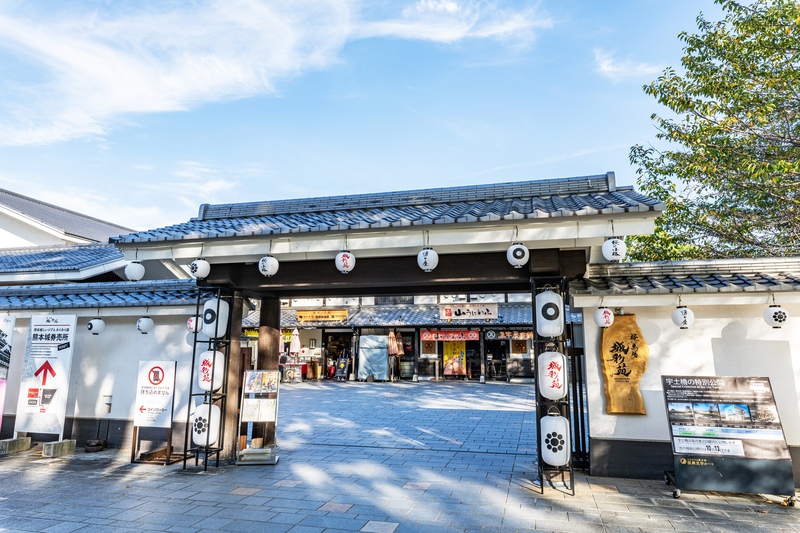
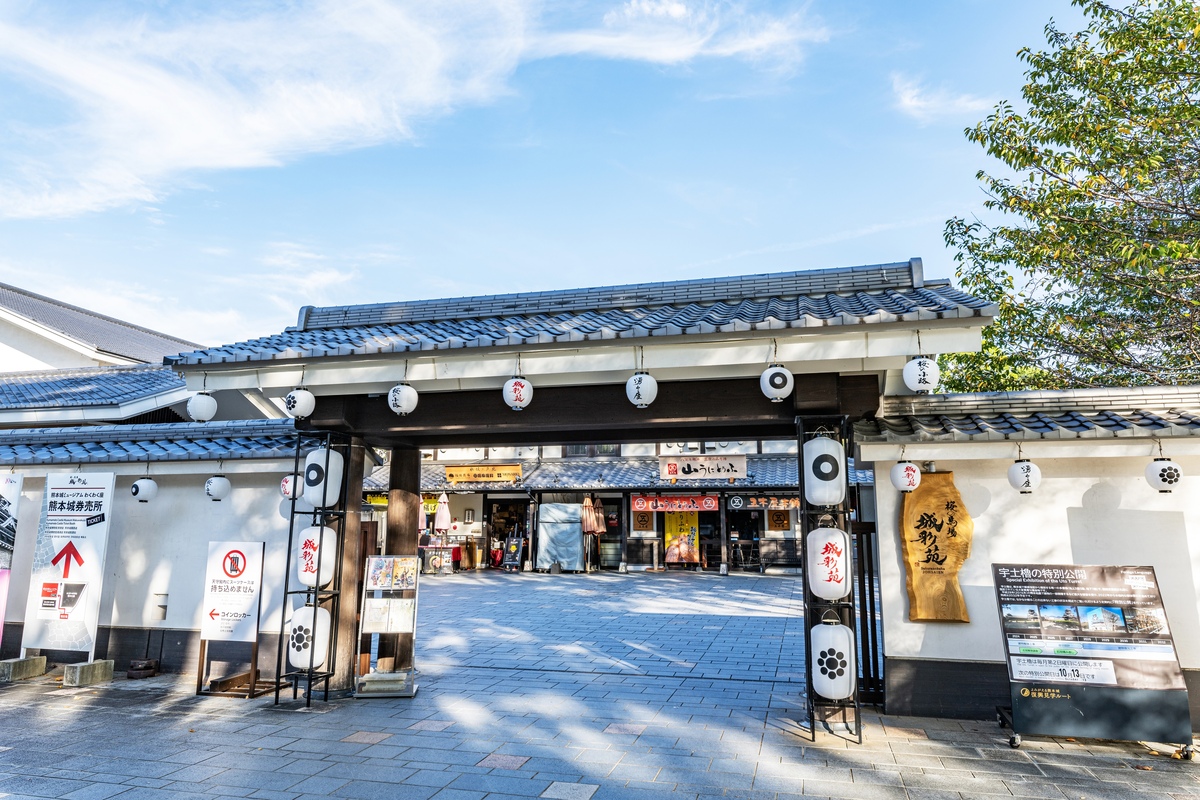
Josaien sits right by the castle area, and it works as the day’s practical hinge. This is where you can eat, buy local snacks, and reset before heading into the shopping streets. The best part: it’s designed for exactly that kind of stop. You don’t need to overthink it, which is a mercy after a morning of castle paths and sun glare.
My tip: use Josaien for an early lunch or an early snack, not for the grand finale. Kumamoto has enough character in its streets that you should save some appetite for later. I went for a light spread once, then regretted being too sensible because the regional food options were more tempting than I’d budgeted for. Us dorks do this to ourselves.
What to eat in the castle district
Go for things that travel well and taste of Kumamoto. 馬刺し (Basashi, horse sashimi) is the obvious regional headline if you eat horse meat, and it’s served all over the city in different forms. 辛子蓮根 (Karashi renkon, mustard-stuffed lotus root), lotus root stuffed with mustard miso, is another classic, sharp and a little bracing. Then there’s 鯛焼き (taiyaki, fish-shaped sweet cake), croquettes, rice balls, and soft-serve stands when the weather turns warm. Nothing here is precious. That’s part of the charm.
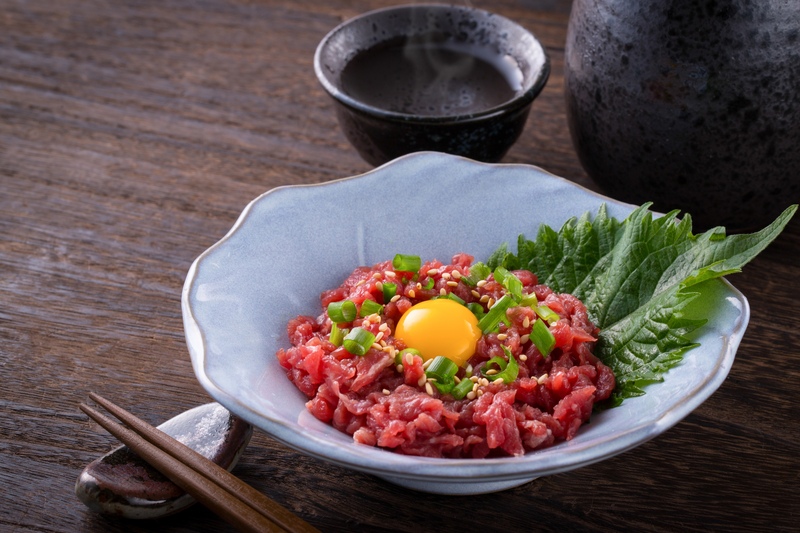
Quick detour: if you’re learning Japanese, this is a good place to notice how food names often stay short and direct, almost stubbornly so. Karashi renkon. Basashi. おにぎり (Onigiri, rice ball). No drama. The language behaves like the food, plain on the surface, built for daily life. That may sound obvious, but I find it useful. You remember words faster when they’re attached to something you can actually eat. Convinced yet?
Shinmachi-Furumachi and the Kamitori-Shimotori arcades
Here’s the kicker: once you leave the castle zone, Kumamoto stops being a monument and becomes a working city again. Shinmachi-Furumachi, with its older merchant-town feel, gives you a sense of the layers underneath the modern grid, while Kamitori and Shimotori pull you into the covered shopping arcades that make walking in Kumamoto workable even in bad weather. This is city life with a roof over it, and I mean that as praise.
That reminds me: the arcades aren’t just for shopping. They’re for drifting. You can move from stationery shops to pharmacies, from snack counters to 喫茶店 (kissaten, coffee shop), and still keep your route coherent. Kamitori tends to feel a little more central and busy, Shimotori a touch more relaxed, though both are part of the same urban rhythm. If you only have a couple of hours, this is where I’d spend them. Simply brilliant.
Food stops worth your steps
Look for lunch sets in small local diners, bakeries with melon pan and cream-filled buns, and depachika-style takeout counters if you want to keep moving. The covered streets are also good for casual noodles or curry rice, the sort of meal that lands well after several kilometres on foot. I especially like places where you can sit for twenty minutes, drink something cold, and watch the afternoon thicken around the edges.
Oh, almost forgot: Kumamoto’s street-corner snack culture is quietly strong. Ice cream, fried treats, sweets packed for gifts, little regional boxes of this and that, all of it designed for people who are already walking somewhere else. That makes the arcades a useful learning space too. You’ll see plenty of signage in カタカナ (katakana, katakana script) and kanji, and you can practise reading the same menu terms over and over until they stop looking like a puzzle. They should. The city is doing half the teaching for you.
A practical one-day walk through Kumamoto
If you want the route in plain terms, start early at Kumamoto Castle, spend a good hour or two there, then cut over to Josaien for food. After that, move into Shinmachi-Furumachi and continue along Kamitori and Shimotori as your energy allows. The whole day works best when you treat it as a walk with built-in pauses, not a checklist. Cities reward that approach. They always have.
My preferred rhythm is this: one substantial sight, one food stop, one stretch of loose wandering, then another meal if the day asks for it. In Kumamoto, the body stays engaged without getting crushed, and that balance matters more than people admit. You’re not trying to conquer the city. You’re trying to understand it at walking speed, which is slower, kinder, and usually smarter. Wait, there’s more.
If you want to keep going with Japan planning and news, see more Japan news on jpnerd.com.
In pictures
Frequently Asked Questions
How long do I need for this Kumamoto walking route?
Plan on a full day if you want the castle, Josaien, and the shopping streets without rushing.
Is Kumamoto Castle easy to visit on foot?
Yes. The main approach is very walkable, though the grounds take time if you want to see them properly.
Where should I eat first?
Josaien is the easiest place to start, then save the arcades for a second meal or a snack crawl.


