What Is an Ekiben, and Why Does It Even Matter?
Let's get the basics out of the way first. Ekiben is written 駅弁 (romaji: ekiben) and simply combines eki (駅, station) with ben, short for bento (弁当, a boxed meal). But calling an ekiben just a "boxed meal" would be doing it a serious disservice.
Trust me on this one: ekiben culture in Japan is a whole world unto itself. Dedicated fans, known as ekiben mania, travel specific train routes just to get their hands on regional specialties. There are ekiben fairs held at department stores in Tokyo that draw enormous crowds. Some boxes have been sold at the same station for over a century. That's the level we're dealing with here.
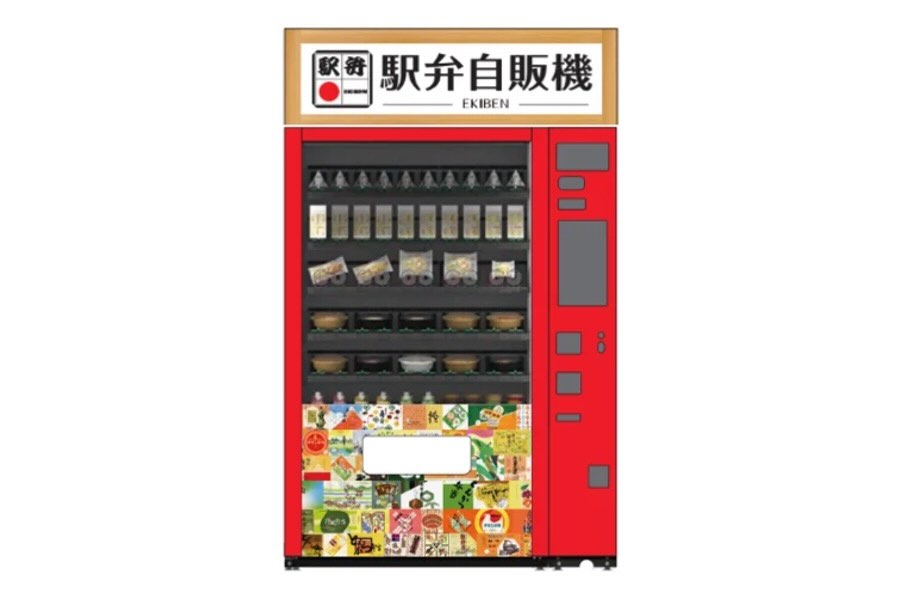
Picture this: you're standing on a platform, your shinkansen leaves in four minutes, and you need lunch. The ekiben vending machine at Odawara doesn't just solve a logistical problem; it preserves a deeply rooted travel ritual in a format that fits modern station life. See what I mean?
Odawara Station Gets an Ekiben Automat: Here's What's Inside
JR East has installed the new ekiben vending machine at Odawara Station, a busy stop on the Tokaido Shinkansen line in Kanagawa Prefecture, roughly an hour southwest of Tokyo. The machine offers around 15 different bento varieties at any given time, rotating to reflect seasonal availability and regional character.
Three Boxes Worth Knowing By Name
A great example of what the machine stocks is the Chicken Bento, a crowd-pleasing staple that travels well and appeals to pretty much everyone. Then there's Fukagawa-meshi (深川めし), a traditional Tokyo dish of clams and rice cooked together in a soy-based broth, named after the old shitamachi district of Fukagawa in eastern Tokyo. It's earthy, a little briny, and genuinely delicious. And if you're in the mood for something lighter, the Ofunaken Aji-Sushi brings vinegared horse mackerel (aji, 鯵) pressed into sushi form, a style rooted in the Shonan coastal region nearby.
What I especially like is that the selection isn't generic convenience store fare. These are products with regional identity, sold in a modern format. That's a thoughtful balance, and JR East clearly put some effort into the curation.
Vending Machine vs. Traditional Counter
That brings us to the obvious question: does swapping a human vendor for a machine take something away from the experience? Honestly, a little, yes. Part of ekiben culture is the interaction, the recommendation from a vendor who knows the boxes, and the hand-off at the window just before your train departs. That charm is real.




But let's stick with the practical side for now. Vending machines don't close early. They don't run out of staff during peak travel hours. And for solo travellers arriving late or rushing between connections at Odawara, having a reliable machine stocked with actual regional bento is infinitely better than grabbing a triangle onigiri from a konbini. Pro tip: check the machine's stock display before committing to a platform, as availability can shift throughout the day.
Why Train Nerds and Japan Learners Should Pay Attention
Fun fact: Odawara Station is more than just a shinkansen stop. It's also the gateway to Hakone, one of the most visited onsen resort areas in Japan, and a stop on the historic Tokaido road that connected Edo (modern Tokyo) to Kyoto. The station sees a serious mix of domestic commuters, tourists, and day-trippers, which makes it an interesting test location for a format like this.

For Japanese learners, ekiben vocabulary is genuinely useful. You'll encounter eki (駅) constantly in station names and signage. Bento (弁当) appears on menus, in supermarkets, and in everyday conversation. And if you ever want to sound like you know what you're talking about on a Japan trip, dropping ekiben into a sentence about train travel goes a long way. The kanji 駅弁 are also a good early study pair since both appear frequently in real-world contexts.
Unlike what we're used to in most Western countries, where station food is an afterthought, Japan has built an entire culinary identity around the train journey itself. The ekiben vending machine at Odawara is a small but telling sign that this identity isn't fading; it's adapting.
Oh, I almost forgot: if you're planning a trip to Hakone and passing through Odawara, build in a few extra minutes at the station. A machine-dispensed Fukagawa-meshi eaten on the platform with a view of the mountains is still a pretty good afternoon. My verdict? The ekiben automat is a smart move by JR East and well worth a stop.
In pictures

Frequently Asked Questions
Where exactly is the ekiben vending machine located at Odawara Station?
The machine is located at JR East's Odawara Station in Kanagawa Prefecture, a stop on the Tokaido Shinkansen line approximately one hour southwest of Tokyo. It's accessible from the main station concourse.
How many bento options does the Odawara ekiben machine offer?
The machine stocks around 15 bento varieties, including the Chicken Bento, Fukagawa-meshi, and Ofunaken Aji-Sushi. The selection may rotate based on season and availability.
What does ekiben mean in Japanese?
Ekiben (駅弁) combines eki (駅, station) and ben, short for bento (弁当, boxed meal). It refers to regional boxed meals sold at train stations across Japan, often tied to local culinary traditions.