
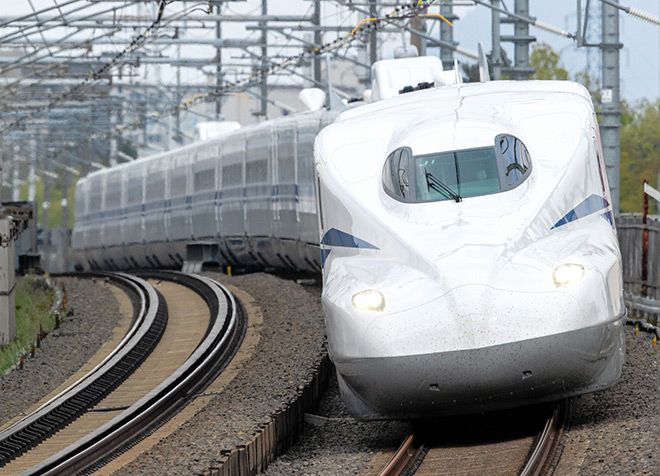
It’s the kind of rail event that stops you mid-scroll because it mixes speed, nostalgia, and a very specific date. And if you’re learning Japanese, it also gives you a nice peek into how Japan turns ordinary transport into an event.



A rare night ride on the Tokaido Shinkansen
On 8 August, the Tokaido 新幹線 (Shinkansen, bullet train) is scheduled for an unusual overnight special run, and that alone makes it worth talking about. The line usually belongs to daylight business trips, weekend escapes, and tightly timed Tokyo-Osaka travel, so a night service instantly feels different. Sounds weird, but it’s true.
For many Japan fans, the word Shinkansen brings to mind clean platforms, bright mornings, and that famous feeling when the doors close with perfect timing. This one flips the script. Instead of a rushed commuter rhythm, the train becomes part of the night itself, and that rarity is what gives the run its charm. But that’s not all.
Compared with back home, where night trains are often ordinary or even old-fashioned, Japan’s high-speed rail network almost never works like this. That’s why a special overnight operation on the Tokaido Line stands out so sharply. It’s not just a ride, it’s a rail event with a fixed date, a clear route, and serious bragging rights for anyone lucky enough to board.
What makes the 8 August run so unusual
The first time I went to Japan, I was surprised by how strictly the rail system runs on schedule. The surprise here is different, because this service isn’t about delay or disruption, it’s about intention. A Shinkansen running through the night is rare enough to feel almost ceremonial.
Before I forget: Japan does have special trains for seasonal events, sightseeing, and fan trips, but they’re usually limited, announced in advance, and tied to very specific purposes. That makes this 8 August departure more like a one-off celebration than a normal timetable entry. If you know the word 特別 (tokubetsu) 列車 (ressha), you already get the idea, a special train, not business as usual. But that’s not all.
By the way, the Tokaido Shinkansen itself has a powerful place in rail history. It opened in 1964, linking Tokyo and Shin-Osaka, and became a symbol of modern Japan almost overnight. So when a train from that line gets turned into a night special, the contrast is deliciously Japanese, old prestige, new surprise.



Tokyo, the Tokaido Line, and the appeal of rail romance
Ever wondered why Japanese rail trips can feel so emotional? Part of it is the detail. Stations, platform signs, ticket timing, and even the smell of the carriage create a sense of ritual, and this overnight Shinkansen pushes that feeling even further. Hand on heart, that’s one reason rail fans go crazy for special runs.
For example, if the trip starts in Tokyo, the departure itself becomes a little story. Night lights at the station, the quiet before boarding, the low hum of a train that’s usually associated with daytime speed, it all changes the mood. If the route continues along the Tokaido Line, you’re looking at one of Japan’s most famous corridors, a line many learners already know by name because it appears so often in travel guides and language materials. Sounds good, right?
Trust me on this one: when Japanese rail culture gets playful, it’s often more memorable than a standard sightseeing plan. A special overnight Shinkansen is exactly that kind of memory-maker. It gives rail enthusiasts a reason to chase a timetable, not just a destination. Wait, there’s more.
Japanese travel vocabulary you can actually use
Speaking of which... this is a great moment for learners to pick up a few useful words. Shinkansen means bullet train, of course, but tokubetsu means special, 最終 (saishuu, last; final) means last, and 時間 (jikan) means time. If you spot terms like 運転手 (untenshu) for driver or ressha for train, you’re already reading rail content with more confidence. Highly recommended: keep a note of these when you see Japanese train news.
My tip: when you read articles like this, don’t just focus on the headline, look for timing words too. Dates like 8 gatsu 8 nichi, route names like Tokaido, and station names like Tokyo are the pieces that help you decode Japanese travel reporting. That’s a useful habit, and it makes Japan news much easier to follow. But that’s not all.
To be fair, you don’t need perfect Japanese to enjoy this kind of story. Even a few romaji terms can open the door to a lot of cultural context. And once you start noticing how often Japan turns transport into a seasonal or limited-time experience, you’ll understand why fans get excited so quickly. Sounds good, right?
Frequently Asked Questions
What is special about this Shinkansen run?
It is an unusual overnight special service on the Tokaido Shinkansen, scheduled for 8 August, which is rare for this line.
Does the Tokaido Shinkansen normally run at night?
No. It usually operates during the day, so a night run is unusual and attracts attention from rail fans.
Why is this interesting for Japanese learners?
It gives learners useful travel vocabulary and a real example of how Japan turns transport into a cultural event.


