Thirty years on, that shift still matters. If you care about Nintendo history, Japanese game design, or just love a good nostalgia trip, this is one sequel worth remembering.
![Dragon Ball Z: Kakarot [Master Edition]](https://s.pacn.ws/1/p/1eh/dragon-ball-z-kakarot-master-edition-908785.1.jpg?v=t8ja8t&width=400)
![Startup Company [Console Edition] (Limited Edition)](https://s.pacn.ws/1/p/157/startup-company-console-edition-limited-edition-741799.16.jpg?v=ry4mm8&width=400)
![Startup Company [Console Edition]](https://s.pacn.ws/1/p/157/startup-company-console-edition-741779.10.jpg?v=ry4ngq&width=400)
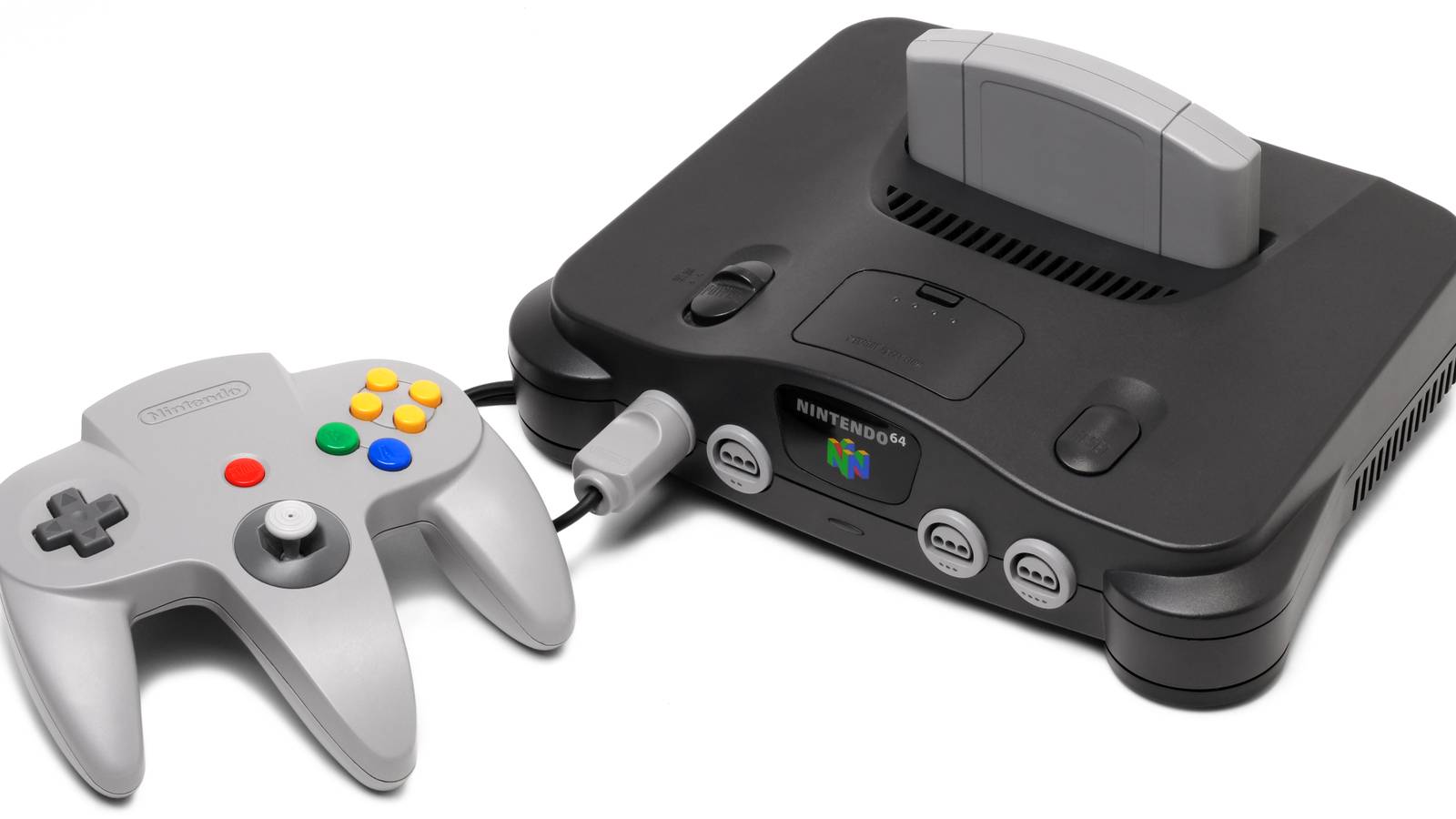
Thirty years after the Nintendo 64 arrived, it's easy to forget how bold Mario Kart 64 felt at the time. The Super Famicom original had already created a new kind of competitive racing game, but the sequel made the formula bigger, louder, and far more replayable. No exaggeration: this was the moment Mario Kart stopped being a nice spin-off and started becoming a pillar of Nintendo's identity.
For Japanese learners, there's a neat language angle here too. Words like 速攻 (sokkou, rapid attack; quick burst) for speed, 競争 (kyoso, competition) for competition, and 歌留多 (karuta, Japanese card game) as a loanword-adjacent joke among fans all pop up in gaming talk, especially when people discuss old Nintendo magazines or retro streams. Sounds odd, but it's true. Games teach vocabulary the same way they teach reflexes, through repetition and memory.
Nintendo 64 history: the console that had to prove itself
Guess what? The Nintendo 64 launched in Japan on 23 June 1996, then reached North America in September and Europe in 1997. That timing mattered, because Sony's PlayStation was already building momentum, and Sega Saturn had made the market feel crowded. Nintendo needed software that could show off 3D without losing the charm that made its older games so strong.
Mario Kart 64, released in Japan on 14 December 1996, did exactly that. It arrived after the first wave of Nintendo 64 curiosity, and it gave players something they could understand in seconds: race, grab items, ruin your friend's day. Speaking of which, that social friction is part of why the game still gets discussed in Japan and abroad, because it turned living-room chaos into a repeatable ritual.
What most people don't know: the shift from Mode 7-style 2D tricks on Super Famicom to true polygon tracks on Nintendo 64 wasn't just cosmetic. Tracks like Moo Moo Farm and Kalimari Desert looked like a new era, even if the series hadn't yet found the cleanest handling model. You could feel Nintendo trying to balance accessibility with technical ambition, and that tension ended up defining the franchise's future. Personally...
Why Mario Kart 64 became the sequel that changed the series
Here's the kicker: Mario Kart 64 didn't just refine the original, it standardised the social experience. Four-player split-screen became the headline, and on a 1990s television, that meant instant party-game energy. The game sold over 9.8 million copies worldwide, which is massive even by Nintendo standards, and it helped make the franchise a must-buy rather than a maybe-buy.
Quick detour: the original Super Mario Kart on Super Famicom had Mode 7 scaling, tight courses, and a surprisingly fierce skill ceiling. But Mario Kart 64 opened the series to a wider audience by making the camera clearer, the items more legible, and the matches more chaotic. That's why people still remember the banana peels, red shells, and the dreaded blue shell era that would come later, because the sequel taught the franchise how to be loud and readable at the same time.
What it added, and what it changed
One of the biggest changes was the move to 3D track design, even though the racers themselves were still flat sprites. That decision sounds like a compromise, but it worked. The course layouts became more expressive, shortcuts felt more dramatic, and the whole thing had a toy-box feel that fit Nintendo's style beautifully. Simply brilliant.
My tip: if you're learning Japanese, compare how fans describe older and newer Mario Kart games in Japanese game forums or YouTube comments. You'll see words like 懐かしい (natsukashii, nostalgic; reminiscent) for nostalgic, 真空 (shinkuu, vacuum) for vacuum-like slipstream talk in later entries, and lots of casual shorthand. It's a fun way to connect language with memory, especially when the topic is a game people grew up with. Convinced yet?
Thirty years later: the sequel's legacy in Nintendo and Japan
Ever wondered why Mario Kart keeps working across generations? It's because Mario Kart 64 established a design language Nintendo still uses: simple controls, fast restarts, and enough randomness to keep experts humble. The later entries changed the physics, added online play, and expanded the roster, but the core fantasy was already locked in by the Nintendo 64 sequel.
No joke: you can trace a direct line from this game to Mario Kart Wii, Mario Kart 8 Deluxe, and even the way Nintendo stages its family-friendly party image in Japan. The series became a standard presence at get-togethers, school hangouts, and game cafes, the same way 将棋 (shogi, Japanese chess) or 太鼓 (taiko, Japanese drum; drumming) culture often becomes a social activity first and a skill test second. That blend of friendship and rivalry is very Japanese in spirit, even when the packaging is pure Mushroom Kingdom.
Oh, almost forgot: Mario Kart 64 also helped normalise Nintendo's move toward a more shared, couch-based identity at a time when the industry was pushing harder into 3D spectacle. The game didn't need a complicated story, and it didn't try to be cinematic. It just had to be fun every single round, and that restraint is why it still feels fresh when you revisit it on original hardware or through retro collections. My verdict:
For Japan fans, the real charm is how a Japanese-made sequel became a global memory machine. It's a clean example of how Nintendo often takes a familiar idea, tightens it, and sends it back out into the world in a form that feels effortless. That's the kind of design lesson Japanese learners can appreciate too, because the same pattern shows up in language study: start simple, repeat often, then suddenly the whole thing clicks. Personally...
Frequently Asked Questions
Why is Mario Kart 64 so important?
It turned Mario Kart into a true party-game franchise and set the template for later entries.
When did the Nintendo 64 and Mario Kart 64 launch in Japan?
The Nintendo 64 launched in Japan on 23 June 1996, and Mario Kart 64 followed on 14 December 1996.
Why do Japanese fans still talk about it?
Because it captured a key era of Nintendo history and remains a nostalgic multiplayer classic.