
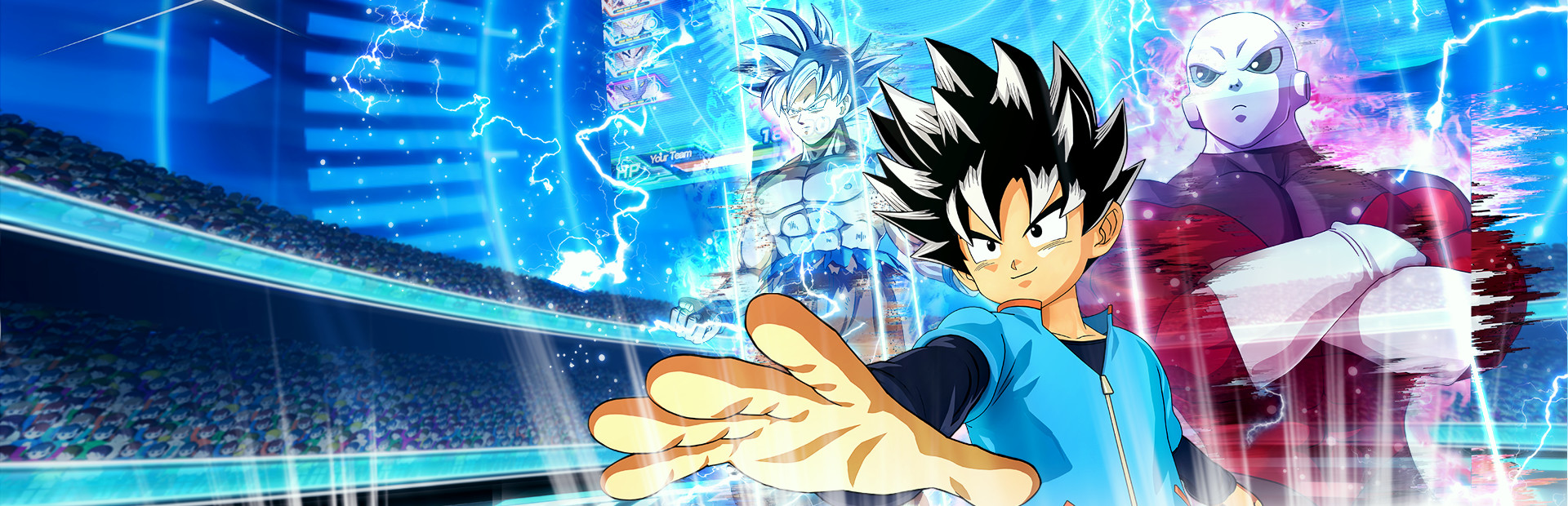
For fans, that means this isn't just a rerun. It's shaping up to be a carefully rebuilt return, and the details already have the anime world buzzing.
![Dragon Ball Z: Kakarot [Master Edition]](https://s.pacn.ws/1/p/1eh/dragon-ball-z-kakarot-master-edition-908785.1.jpg?v=t8ja8t&width=400)
![Dragon Ball: The Breakers [Special Edition]](https://s.pacn.ws/1/p/131/dragon-ball-the-breakers-special-edition-702961.11.jpg?v=rfedy7&width=400)
Dragon Ball Super is back in the conversation, and this time the buzz is tied to Fuji TV, autumn 2026, and an "enhanced version" that sounds far more ambitious than a simple broadcast repeat. If you grew up with Goku, or you’re learning Japanese through anime, this is the kind of announcement that makes you sit up a little straighter. It’s not just nostalgia; it could be a fresh introduction to one of the biggest anime brands ever made.

Here’s the deal: the official Dragon Ball site says Fuji TV is planning a major Dragon Ball Super return for autumn 2026. The wording matters, because this is being framed as an enhanced version, fully redrawn and newly dubbed. That means the show isn’t merely being reshuffled into a new time slot, it’s being rebuilt for a fresh run.
For Japan watchers, that’s a big clue. Fuji TV is one of the country’s most recognisable broadcasters, and when it gives a slot to a franchise like Dragon Ball, the signal is strong. No wonder, because Dragon Ball has been a pillar of late-night and family anime culture for decades, from Dragon Ball in 1986 to Dragon Ball Z, Dragon Ball GT, and Dragon Ball Super in 2015. This kind of comeback isn’t random. It’s a calculated TV event.
Fuji TV and the autumn 2026 window
Picture this: autumn in Japan, cooler evenings, new school terms, and TV schedules that often bring a fresh wave of anime. That seasonal timing is no accident. Fuji TV’s autumn 2026 window suggests a return built for maximum visibility, not a quiet streaming drop or a throwaway rerun block.
What most people don’t know: Japanese TV networks still think carefully about timing, audience flow, and franchise placement. If a title like Dragon Ball Super is being positioned for autumn, it likely means there’s confidence in the package, and probably in its merchandising reach too. Anime on TV in Japan is never only about episodes; it’s also about toys, cards, games, and event tie-ins.
Quick detour: for Japanese learners, this is a nice reminder that seasonal words matter in real media coverage. Autumn is 秋 (aki, autumn; fall), and you’ll hear similar seasonal framing all over Japanese entertainment news. If you can spot those clues in headlines, you’ll understand more than just the surface story. Sounds good, right?
What “enhanced version” really suggests
Let’s be honest: “enhanced version” is the phrase that makes fans lean in. It usually means more than polishing the old image a little. In this case, the official wording points to a version that has been fully redrawn and fully re-dubbed, which is a huge amount of work.
The reason is simple: redrawing means the visuals are being rebuilt frame by frame, or at least heavily reworked, and re-dubbing means the voice track is being replaced or newly recorded. That opens the door to cleaner presentation, updated sound, and maybe even subtle fixes that make the show feel more current without losing its core identity.

Why this matters for longtime fans
Dragon Ball has always lived in that space between old-school charm and constant reinvention. A fully new redraw can make classic action scenes hit harder on modern screens, while a new dub can refresh pacing and delivery. What I especially like is that this approach respects the original brand while still giving it a reason to exist in 2026. That’s a hidden gem of an idea, isn’t it?
There’s also a practical side. A rebuilt version can be easier to schedule around modern TV standards, streaming partnerships, and international distribution. Japan’s media machine loves a format that can travel well, and Dragon Ball is one of the few anime names that still feels instantly global.
Dragon Ball Super’s place in the franchise
Basically, Dragon Ball Super has always sat at a very important point in the timeline. It followed the huge success of Dragon Ball Z and continued the story with new gods, universes, and tournament-scale battles. The original TV run started in 2015, and since then the franchise has stayed active through films, games, and constant merchandise.
Unlike what we’re used to with many anime sequels, Dragon Ball Super never felt like a one-off revival. It became part of the franchise’s main engine. That’s why a 2026 Fuji TV return matters so much, because it doesn’t just bring back a title, it brings back a whole era of weekly conversation.
Know that feeling when a series you grew up with suddenly gets a serious reboot-style treatment? That’s the mood here. For Japanese learners, Dragon Ball is also great language practice, because the dialogue is packed with simple verbs, battle commands, and repeated expressions that stick in your head. Phrases like 頑張れ (ganbare, do your best; hang in there), 只今 (tadaima, I’m home; just now), or 俺 (ore, I; me (rough masculine first-person pronoun)) are easy to catch, and anime often trains your ear faster than textbooks do. My tip: use a return like this as a listening checkpoint, not just a news item. From my experience, that makes the whole fandom feel more active.
Why fans are already talking
Ever wondered why one announcement can set off so much excitement? With Dragon Ball, it’s the combination of history, scale, and timing. Fuji TV, autumn 2026, and a fully redrawn, re-dubbed enhanced version all point to a release that’s being treated like an event.
Let’s be honest: fans want proof of life for beloved franchises, but they also want care. This setup suggests both. If the project lands well, it could become the kind of return that introduces younger viewers to Dragon Ball Super while giving older fans a reason to come back too.
And for Japan fans outside Japan, this is exactly the kind of news worth tracking through official channels like the Dragon Ball Official Site announcement. When a broadcaster, a time window, and a remake-style presentation all line up, you’re looking at more than a casual rerun. Wild, isn’t it?
In pictures
Frequently Asked Questions
Is Dragon Ball Super really returning to Fuji TV in 2026?
According to the official announcement, Fuji TV is planning a major Dragon Ball Super return for autumn 2026.
What does “enhanced version” mean here?
It indicates a fully redrawn and newly dubbed version rather than a simple rebroadcast.
Why is this such a big deal for fans?
Because it combines a major broadcaster, a clear broadcast window, and a serious remake-style approach for one of anime’s biggest franchises.
If you want more updates like this, check out more Japan news on jpnerd.com.


