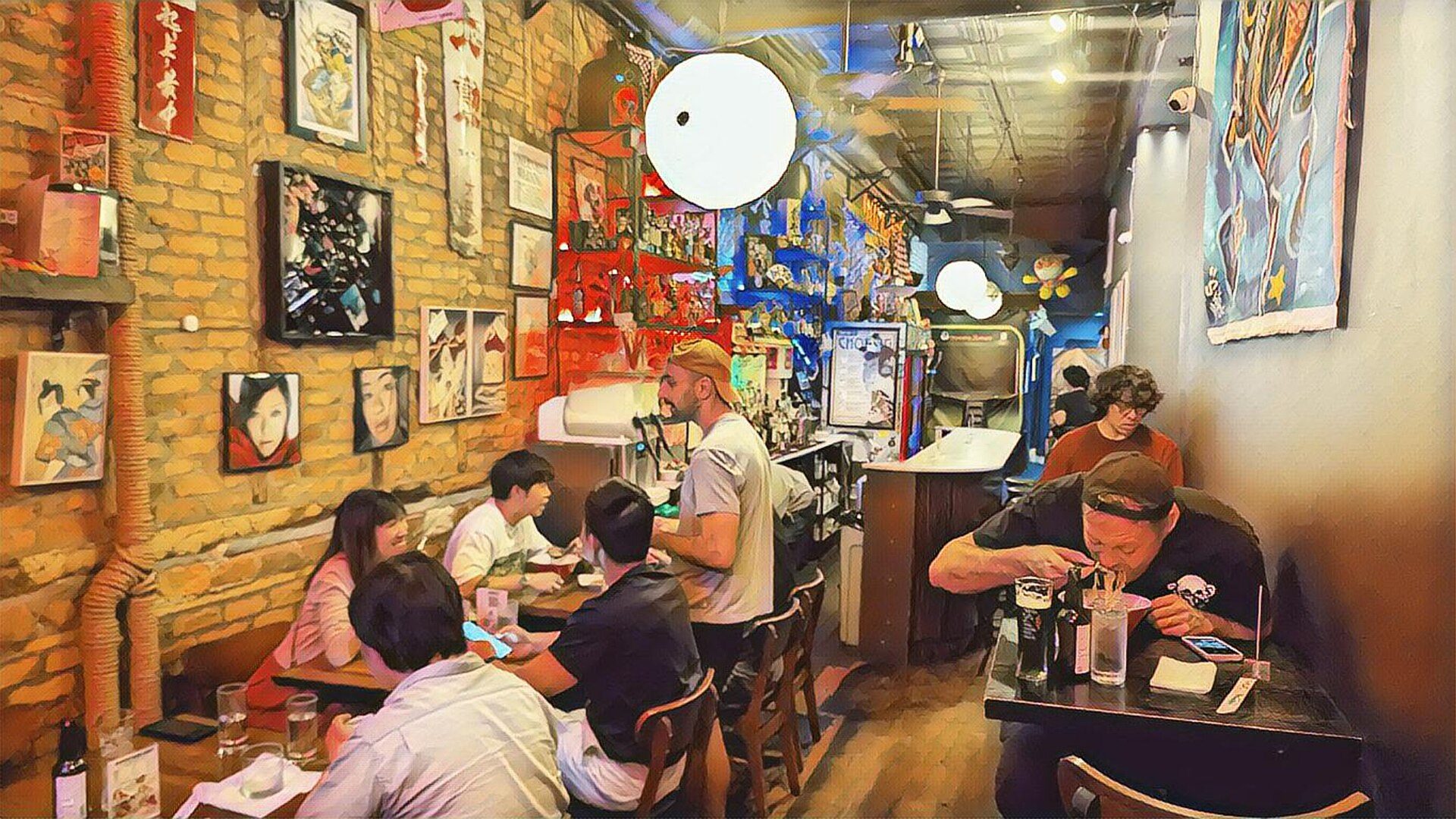
If you like Japan travel with a bit of real local flavour, this is my absolute hidden gem. The best part is that you’re not just bar-hopping, you’re learning how Kyoto drinks, chats, and unwinds after sunset.
Kawaramachi Kyoto at night, where the city changes pace
Kawaramachi is the part of Kyoto that wakes up after sunset. By day, it’s busy with shoppers, department stores, and people moving between Sanjo, Shijo, and Gion, but at night the mood shifts fast, and the side streets start pulling you in. If you know a little Japanese, this area is a great place to hear real everyday words, from nomi tokanai talk about going out for drinks, to 乾杯 (kanpai, cheers) at the table.
The first time I went to Japan, I thought Kyoto would always feel calm and temple-like. Then I stood near Kawaramachi at night, and the city felt young, lively, and slightly mysterious. Classic Japan, isn’t it? The contrast is what makes this area so good for an evening walk, because you can move from bright commercial streets into tiny back lanes in a matter of minutes. And there’s more.
Izakaya crawl tour with a local guide
An 居酒屋 (izakaya, Japanese pub) crawl tour with a local guide is a smart way to handle Kyoto nightlife if you don’t want to wander blindly. A good guide knows which spots still feel local, which places are too touristy, and how to order without awkward guesswork. Take the phrase お通し (otoshi, small automatic appetizer), for instance. It refers to the small appetiser that often appears automatically when you sit down, and it’s one of those practical words that makes you sound less like a first-timer.
Most crawl-style tours stop at several places in one evening, often three to four bars or izakaya, which means you get variety without spending your whole night deciding where to go. On a related note, this structure is great for learners, because each stop gives you another chance to hear casual Japanese in context. You might hear someone ask for 焼酎 (shochu, shochu distilled spirit), someone else order 焼き鳥 (yakitori, grilled chicken skewers), and the guide explain why one bar serves craft beer while another focuses on local sake. From my experience, that mix keeps the evening moving.
What the guide actually adds
Here’s the catch: the guide isn’t just there to point at doors and say follow me. A good local guide explains the rhythm of the neighbourhood, how Kyoto differs from Osaka, and why some bars are tucked away behind unmarked doors or up narrow stairs. That context matters. Kyoto can feel reserved at first, so having someone break the ice helps you relax, ask questions, and try drinks you might normally skip.
Pro tip: if you are learning Japanese, listen for set phrases like お願いします (onegaishimasu, please) when ordering, ありがとうございます (arigato gozaimasu, thank you very much) when paying, and ikura desu ka if you want to confirm the price. These are simple, but they make the night feel more interactive. By the way, a guide can also help you understand payment style, seating rules, and whether the place expects a cover charge. There’s still more to it.
Hidden bars, local sake, and the real Kyoto night mood
Striking, isn’t it? Some of the best spots in Kawaramachi are the ones you would walk past without noticing. A staircase behind a vending machine, a door with no sign, a tiny counter with seven seats, these are exactly the places that make a crawl feel special. Kyoto has a reputation for elegance, but its nightlife can be surprisingly intimate, and hidden bars fit that mood perfectly.
What I especially like is the sake angle. Kyoto is close to Fushimi, one of Japan’s best-known sake regions, and many Kawaramachi bars pour labels that you won’t casually find abroad. A local guide can point out whether a sake is dry, soft, fruity, or seasonal, and that gives you a practical vocabulary boost. A great example: if you hear junmai, ginjo, or daiginjo, you’re already in the world of sake grading, and that tiny bit of knowledge makes tasting more fun. And there’s more.
What you might drink and eat
Expect small plates that pair well with alcohol, like karaage, dashimaki tamago, edamame, grilled fish, and seasonal Kyoto-style snacks. The food isn’t trying to be fancy, it’s there to support the drinks and keep the pace easy. Compared with back home, where a bar crawl can feel loud and rushed, Kyoto often feels more conversational. People sit, talk, pour for each other, and slow down. That slower tempo is part of the charm.
My tip: don’t only chase the strongest drink on the menu. Try one local sake, then one lighter beer or highball, and notice how the flavour changes with each stop. If you like food, ask the guide about Kyoto ingredients such as yuba or obanzai, because those words connect the nightlife back to the city’s cooking traditions. From my experience, that’s where the evening really clicks.
Why this Kyoto insider walk is worth it for Japan fans
For Japan fans, this kind of evening is more than a night out. It’s a small language lesson, a culture lesson, and a neighbourhood lesson all at once. You see how people unwind in Kyoto, you learn the feel of words like izakaya and sake in a real setting, and you get a better sense of how Japanese social life works after office hours. That’s the kind of memory that sticks.
Here’s the kicker: Kawaramachi is easy to reach, but hard to truly understand if you only pass through once. A guide helps you read the signs, both literal and cultural, and that makes the area feel less like a map pin and more like a living district. If you are building your Japan trip around food, language, and local atmosphere, this is one of the strongest nighttime experiences in Kyoto. There’s still more to enjoy.
If you want to keep following Japan travel and culture updates, check out more Japan news on jpnerd.com.
Frequently Asked Questions
Is a guided izakaya crawl in Kyoto good for first-time visitors?
Yes. It helps you find good bars quickly, understand ordering, and avoid places that feel too confusing on your own.
Do you need Japanese to enjoy Kawaramachi at night?
No, but a few basic phrases make the experience better and help you connect with staff and your guide.
What makes Kawaramachi different from other nightlife areas?
It blends easy access, hidden side streets, local bars, and a more relaxed Kyoto atmosphere than many larger nightlife districts.