
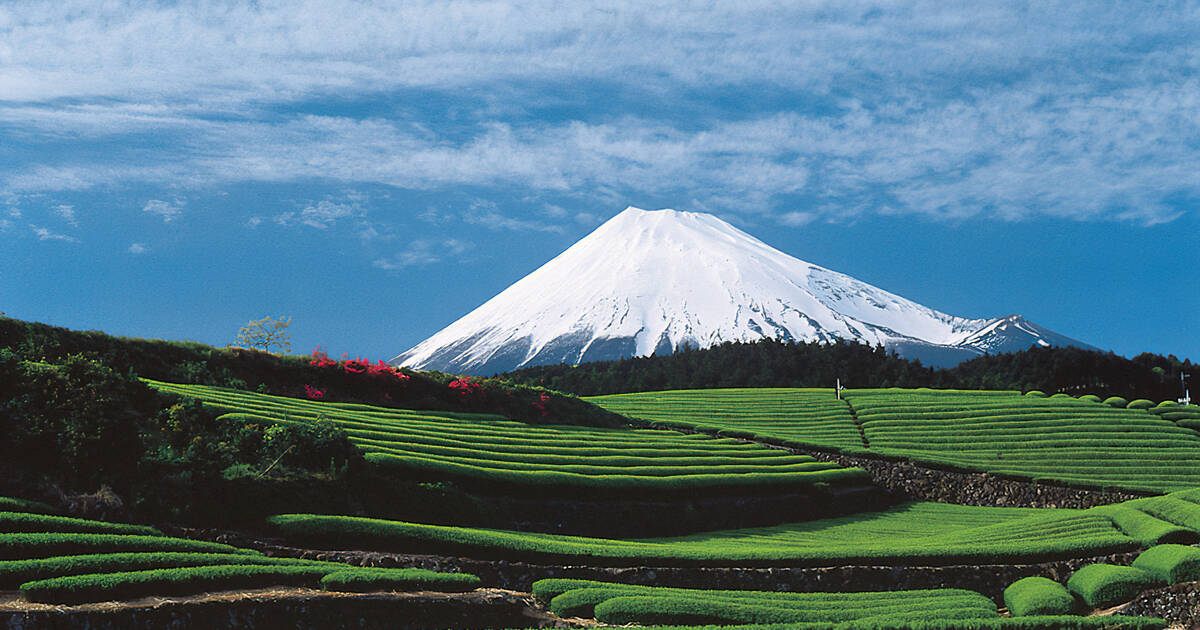
What Goraikō Actually Means (And Why the Word Matters)
Let’s be honest: most travel content about climbing Fuji focuses on the bucket-list angle. You tick the box, post the photo, and move on. But when you understand the word goraikō itself, something shifts.
The kanji 御 (go/o) is an honorific prefix, the kind placed before words to show reverence. 来 (rai) means "coming" or "arrival". 光 (kō) means "light". Put it together, and you’re not just describing a sunrise. You’re describing the honourable arrival of light, a phrase that treats the sun almost as a divine guest crossing the threshold of the sky. That linguistic framing tells you everything about how the Japanese relationship with this moment differs from simply "watching the sun come up".

Did you know that the Japanese language has dozens of words for different qualities of light and their emotional weight? Goraikō sits in that tradition. Learning terms like this one doesn’t just expand your vocabulary; it rewires how you read Japanese culture. See what I mean?
Mount Fuji as a Sacred Mountain: A History of Pilgrimage
Fuji has been a site of religious practice for over 1,300 years. The mountain is home to the Fujisan Hongu Sengen Taisha shrine network, which includes more than 1,300 shrines across Japan dedicated to the deity Konohanasakuya-hime, the goddess of blossoming flowers and, by extension, Mount Fuji itself. The summit shrine, Okumiya, sits at 3,776 metres and marks the highest point of this sacred geography.
The Fuji-kō Pilgrimage Tradition
From around the 16th century onwards, organised pilgrimage confraternities called Fuji-kō became enormously popular among ordinary townspeople, especially in Edo (present-day Tokyo). These weren’t elite religious journeys. They were community-organised climbs, funded collectively, with members taking turns to represent their neighbourhood on the mountain. What I especially like about this history is how democratic it was. Goraikō wasn’t reserved for monks or aristocrats. A fishmonger from Edo could stand on that summit and witness the same sacred light.
UNESCO recognised Fujisan as a Cultural Heritage Site in 2013, specifically citing its role as a "source of artistic inspiration" and object of religious practice. The official designation is "Fujisan, sacred place and source of artistic inspiration". That’s not a bureaucratic label; it’s an acknowledgement of something the Japanese have understood for centuries.
Shinto, Buddhism, and the Summit Crater
The spiritual identity of Fuji is layered. Shinto and Buddhist traditions both claimed the mountain at different points in history. Before the Meiji government enforced a separation of the two religions in 1868, the summit was dotted with Buddhist halls alongside Shinto shrines. The crater itself, called Naien, was considered the innermost sanctum, a place of concentrated divine energy. Climbing to the rim and completing the crater circuit, known as お鉢巡り (ohachi-meguri), was part of the full ritual ascent. Simply reaching the summit wasn’t enough; you walked the edge of the sacred vessel.
No joke: some pilgrims historically completed the entire climb barefoot as an act of devotion. The physical suffering was the point.
The Moment of Goraikō: What Happens and Why It Hits Differently
Imagine standing at 3,776 metres in total darkness, surrounded by other climbers who’ve been silent for the last hour. The temperature at the summit in August can drop to around 5 degrees Celsius even in summer. Your body is tired, and the air is thin, roughly 38 percent less oxygen than at sea level. Then, somewhere around 4:30 to 5:00 in the morning, depending on the season, the eastern horizon begins to separate light from dark.



When goraikō arrives, the crowd often goes completely silent. Then, just as often, people cry. Not because they planned to. The combination of physical exhaustion, altitude, darkness suddenly broken, and the weight of knowing you’re standing where millions of pilgrims stood before you converges into something that resists easy description.
Pro tip: if you want to experience goraikō properly, start your climb from the Yoshida Trail (the most historically significant route, also called the Fuji Subaru Line Trail) in the evening. Rest briefly at one of the mountain huts between stations 7 and 8, and time your arrival at the summit for about 30 minutes before sunrise. Arriving too early means waiting in the cold and wind, while arriving late means missing it entirely.
From my experience reading firsthand accounts from climbers on forums and travel communities, those who treat the climb as a spiritual or at least a mindful experience consistently describe goraikō as one of the most affecting moments of their lives. Those who sprint up with a purely athletic mindset often say it was harder than expected but not particularly moving. The frame you bring matters enormously.
Goraikō and the Japanese Language Learner
For anyone studying Japanese, Mount Fuji and goraikō offer a remarkably rich entry point into vocabulary that you won’t find in a standard textbook. Words like 霊山 (reisan, sacred mountain), 御来光 (goraikō, the sacred sunrise), 登山 (tozan, mountain climbing), and 山小屋 (yamagoya, mountain hut) all cluster around this single cultural experience.
And it gets better: understanding the honorific prefix 御 (go/o) through goraikō gives you a shortcut to understanding dozens of other respectful Japanese expressions. Once you recognise that 御 signals reverence, words like ご飯 (gohan, meal/rice), ご家族 (gokazoku, your family, used respectfully), and ご連絡 (gorenraku, your contact/communication) all start to feel coherent rather than arbitrary.
Before I forget, the mountain itself is written 富士山 (Fujisan in Japanese, not "Fujiyama" as it’s often mispronounced in the West). The reading "Fujiyama" comes from an alternative reading of the kanji 山 (yama), but Japanese speakers universally say Fujisan. Using the correct term is a small but meaningful sign of cultural literacy.
My tip: build a small vocabulary cluster around goraikō and use it as a memory anchor. When you learn 夜明け (yoake, dawn/daybreak) or 日の出 (hinode, sunrise) in your studies, connect them back to this specific cultural moment. Language learning sticks when it’s attached to real meaning.
Frequently Asked Questions
What does goraikō mean in Japanese?
Goraikō (御来光) translates roughly as "the honourable arrival of light" and refers specifically to the sunrise as seen from the summit of Mount Fuji. The honorific prefix 御 (go) signals that the light is being treated with reverence, reflecting the mountain's deep religious significance in Japanese culture.
Is climbing Mount Fuji a religious act?
Historically, yes. For centuries, climbing Fuji was a pilgrimage performed by confraternities called Fuji-kō, and the summit shrines remain active Shinto sites today. Modern climbers may not approach it with explicit religious intent, but the cultural and spiritual framework is still woven into the mountain's identity. UNESCO listed Fujisan as a Cultural Heritage Site in 2013 partly for this reason.
When is the best time to see goraikō on Mount Fuji?
The official climbing season runs from early July to mid-September. Sunrise times at the summit during this period range from roughly 4:30 to 5:00 in the morning. Most climbers start in the evening, rest at a mountain hut, and aim to reach the summit (3,776 metres) about 30 minutes before sunrise. The Yoshida Trail on the north side is the most historically significant route and the most popular.


