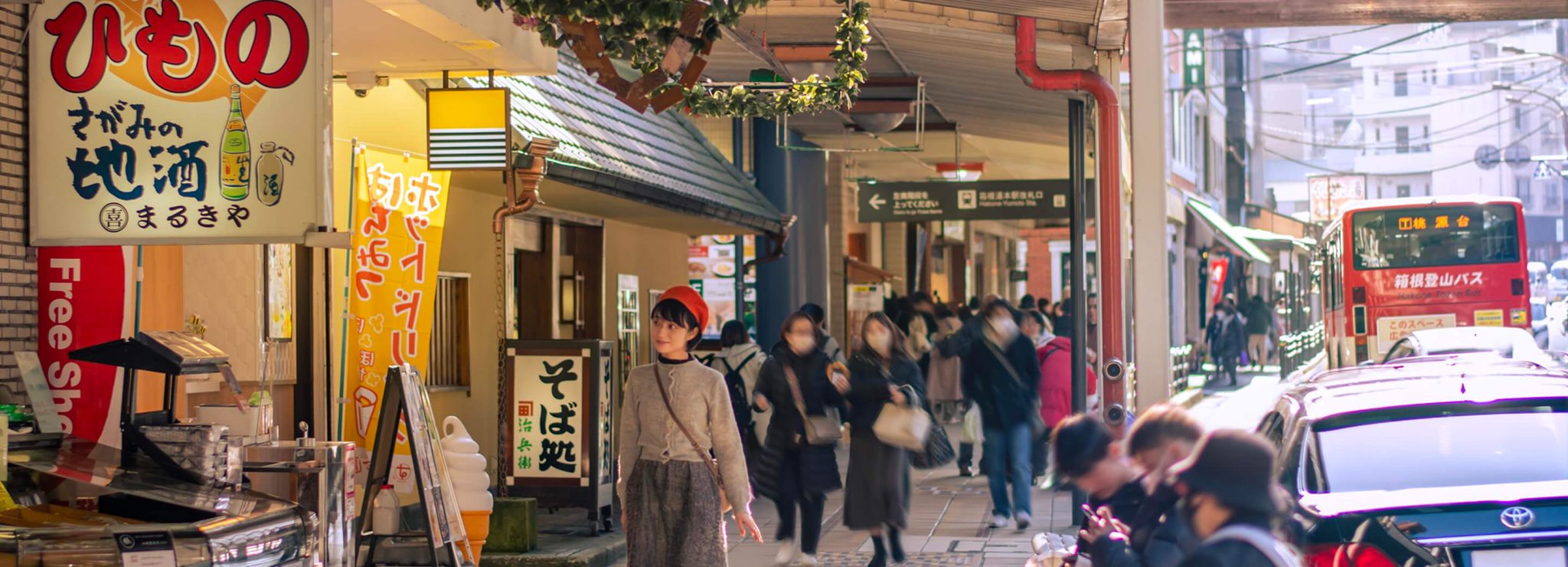
Why Hakone Has a Serious Litter Problem
Let me show you why this matters. Hakone draws millions of visitors every year, thanks to its ryokan culture, open-air museums like the Hakone Open-Air Museum, and jaw-dropping views of Fuji-san on a clear day. All those people need somewhere to throw their convenience store wrappers, empty PET bottles, and onsen snack packaging. The existing bin infrastructure simply wasn't built for 2020s visitor volumes.



Compared to back home, the lack of public rubbish bins in Japan already surprises most first-time visitors. This is actually rooted in a post-1995 policy shift after the Aum Shinrikyo subway attacks, when bins were removed from many public spaces for safety reasons. So tourists end up carrying their trash, or honestly, some of them just dump it wherever looks convenient. In popular spots around the Owakudani volcanic valley or along the Hakone Ropeway route, that means bins overflow fast, and the surrounding area suffers.
Seriously though, overtourism isn't just a crowd problem. It's a waste problem, and Hakone is now treating it as one. See what I mean?
How the Smart Trash Bins Actually Work
So what exactly is a smart trash bin? These aren't just bigger bins with a fancy label. The units installed in Hakone are equipped with sensors that monitor fill levels in real time. When a bin reaches a certain capacity, it sends an automatic alert to the waste management team so staff can empty it before it overflows. No more guessing or scrambling after a busy weekend.
The Tech Behind the Bins
The sensors communicate fill-level data over an IoT network, allowing operators to see at a glance which locations are getting hammered and which are quiet. That data is genuinely useful over time. It means the town can figure out exactly where peak waste generation happens and when, whether that's a Saturday afternoon near the Hakone Checkpoint (箱根関所, Hakone Sekisho) or a holiday Monday up by Lake Ashi (芦ノ湖, Ashi-no-ko). Smarter routing for collection vehicles is a direct side benefit, cutting both costs and emissions. Classic Japan, isn't it?
Where the Bins Are Deployed
The rollout targets high-footfall tourist zones within the Hakone area. Think busy bus stops, popular scenic viewpoints, and spots near the Hakone Tozan Railway line, Japan's oldest mountain railway still in operation. These are precisely the places where a single overflowing bin on a Sunday can spiral into a much bigger mess by Monday morning.
What I especially like is that this isn't a one-size-fits-all solution dropped in from outside. It reflects the very Japanese instinct of kaizen (改善), the philosophy of continuous, incremental improvement applied to a practical civic problem. From my experience, that approach tends to actually stick.
Overtourism in Hakone: The Bigger Picture
Hakone isn't alone in wrestling with this. Towns across Japan, from Kyoto's Gion district to Fujikawaguchiko near Mount Fuji, have introduced crowd-control measures ranging from barriers and tarpaulins blocking famous photo spots to outright bans on tourist access to certain streets. Hakone's smart bin initiative sits within that broader conversation about how to keep a destination liveable for residents while still welcoming visitors.



The numbers tell the story bluntly. Hakone welcomed roughly 20 million visitors annually in pre-pandemic years, according to regional tourism data. Even at reduced post-pandemic figures, the pressure on infrastructure is enormous. A resort town of around 11,000 permanent residents simply can't absorb that volume without smart planning.
That brings us to the language angle, which is worth a quick note for Japanese learners reading this. The word for overtourism in Japanese is often written as オーバーツーリズム (oobaa tsuurizumu), a direct katakana loanword. You'll also encounter 観光公害 (kankou kogai), which literally translates to "tourism pollution" and carries a sharper, more critical edge. Knowing both terms helps you read Japanese news articles about this topic with real comprehension, not just surface-level understanding. But let's stick with Hakone for now.
What This Means for Visitors and Japanese Learners
Hand on heart, if you're planning a trip to Hakone, this kind of initiative should make your visit slightly more pleasant. Overflowing bins are unpleasant for everyone, and they create a visual mess that detracts from landscapes that are genuinely worth protecting. Doing your part is easy: use the bins provided, separate your waste correctly (Japan has strict 分別, bunbetsu, waste separation rules), and if a bin is full, hold onto your rubbish until you find one with space.
No joke, getting waste separation right in Japan can be confusing for first-time visitors. Most public bins are divided into categories like 燃えるごみ (moeru gomi, burnable waste), 燃えないごみ (moenai gomi, non-burnable waste), and ペットボトル (PET bottles). Convenience stores (コンビニ, konbini) usually have clearly labelled bins near the entrance, which is your best fallback when you're out and about.
My tip? Download the Hakone Navi app or check the official Hakone tourism site before your trip. It's genuinely useful for transport info, but it also keeps you updated on any new visitor guidelines, including waste disposal rules that may have been introduced recently. But that's not all. Being a thoughtful visitor actively contributes to whether destinations like Hakone continue to welcome independent travellers or start restricting access the way some Kyoto streets now do.
The best part is that smart bins are just one piece of what could become a much more connected tourism management system. Hakone already uses the Hakone Freepass (箱根フリーパス) as a traffic management tool of sorts, channelling visitors through public transport rather than private cars. Add real-time waste monitoring, and you start to get a picture of a resort that's genuinely trying to evolve rather than just cope. For Japan fans and learners alike, watching how towns like Hakone navigate this challenge is a window into a very real and very current slice of modern Japanese society.
More Japan news on jpnerd.comFrequently Asked Questions
What are the smart trash bins in Hakone designed to do?
They use IoT sensors to monitor fill levels in real time and alert waste management staff before bins overflow, helping to keep tourist areas cleaner during peak visitor periods.
Why are there so few public rubbish bins in Japan?
After the 1995 Aum Shinrikyo sarin attack on the Tokyo subway, many public bins were removed for security reasons. That policy has shaped Japanese public space ever since, meaning visitors are generally expected to carry their rubbish until they reach a convenience store or designated bin.
What does overtourism mean in Japanese?
It's commonly expressed as オーバーツーリズム (oobaa tsuurizumu), a katakana loanword, or as 観光公害 (kankou kogai), meaning roughly 'tourism pollution', which has a stronger critical nuance in Japanese media coverage.