Hakone is the obvious starting point, but it’s far from the only place where steam, hot mineral water and a mountain backdrop make sense together. Here are six spots that capture the mood, plus a few Japanese learning notes you can actually use on your next trip.



Why Fuji-view spas keep getting attention
Ever wondered why Japan keeps winning people over with wellness travel? Part of the answer is that the country treats bathing as part of daily life, not as a luxury add-on. That’s one reason the New York Times keeps returning to the theme, especially when a destination combines design, food and a view of Mount Fuji.
Compared with back home, where a spa day often means a few hours of pampering, a Japanese onsen trip can feel slower and more layered. You check in, change into a 浴衣 (yukata, light cotton kimono), sit down for tea, then ease into hot water while the mountain sits in the distance. Classic Japan, isn't it?
No wonder, because Mount Fuji gives the whole experience a natural focal point. Even when the peak is partly hidden by clouds, the region around Hakone, Gotemba and the Fuji Five Lakes still has that unmistakable sense of place. My tip: if you want the best photos, stay one night, not just one afternoon.
Hakone spa escapes with mountain views
Trust me on this one: Hakone is still the easiest entry point for Fuji-view wellness. It’s about 85 to 90 minutes from Tokyo by Romancecar or roughly two hours by train and bus, and the area has a dense cluster of ryokan, day-use baths and hillside resorts. You don’t need to be a serious spa traveller to enjoy it.
1. Gora Kadan
A former imperial villa turned luxury ryokan, Gora Kadan sits in the Gora area of Hakone and is often praised for its blend of traditional architecture and modern comfort. It’s not a budget stay, but it does everything at a very high level, from 懐石 (kaiseki, traditional multi-course meal) dinners to private bath options. What many overlook: the mood here is as much about restraint as it is about luxury, which makes the whole stay feel calmer.
For language learners, this is a good place to notice the word onsen in real life, not just in textbooks. Staff may also talk about 露天風呂 (rotenburo, open-air bath), an outdoor bath, and 輸出 (yushutsu, export), though menus and signage often keep things simple for international guests. See what I mean?
2. Hakone Kowakien TEN-YU
Opened in 2017, Hakone Kowakien TEN-YU has become a favourite for travellers who want an elegant hotel feel with easy access to hot spring bathing. The standout feature is its large infinity-style bath overlooking the hills, and on clear days you can catch a strong sense of Fuji in the wider landscape. It feels modern, but still very rooted in local bathing culture.
The best part: the property connects neatly with the broader Kowakien area, so you can mix a resort-style stay with visits to public baths and nearby attractions. If you’re learning Japanese, this is a smart place to hear practical words like ryokan, kaiseki and 宿泊 (shukuhaku), which means overnight stay. Not bad, right?
3. Hyatt Regency Hakone Resort and Spa
In the Sengokuhara area, Hyatt Regency Hakone Resort and Spa has long appealed to travellers who want spacious rooms and a quieter setting. The hotel’s mountain location makes it a strong base for exploring Hakone’s museums, ropeway and crater lake, while the spa itself focuses on recovery after a day on your feet. That balance is exactly what a lot of Japan visitors are after.
Oh, I almost forgot: this area is especially good if you want to combine western-style comfort with a very Japanese travel rhythm. You can spend the morning on a ropeway, the afternoon in a bath and the evening over a multi-course dinner. Personally, I like places like this when I’m travelling with someone who wants comfort but still wants to feel the Japan of the trip.
Beyond Hakone, other Fuji-view spa picks
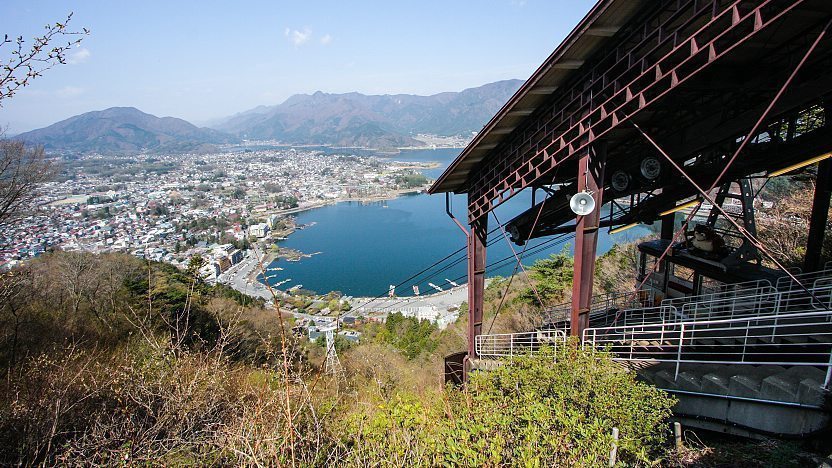
Did you know that some of the best Fuji views come from a little farther out, where the crowds thin and the horizon opens up? That’s where the Fuji Five Lakes area becomes interesting. Lake Kawaguchi, Lake Yamanaka and the surrounding hills often give you a clearer angle on the mountain than busy Hakone does.



4. Fuji Kawaguchiko Onsen Hotel Konansou
Hotel Konansou, near Lake Kawaguchi, is one of the most talked-about places for a Fuji-facing bath. The location matters here, because the lake sits close enough to Mount Fuji to create those postcard-style reflections people come to Japan for. The hotel has a mix of indoor and outdoor baths, plus room types that are designed for people who want the view first and everything else second.
For learners, Kawaguchiko is a useful place name to remember, and you’ll hear it constantly in travel searches. The surrounding area also makes a good base for practicing simple Japanese travel phrases, since local signs often assume visitors are moving between stations, buses and hotels. Insider tip: book early for winter and cherry blossom season.
5. Mizno Hotel
Mizno Hotel is another Lake Kawaguchi favourite, known for its rooftop bath and terrace views. It’s not trying to be the biggest or flashiest hotel in the area, and that works in its favour. The atmosphere is relaxed, and the mountain view does a lot of the heavy lifting.
The appeal here is timing. On a clear morning, Fuji can look sharp and almost unreal, then disappear by lunchtime. If you stay overnight, you get two chances to catch it, sunrise and the softer light before dinner. What I especially like: this is the kind of place that rewards patience, not just a camera.
6. Fuji Lake Hotel
Fuji Lake Hotel, also by Kawaguchiko, has a long history and a more classic resort feel than some of the newer properties nearby. It’s a solid choice for travellers who want lake access, generous bathing facilities and a very direct relationship with the mountain view. The hotel’s setting makes it easy to understand why this area keeps attracting domestic holidaymakers as well as visitors from abroad.
No wonder, because staying here turns Fuji from a sightseeing stop into a daily companion. You see it on the walk, at breakfast and again when you head back to the bath in the evening. My verdict: if you want the simplest, most reliable Fuji-view spa experience, this is a strong name to keep on your list.
How to choose the right onsen trip
Here's the thing: the best Fuji-view spa for you depends on what kind of traveller you are. If you want convenience from Tokyo, Hakone wins. If you want the clearest chance of a dramatic mountain view, Kawaguchiko often has the edge, especially on crisp mornings in winter.
Also think about travel style. Some places lean into luxury ryokan service, with dinner served in-room and quiet private baths. Others feel more like modern resorts, which can be easier if you’re new to hot springs or travelling with friends who want hotel-style comfort.
For Japanese learners, this is a nice chance to build vocabulary around real travel situations. Words like onsen, rotenburo, ryokan, kaiseki and yukata come up again and again, and once you know them, reading hotel websites gets much easier. That’s the kind of practical learning that sticks.
What I especially like about Fuji-view spas is that they make the region feel alive even when you’re not out hiking or visiting shrines. You’re still doing something very Japanese, but in a slower, more restorative way. See what I mean?
Frequently Asked Questions
When is the best time to visit a Fuji-view spa?
Winter often gives the clearest views, but spring and autumn can also be excellent.
Is Hakone easier to reach than Lake Kawaguchi?
Yes, Hakone is usually the easier day-trip or one-night option from Tokyo.
Do I need to speak Japanese to stay at these hotels?
No, but knowing a few travel words can make check-in and bath etiquette much easier.