
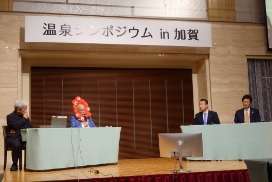
Why? Because Kaga isn’t pretending to be a generic resort town. It’s presenting itself as a clear onsen place, with identity, history, and a tourism pitch that actually makes sense.
I still remember how often Japan’s tourism conversation gets flattened into one lazy phrase: "people go for the food, the temples, and maybe some shopping." That’s not wrong, but it’s far too neat. The second Hot Spring Symposium in Kaga, held under the wider Japan Tourism Showcase framework, is a better story, and a more honest one. It says that Japan’s hot spring culture, onsen, isn’t just a charming tradition, it’s also a serious piece of regional economic strategy.
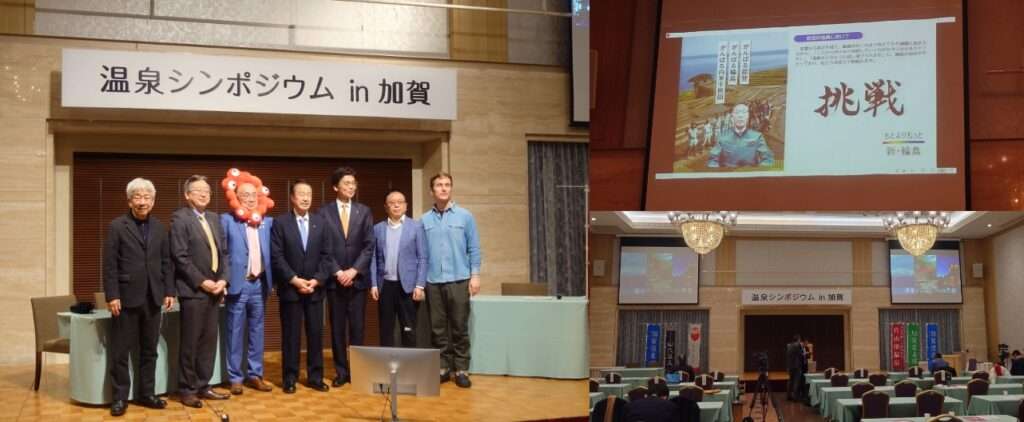
The reason is simple: if a town wants visitors to stay longer, spend more, and come back in winter as well as spring, it needs a reason that feels rooted in place. Kaga has that. It isn’t trying to be a mini-Kyoto or a budget Tokyo. It’s leaning into what it already is, a clear onsen area with a defined identity, and that makes the whole pitch stronger. Sounds weird, but it’s true.
Before I forget: this matters for Japanese learners too. If you can read headlines like onsen, ryokan, and 観光 (kanko, tourism) without blinking, you’re already seeing how tourism, language, and local branding overlap in Japan. That overlap isn’t a sideshow, it’s the main event. And if you keep an eye on it, you start understanding why certain towns revive while others stay sluggish.
The second Hot Spring Symposium in Kaga
The second Hot Spring Symposium in Kaga is important precisely because it’s the second one. In Japan, repeat events mean something. They suggest that the first meeting wasn’t just ceremonial, and that local officials, businesses, and tourism partners think the idea has enough traction to build on.
From the original report by Japan Showcase, the symposium sat inside a bigger programme designed to present regional strengths to a wider audience. That means this wasn’t some sleepy local roundtable with tea, handshakes, and polite nods. It was a curated tourism moment, meant to show how onsen culture can be packaged without losing its soul. That’s a delicate balance, and Japan usually understands it better than outsiders give it credit for.
What I especially like is that the onsen sector is being talked about as an industry, not just a mood. People often treat hot springs as a romantic side dish to Japanese travel. But for many regions, they’re the main economic engine. A single ryokan stay can support transport, food suppliers, bathhouse staff, local crafts, and seasonal events. Convinced yet?
Why Kaga is a useful test case
Kaga is in Ishikawa Prefecture, on the Sea of Japan side of Honshu, and it already has the ingredients that tourism planners dream about: recognisable hot spring districts, a strong ryokan culture, and an atmosphere that feels distinct from Japan’s big-city travel circuit. That matters because travellers, especially repeat visitors, are increasingly looking for places with a clear story.
For example: if you go to a place like Kaga, you’re not just "doing hot springs." You’re entering a specific regional rhythm. You wake up early, you change into 浴衣 (yukata, light summer kimono), you eat 会席料理 (kaiseki-style, kaiseki multi-course meal) meals, you hear the clack of 下駄 (geta, wooden sandals) on stone paths, and suddenly the trip has a shape. That shape is what urban Japan can’t easily fake. My tip: if you’re learning Japanese, look up ryokan vocabulary before your next trip, because the language will make the experience feel much less intimidating.
But that’s not all. Kaga’s value is also strategic. Japan’s tourism policy has been pushing harder on regional dispersal for years, trying to move visitors beyond the usual Tokyo-Kyoto-Osaka triangle. A place like Kaga is exactly the kind of destination that can absorb that demand, if it’s presented properly and connected to broader travel routes. That’s a tourism lesson with real teeth.
Japan Tourism Showcase as the frame
Here’s the deal: once you place the symposium inside the Japan Tourism Showcase, the whole thing changes from local publicity into national messaging. The Showcase isn’t just about showing pretty postcards. It’s about making a case that regional Japan has marketable depth, and that visitors should see the country as a network of experiences, not a checklist of famous sights.



That framing is clever. Japan has spent years trying to revive local economies that feel, in some places, sluggish or outright stagnant. Tourism isn’t a magic wand, obviously, but it is one of the few sectors where a town can convert culture into cash without pretending to be something else. A hot spring town doesn’t need to invent a theme park identity. It already has a living one.
That reminds me: Japanese tourism works best when it respects the grain of the place. A mountain onsen town should feel different from a coastal resort, and a historic bath district shouldn’t be marketed like a neon entertainment zone. The Showcase seems to understand that, at least in principle, and Kaga is a useful example because its onsen identity is already legible. Visitors can feel what the place is about almost immediately.
Onsen as culture and policy
For Japan fans, onsen often begins as a romantic image, steaming water, cedar tubs, winter snow, maybe a quiet afterglow from an anime background scene. But the actual industry is more structured than that. It involves accommodation, transport links, bathing etiquette, and local branding that must work for both domestic and overseas visitors.
That is where language matters. Words like onsen, 露天風呂 (rotenburo, open-air bath), ryokan, and yukata are not just cute Japanese borrowings, they’re labels for a whole travel system. If a municipality uses them well, it isn’t being decorative, it’s being precise. And precision is what makes a tourism strategy believable rather than cheesy.
Plot twist: some of the most modern-sounding economic policy in Japan is really just about protecting old habits that people still love. Bathing in mineral water is ancient. Turning that into a tourism asset in 2025, with international promotion, event programming, and regional branding, is the modern part. I find that mix deeply Japanese, and honestly rather smart.
Why Kaga's clear onsen identity matters
Imagine a narrow alley in Tokyo. Now imagine replacing the noise, speed, and overstimulation with steam, 畳 (tatami, straw mat flooring), and a night sky over a bath district. That contrast is exactly why clear identity matters. Kaga doesn’t need to explain itself for long, because the destination promise is obvious: come here for the onsen experience.
That clarity is a competitive advantage. Too many destinations try to appeal to everyone, and end up sounding like nowhere in particular. Kaga is doing the opposite. It is saying, in effect, "We are the place for this specific kind of trip." That’s much easier to market, much easier to remember, and much easier to turn into repeat visits.
Not bad, right? And for learners of Japanese culture, this is a useful pattern to watch. So much of Japan’s regional strength comes from being specific, not broad. A town that knows what it is can build a better story, and a better story can keep a town alive. That’s especially important in a country where demographic pressure, travel competition, and regional stagnation are all very real.
My own opinion: Japan should keep leaning into this kind of place-based tourism, because it plays to the country’s real strengths rather than borrowed trends. Kaga's onsen identity, presented through the Japan Tourism Showcase, is exactly the sort of practical, grounded strategy that can help regional Japan revive without becoming a caricature of itself. I like that a lot.
If you’ve been following Japan’s tourism recovery, this symposium is a nice reminder that the best strategy is often the least flashy one: know what you are, then say it clearly. That’s harder than it sounds, which is probably why so many places get it wrong. But Kaga seems to get it, and that makes it worth watching.
more Japan news on jpnerd.com
Frequently Asked Questions
What was the Kaga Hot Spring Symposium about?
It focused on hot spring tourism in Kaga, and it was held as part of the Japan Tourism Showcase.
Why is Kaga important for onsen tourism?
Kaga has a clear hot spring identity, which makes it easier to market as a distinct destination.
Why does this matter for Japan tourism strategy?
It shows how regional places can use local culture to attract visitors and support local economies.


