
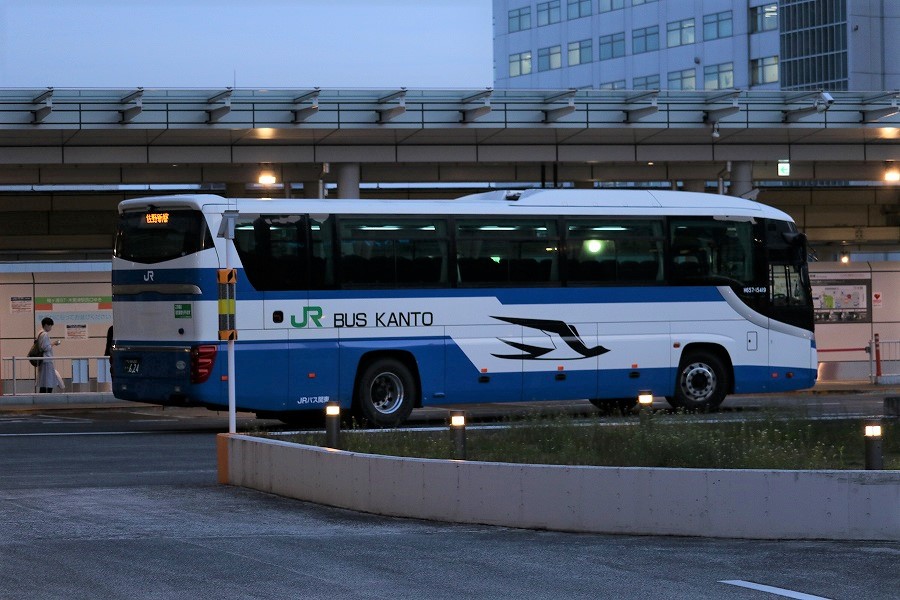
The demonstration service connects rail travel and onsen tourism in a way that feels very practical, very Japan, and honestly... a little exciting too. Less wandering around with your bags, more time for the good part: the bath.
JR Bus Kanto and the new Naganoharakusatsuguchi station link
JR Bus Kanto has started a demonstration service aimed at visitors heading for onsen hotels around Naganoharakusatsuguchi Station, the gateway area for Kusatsu Onsen in Gunma Prefecture. That alone makes this worth watching, because Kusatsu is one of those places people really want to visit, but the final stretch can feel a bit awkward if you’re coming by train and then trying to figure out the last bit on foot or with a local bus.
The idea here is beautifully simple. You arrive by rail, transfer more easily to an onsen bus terminal setup, and continue straight to your hotel area with less friction. For travellers carrying luggage, for families, or for anyone arriving after a long ride from Tokyo, that last mile matters a lot more than people sometimes admit.
And this is where JR Bus Kanto matters. They’re not just running a bus, they’re testing whether transport and resort access can be stitched together more neatly. If the trial works well, it could become one of those quietly useful Japan travel improvements that doesn’t make a huge splash, but absolutely changes the feel of a trip. Not bad, right?
Quick detour: Naganoharakusatsuguchi Station itself sits on the JR Agatsuma Line, and the station-to-onsen connection has always been part of the Kusatsu travel rhythm. But when you’re actually there, in real life, with shoes on and a backpack cutting into your shoulder, even a short transfer can feel longer than it sounds on a map. That’s why this pilot is interesting. It’s less about glamour and more about making movement easier, which is often the difference between “that sounds nice” and “we should actually go.”
The reason is simple: Japan’s best trips often depend on the small links between places. A station, a bus, a hotel, a bath, dinner, then maybe a late-night wander to a vending machine and a quiet street corner. When those pieces connect smoothly, the whole experience feels more relaxed. And if you’ve ever rolled luggage over a station overpass in winter, you know exactly what I mean...
Why the onsen bus terminal idea matters for Kusatsu travel
Onsen destinations often look compact on a brochure, but the lived experience can be more complicated. Ryokan and onsen hotels are rarely right beside the main rail line, and places like Kusatsu have topography, slopes, and busy arrival points to deal with. A dedicated onsen bus terminal, or even a stronger bus-to-hotel transfer system, can quietly solve a lot of that.
Speaking of which... that’s also why this demonstration service feels so relevant for Japan fans who like off the beaten path travel. Kusatsu isn’t some secret hidden gem, of course, but it does reward travellers who are willing to plan a little and learn how the local transport actually works. Once you understand the flow, the trip opens up in a nicer way, almost like the destination was waiting for you to catch up.
What it changes on the ground
For one thing, it simplifies the arrival sequence. Instead of decoding the transfer after a long train ride, you can move more directly towards the onsen hotel zone. That means less confusion for first-time visitors, fewer awkward luggage moments, and a better shot at arriving in time for an afternoon soak in the 露天風呂 (rotenburo, open-air bath).
And there’s another layer here too. Pilot services like this are often a way for transport operators to test demand before making bigger decisions. In Japan, these trials matter. They show whether there are enough people who want the connection, how timetables should be arranged, and whether the route really improves the travel experience. My tip: when you see a demonstration service like this, don’t just read it as a bus story. It’s also a glimpse into how local tourism might evolve.
A great example: a route like this can be especially helpful for travellers coming with children, older relatives, or bulky winter bags. Kusatsu gets cold, and in winter the simple act of getting from station to hotel can feel like a tiny expedition. A smoother transfer makes the whole trip feel calmer, and that calm is part of what people are paying for when they book an onsen stay. But that's not all.



What Japan language learners can notice in this travel story
Fun fact: transport news like this is a nice way to pick up everyday travel vocabulary, especially if you like reading Japanese media alongside English coverage. A few useful words here are 試験運転 (shiken unten, test run) for demonstration or trial operation, 企業 (kigyo, company) for a company, 駅 (eki, station) for station, and onsen for hot spring. You’ll see these terms again and again if you start following Japan news with a travel angle.
If you like learning Japanese through real-world travel stories, this is the kind of article that gives vocabulary a place to live. Busu tachiiri might not be the phrase you’re using every day, but noticing how transport, hotels, and station names get connected in news reports helps you understand how Japan actually works. And that’s one of the best parts of learning here, isn’t it? The language is never floating in the air, it’s attached to places, routines, and little decisions people make every day.
Know that feeling when you finally understand how to get somewhere without second-guessing every step? That’s the same feeling this kind of service tries to create for travellers. I’ve had trips in Japan where the destination was lovely, but the transfer was a bit clunky, and I remember those moments more than I should. So when transport gets simpler, I pay attention.
On a related note: Kusatsu remains one of the strongest onsen names in Japan for a reason. The water is famous, the town atmosphere is lively, and the arrival experience shapes your mood before you even check in. If a bus can take a little strain out of that process, then it’s doing real work, even if it doesn’t look dramatic from the outside. My verdict:
Will this direct bus idea spread to more onsen towns?
That’s the question I keep coming back to. If JR Bus Kanto sees enough use, similar links could make sense in other onsen areas where station access and hotel access are separated by a few inconvenient steps. Japan has plenty of places like that, where the geography is lovely but the logistics are just tricky enough to matter.
Trust me on this one: if a transport operator can make the last mile feel effortless, people notice. Maybe not in a loud, social-media way, but in the quieter way that brings them back next year, or tells a friend, or chooses the same destination again because the memory of arrival was easy. That kind of service design is underrated.
And for Japan fans, these small changes are part of the fun. We often focus on big bullet trains, famous districts, or major sightseeing spots, but the real texture of travel in Japan often lives in these in-between moments, the station transfer, the local bus, the hotel pickup, the tiny convenience that saves your energy for the bath. That’s the good stuff. But let's stick with JR Bus Kanto for now.
Insider tip: if you’re planning a Kusatsu trip, keep an eye on transport updates close to your travel date. Trial services can change, schedules can shift, and the best onsen trip is the one that matches the current reality, not last year’s blog post. For me, that’s part of the charm. Japan rewards the traveller who checks, waits, adjusts, and then goes anyway. And when it all lines up, you feel it right away... you’re finally on the way to the bath, and the day gets better from there.
Frequently Asked Questions
What is JR Bus Kanto testing?
It is testing a direct bus connection to onsen hotels near Naganoharakusatsuguchi Station as a demonstration service.
Why is this service important?
It makes the last mile easier, especially for travellers carrying luggage or arriving for an onsen stay.
Is this only useful for tourists?
No, it can also help families, older travellers, and anyone who wants a smoother station-to-hotel transfer.


