That’s exactly why this interview angle matters. When the head of Sonic Team at SEGA reflects on Sonic’s past, you get a real look at how an icon is kept alive, refreshed, and still recognisable after more than three decades.
![Dragon Ball Z: Kakarot [Master Edition]](https://s.pacn.ws/1/p/1eh/dragon-ball-z-kakarot-master-edition-908785.1.jpg?v=t8ja8t&width=400)
Takashi Iizuka and Sonic’s long road at SEGA
Okay, here’s the thing: Sonic only looks effortless from the outside. The blue hedgehog has been moving fast since 1991, but keeping a character alive for that long takes planning, restraint, and a lot of very careful decisions. Takashi Iizuka, now the head of Sonic Team at SEGA, has been part of that process for years, and his perspective is especially useful because he’s seen Sonic evolve from a console mascot into a full pop culture figure.
What many overlook is just how long Iizuka has actually been around the series. He joined Sonic Team in the early 1990s and contributed to titles like Sonic the Hedgehog 3 and Sonic & Knuckles, before becoming one of the key creative voices behind later entries such as Sonic Adventure in 1998. That matters. You can’t really talk about Sonic’s identity without talking about the people who kept defining it across eras.
Basically, Sonic’s success was never just about speed. It was about personality, attitude, and a very specific kind of cool that made sense in 1991 and still makes sense now. That kind of continuity is hard. Really hard. See what I mean?
Sonic as a character for more than one generation
Ever wondered why Sonic feels so familiar to parents and kids at the same time? That’s the core of the generational angle in Iizuka’s reflection. Sonic first appeared in the original Sonic the Hedgehog on the Sega Mega Drive in 1991, and then stayed visible through new games, cartoons, comics, toys, and the 2020s movie boom. He didn’t just survive. He spread.
For example, someone who grew up with the Mega Drive in the 1990s might remember blasting through Green Hill Zone, while a younger fan may know Sonic first through the live-action films, the Nintendo Switch, or even short clips online. Different entry points, same character. That’s rare, and it’s one reason Sonic has become a bridge between generations of Japan fans and global game fans.
What I especially like here is that Sonic never needed to become a totally different character to stay relevant. SEGA has updated the gameplay, the graphics, the tone, and the supporting cast, but Sonic’s core identity is still easy to recognise. Fast, rebellious, confident. Sounds simple, but it’s true.
Why that matters for Japanese learners
If you’re learning Japanese, Sonic is also a really handy cultural reference point. You’ll hear words like センス (sensu, Stil; Geschmack) for style, 速い (hayai, schnell) for fast, and 格好いい (kakkoii, cool; stylisch) for cool in plenty of gaming conversations. Those words show up everywhere in Japanese pop culture, not just in game interviews. So when you read about Sonic in Japanese media, you’re also picking up the language of character branding.
Insider tip: if you ever see fans describing a character as 世界中 (sekai-juu, weltweit; auf der ganzen Welt) popular, they’re usually talking about something that has crossed borders and generations. Sonic fits that perfectly. Wild, isn’t it? But let’s stick with the history for now.
What Takashi Iizuka’s perspective tells us about Sonic Team
Unlike what we’re used to with many long-running franchises, Sonic has often had to defend its identity while also chasing change. That tension shows up in almost every era of the series. SEGA had to keep Sonic modern without flattening what made him different in the first place. Iizuka’s position at Sonic Team means he sits right in the middle of that balancing act.
On the flip side, that challenge is probably what keeps Sonic interesting. If a character is too rigid, he fossilises. If he changes too much, he stops feeling like himself. Sonic Team has spent years trying to avoid both traps, and that’s why Iizuka’s comments about looking back on the series matter so much. He isn’t just reminiscing. He’s explaining how a brand survives.
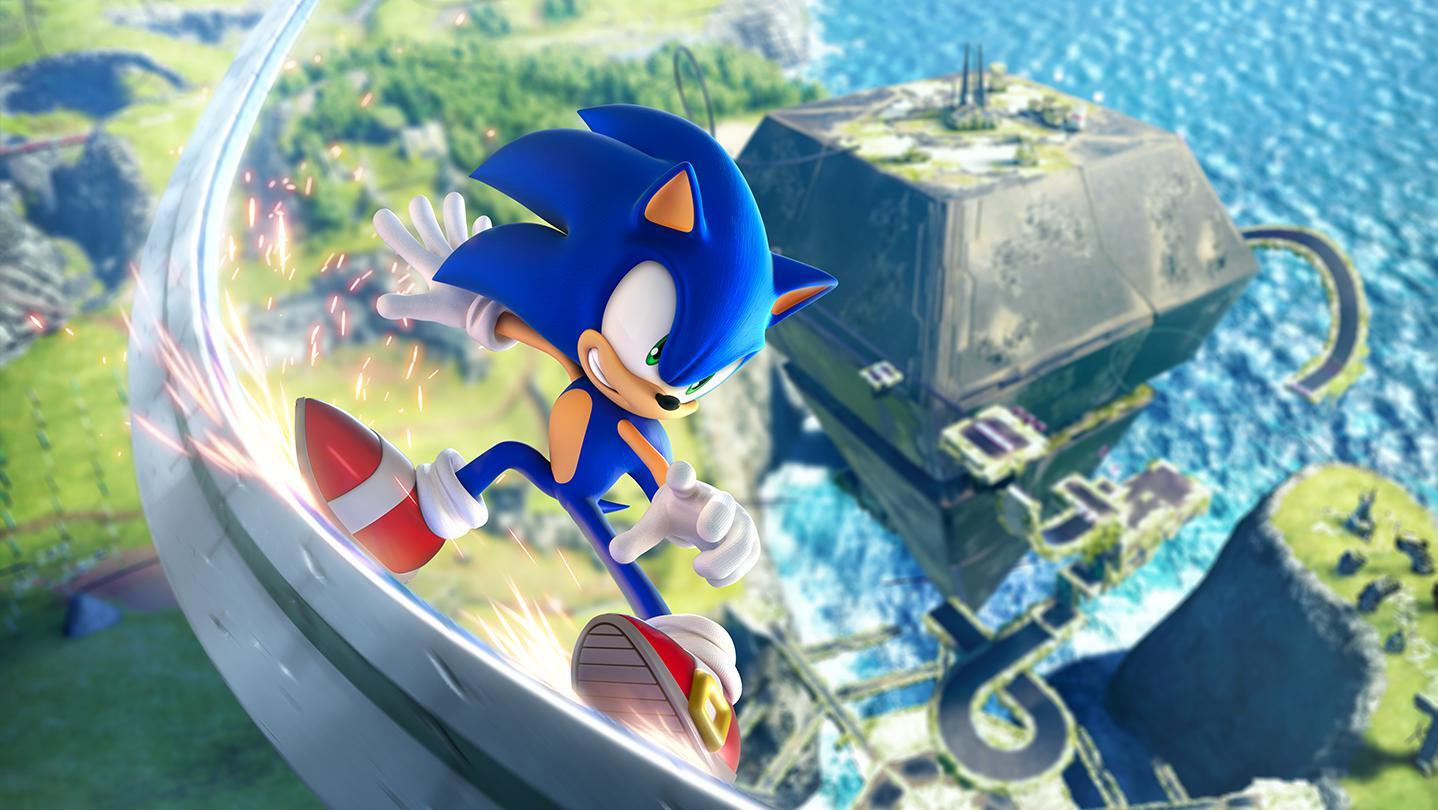
While we’re at it, this is one reason Sonic’s design still works so well. The shoes, the spikes, the red-and-white colour palette, the expressive face, you can spot him from a distance. That visual consistency is a game changer for a character that has to appear across games, animation, merchandise, and movie posters. It gives SEGA room to experiment without losing recognition.
From video game star to pop culture icon
Guess what? Sonic’s move from game hero to pop culture icon didn’t happen all at once. It was built through decades of visibility. The franchise had highs and lows, sure, but the character himself kept returning. The 2000s brought more ambitious 3D experiments, the 2010s pushed nostalgia and reinvention, and the 2020s turned Sonic into a box-office-friendly name again through the Sonic the Hedgehog films.
That last part matters more than people think. Film audiences who never owned a console still learned Sonic’s silhouette, voice, and energy. Then those people started noticing the older games, the remasters, the merch, and the wider SEGA history around him. It becomes a loop. New fans bring old material back into the conversation, and old fans pass the character along. Personally, I think that’s the best kind of legacy a game character can have.
And here’s the thing: Iizuka’s reflections help explain why this works. He’s not treating Sonic as a museum piece. He’s treating him as a living character that has to keep moving, much like the way Japanese pop culture often carries familiar figures forward through small updates rather than total reinvention. That subtle evolution is a very Japanese brand instinct, honestly, and it’s one reason Sonic still feels balanced between nostalgia and motion.
My tip: if you’re studying Japanese, follow these franchise histories closely. You’ll learn how people talk about identity, continuity, and reinvention, all in the same sentence. That’s useful language, and it’s also a window into how Japanese entertainment companies think. See what I mean?
For readers who want to keep exploring Japanese game culture, you can find more Japan news on jpnerd.com. And if you want the original interview context, the source is worth reading in full.
Frequently Asked Questions
Who is Takashi Iizuka?
He is a long-time Sonic developer and the head of Sonic Team at SEGA.
Why is Sonic considered a generational character?
Because he has stayed relevant to players who first met him in the 1990s and to newer fans who discovered him through films, modern games, and online culture.
When did Sonic first appear?
Sonic first appeared in 1991 on the Sega Mega Drive.