
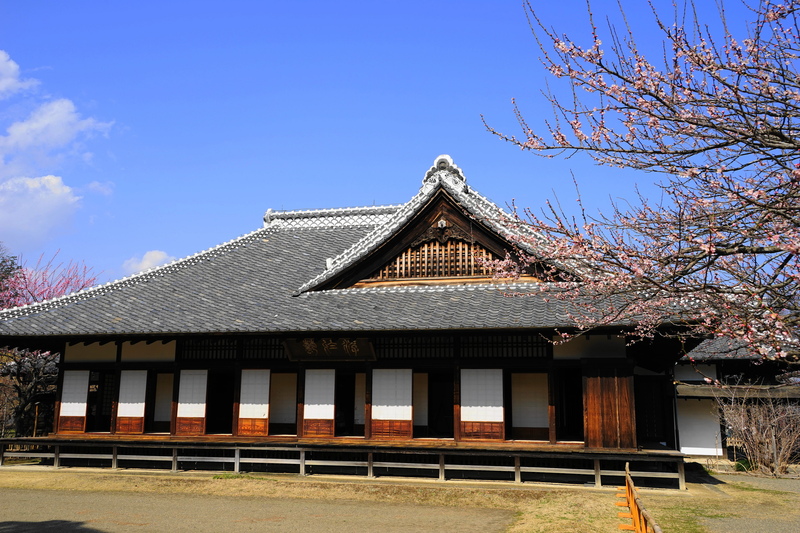
We’re not dealing with a grand ruin in the usual tourist sense. We’re dealing with an institution, and institutions tend to matter in ways postcards rarely explain.
Kodokan in Mito: the school that made a domain think seriously
What most people don't know is that Kodokan wasn’t some side project or decorative annex to the Tokugawa world. It was founded in 1841 in Mito by the Mito branch of the Tokugawa family as a domain school for 侍 (samurai, warrior class) education. In practical terms, that meant Confucian learning, military studies, medicine, astronomy, ethics, and the kind of disciplined reading that Edo authorities loved to talk about when they wanted order and virtue to look inseparable.
Here’s the catch: a 藩 (han, domain) school was never just a school. It was a political statement. When a domain built a place like Kodokan, it was saying that its samurai should not only fight, but read, judge, memorise, argue, and govern. That sounds very dry until you remember that the late Edo period was full of people trying to answer one awkward question: how do we keep the country intact when the old certainties are starting to wobble?
Tokyo has plenty of famous learning sites, and Kyoto gets its fair share of historical polish, but Kodokan remains comparatively neglected, overlooked, dismissed. Which is strange, because the site preserves exactly the kind of learning culture that shaped modern Japan’s political class. We’re talking about a place where education wasn’t separate from power. It was power.
Edo-period learning culture at Kodokan
Basically, if you want to understand Edo learning culture, don’t start with a library card. Start with obligation. Samurai study in the Edo period had a strong moral core, and Kodokan reflected that logic. Students didn’t come to become broad-minded hobbyists. They came because their status required competence, restraint, and a correct relationship to authority. Which sounds stern, because it was.
That said, the school wasn’t a museum piece even then. It connected Chinese classics, Japanese statecraft, practical medicine, and local intellectual life. Mito domain thought had a reputation for seriousness, and some of that comes from the 水戸学 (Mito-gaku, Mito learning) tradition, which prized loyalty to the imperial house and a strong sense of historical mission. If that sounds ideological, good. It was. Late Edo intellectual life often was.

What students actually studied
We can be precise about the curriculum without pretending the archive has left us a perfect timetable. What our actual sources have to say suggests a mix of Confucian texts, martial training, and technical learning. Students were expected to absorb classics like the Shiji and the Analects, but also to handle the practical needs of administration and defence. If you’re a Japanese learner, this is a neat reminder that words like 学問 (gakumon, learning; scholarship) (learning), shigaku (classical studies), and 知性 (chisei, intellect; wisdom) (intellect, wisdom) carried real institutional weight, not just dictionary definition.
Trust me on this one: the old image of samurai as men who merely swung swords is hopelessly thin. A domain like Mito wanted literate retainers who could support policy, not just survive a skirmish. That broader educational ideal is why Kodokan matters. It shows us a samurai class being trained to think, and not always comfortably.
And yes, the atmosphere still matters today. Walk the grounds and you can feel the tension between formality and reform, between inherited order and intellectual ambition. Wild, isn’t it?
Tokugawa Yoshinobu and the Mito connection
That brings us to Tokugawa Yoshinobu, perhaps the most famous name tied to Mito’s political legacy. Born in 1837, he was the seventh 将軍 (shogun, military ruler) of the Tokugawa shogunate and one of the last great figures of the 幕末 (bakumatsu, late Tokugawa period) period. His family background mattered, and not only in the usual aristocratic sense. He came out of a Mito lineage steeped in the moral and political expectations that schools like Kodokan helped cultivate.

To be fair, Yoshinobu did not study at Kodokan as a child in any simple, headline-friendly way. But the school belonged to the intellectual ecosystem that shaped Mito’s elite. That ecosystem produced men who thought in terms of duty, legitimacy, and national crisis. Yoshinobu inherited that world, then found himself trapped in the collapse of it. History has a wicked sense of timing.
A great example: Mito scholars and retainers played an outsized role in the ideological currents that fed the sonnō jōi movement, the call to revere the emperor and expel the barbarians. Yoshinobu later tried, with varying degrees of success, to steer Japan through the political wreckage that followed. He wasn’t doomed to failure from birth, but the structures around him were already cracking. Convinced yet?
Kodokan near Kairakuen and Mito Station
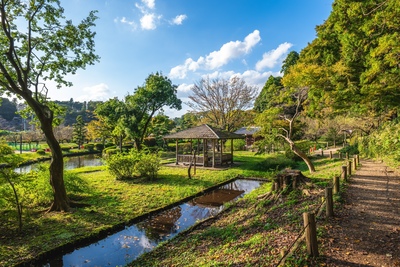
Plot twist: one of the easiest ways to visit this historical site is not through an obscure pilgrimage route, but by ordinary train travel. Kodokan sits near Kairakuen, one of Japan’s famous gardens, and not far from Mito Station. That geography matters. It means you can see the school, then walk to one of the city’s best-known scenic landmarks, and the contrast is instructive.
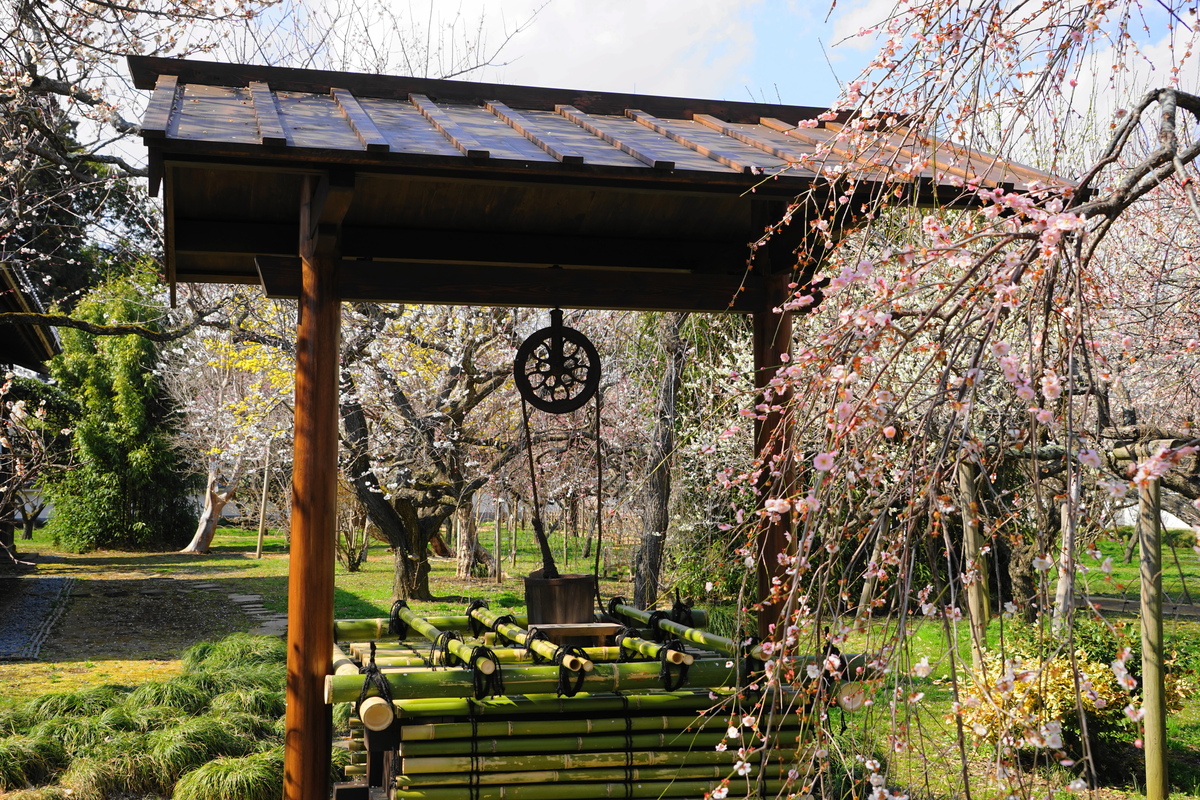
Kairakuen was created in 1841 by Tokugawa Nariaki, Yoshinobu’s father, the same Mito ruler associated with a broader programme of domain reform. So you have learning and landscape, discipline and aesthetics, scholarship and plum blossoms, all within easy reach of each other. That pairing is not accidental. Edo elites liked to stage moral cultivation in carefully designed spaces. They were not subtle about it, which is part of the charm.
Imagine a narrow alley in Tokyo. Now replace the neon with orderly timber buildings, a domain school, and a garden built to embody civic virtue. The mood changes fast. If you’re arriving from Mito Station, the site is accessible enough for a half-day historical walk, and my tip is to visit Kodokan first, then Kairakuen. The sequence helps. You start with thought, then move to cultivation, and that feels more honest than the other way round. Insider tip: go in the morning, before the crowds thicken. The site is quieter, and quiet suits old schools.
Oh, almost forgot: if you’re learning Japanese, Mito gives you an excellent vocabulary lesson in place names and institution names. kodokan, kairakuen, han, shogun, these words appear everywhere in historical writing, but they stop being abstract once you stand in front of the building they once described. Basically, that’s the best kind of language learning. It sticks because the place is real.
What I especially like is that Kodokan doesn’t try to sell itself as a theme park version of samurai life. It keeps the intellectual seriousness of its original purpose. That’s rarer than it should be. If you care about Japanese history, or about how education and authority braided themselves together in the Edo period, this is one of Ibaraki’s most rewarding stops. Perhaps a neglected one, but not for any good reason.
And if you’re building a wider Japan itinerary, you don’t have to choose between famous and meaningful. Mito lets you have both, which is more than can be said for many places that shout louder. Sounds good, right?
In pictures
Frequently Asked Questions
Where is Kodokan in Mito located?
It is in Mito, Ibaraki, near Kairakuen and within easy reach of Mito Station.
Why is Kodokan historically important?
It was a domain school that reflects Edo-period learning culture and the political priorities of the Mito Tokugawa line.
Can I combine Kodokan with other sights in Mito?
Yes. Most visitors pair it with Kairakuen, which is close by and makes for a strong half-day historical route.


