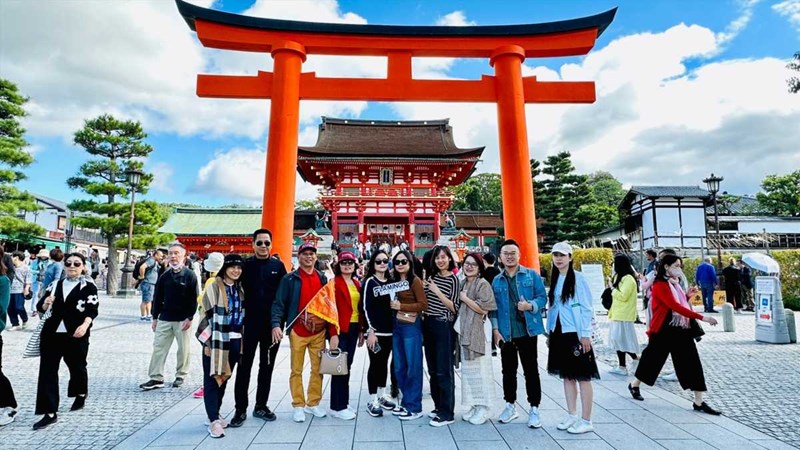
Japan records a record number of international visitors in March
Japan recorded a record number of international visitors in March, and that really stands out because March isn’t usually the busiest travel window. According to the original report from Lao Dong, the country welcomed 3.08 million foreign visitors in March, the highest March figure ever recorded. That’s a huge number for what many travellers still treat as a shoulder season. Sounds odd, but it’s true.
Why does that matter? Because Japan’s tourism calendar is usually dominated by cherry blossom season, Golden Week, summer breaks, and autumn leaves. March sits right in that awkward-but-useful gap, when schools are still in session, business travel continues, and leisure travellers can sometimes catch better prices. For Japan fans, that makes March a smart month to visit if you don’t want every station platform and temple path packed to the edge. There’s more to it, though.
Why March is a quieter month in Japan travel
Unlike what we’re used to in peak holiday months, March often feels like a transition period. The weather changes fast, plum blossoms appear before 桜 (sakura, cherry blossoms), and many domestic travellers are focused on graduation ceremonies, move-in season, or preparing for the new school and work year that begins in April. That gives March a very different rhythm from April, when cherry blossom tourism and spring outings explode across the country.
Take Kyoto, for instance. In a normal March, you can still find calm mornings around Higashiyama, less crowded train rides, and easier dinner reservations at small 居酒屋 (izakaya, Japanese pub). Of course, popular blossom spots still fill up, but the overall pace is usually more manageable than in the height of sakura season. My tip is simple: if you want atmosphere without constant crowd pressure, March can be brilliant. From my experience, it’s one of the better times to explore.
What the record says about travel demand
Three million-plus visitors in a single March suggests that demand for Japan travel is staying strong, even outside the best-known peak periods. That’s a useful stat for anyone watching tourism trends. It also shows how international interest in Japan has widened beyond the classic “come for cherry blossoms” script, because visitors are arriving for food, anime, shopping, winter-spring skiing edges, and city breaks all year round.
And it gets better: Japan’s tourism recovery has been backed by easier air connections, a weaker yen for much of the recent period, and the country’s well-built transport network. When the 新幹線 (shinkansen, bullet train) runs on time, local trains connect smoothly, and even smaller cities have solid visitor infrastructure, people feel more confident booking trips that aren’t just Tokyo, Osaka, and Kyoto. That’s why the March record matters beyond one headline number. Pretty brilliant, really.
March travel in Japan, by the numbers and the season
Hand on heart: Japan tourism becomes much easier to understand when you look at the calendar. March sits between winter and peak spring, so travellers get a mixed bag: chilly mornings, milder afternoons, and early flowers in some areas. In Hokkaido, winter sports can still be going strong. In Kyushu, you may already see signs of spring. In Tokyo, layers are still your best friend.



For language learners, this is a great moment to learn a few words that pop up in travel talk. Shun means season, 観光 (kankou, sightseeing; tourism) means sightseeing, shunren is not a travel word, but 春 (haru, spring) means spring, and 旅行 (ryokou, travel; trip) means travel. When Japanese news reports discuss tourism, you’ll also hear 外国人観光客 (gaikokujin kankoukyaku, foreign visitors) for foreign visitors. Knowing these words makes headlines much easier to follow, and it gives you a better feel for how Japanese media frames travel stories. Classic Japan, isn’t it?
What this means for your next Japan trip
If you’re planning a trip, March can be a smart choice, especially if you want a balance of decent weather, lively streets, and fewer crowds than peak blossom week. That said, the exact timing matters a lot. Early March can still feel wintry, while late March can be fully into sakura season depending on the region. Tokyo, Osaka, and Fukuoka all bloom at different times, so checking local forecasts is a must.
Quick detour: if you’re learning Japanese, try reading tourism headlines in romaji and then matching them to the season. It’s a great way to build vocabulary around weather, travel, and city names. You’ll start spotting patterns fast, and that makes news reading much less intimidating. Trust me on this one:
Why Japan’s shoulder season deserves more attention
One thing I especially like about shoulder-season travel in Japan is the breathing room. Hotels are often easier to book, trains are less stressful, and small restaurants can feel more welcoming. You also get a better chance to notice the details, the careful station announcements, the local 弁当 (bento, boxed meal; lunchbox) at depachika counters, the way neighbourhood streets shift from winter to spring. That’s the stuff that sticks with you.
It also helps explain why a record March is worth watching. If a month that isn’t traditionally seen as the biggest travel season can still pull in 3.08 million visitors, Japan’s appeal is clearly strong across the calendar. For tourists, that means more flexibility. For learners, it means there’s always a fresh stream of real-world news to read. By the way, if you follow Japanese travel news regularly, you’ll start spotting how season, weather, and transport all connect in the language. Sounds good, right?
Frequently Asked Questions
Why was March such an important month for Japan tourism?
Because it showed record visitor numbers during a month that is usually less crowded than peak spring travel.
Is March a good time to visit Japan?
Yes, if you want a balance of mild weather, fewer crowds, and a chance to see the start of spring.
What should travellers watch for in March?
Weather changes, local blossom timing, and regional differences across Japan.