That’s why this series keeps winning people over, even when they come in expecting a novelty project. It isn’t news, and it isn’t just fanservice for racing nerds. It’s craft, plain and simple, with a ridiculous wrapper.
![Dragon Ball Z: Kakarot [Master Edition]](https://s.pacn.ws/1/p/1eh/dragon-ball-z-kakarot-master-edition-908785.1.jpg?v=t8ja8t&width=400)
![Startup Company [Console Edition] (Limited Edition)](https://s.pacn.ws/1/p/157/startup-company-console-edition-limited-edition-741799.16.jpg?v=ry4mm8&width=400)
![Startup Company [Console Edition]](https://s.pacn.ws/1/p/157/startup-company-console-edition-741779.10.jpg?v=ry4ngq&width=400)
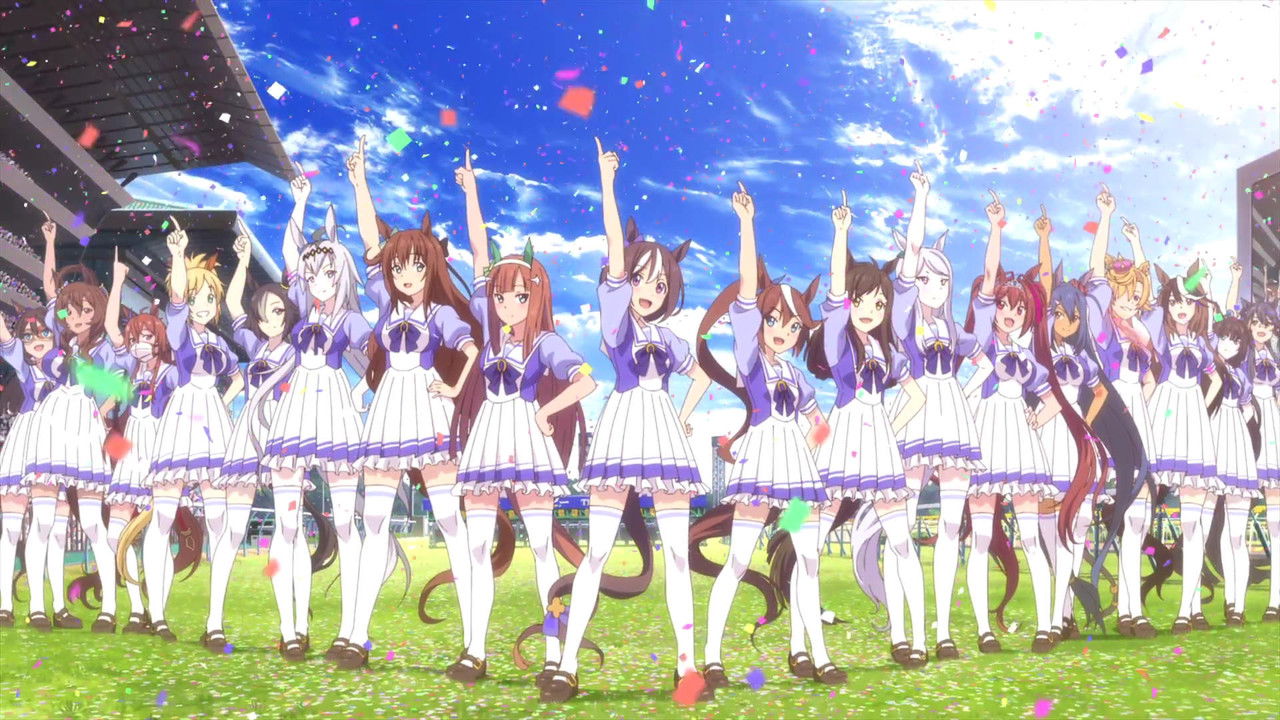
Uma Musume as anime: absurd on paper, serious in practice
Trust me on this one: if you described Uma Musume to someone with no context, they’d assume you were making it up as a prank. Horse girls. Idol training. Real racehorse names folded into a sports-drama frame. On paper, it sounds like a concept that should collapse under the weight of its own silliness.

And yet the franchise keeps working, first with the video that kicked off this discussion, then in the actual series itself, which began airing in 2018 from P.A. Works and later continued with season 2 from Studio Kai in 2021. The reason is simple: the show never asks you to respect the premise. It asks you to respect the execution. That’s a much smarter bargain.
The first season runs for 13 episodes, and it spends those episodes turning an inherently ridiculous setup into a real athletic drama. You don’t watch because you believe in horse girls. You watch because the framing, editing, and emotional escalation make each race feel like a proper event. That distinction matters. A lot. Personally, I think that’s what separates a gag premise from an actual series.
The real strength is direction, not premise
Here's the kicker: Uma Musume doesn’t win by having the best idea. It wins by knowing how to present a plain idea in a way that feels bigger than it should. The camera language is disciplined. The pacing is clean. The emotional beats arrive on time, not because they’re shouted at you, but because the production sets them up with real precision.
Why the races land so hard
Quick detour: racing scenes are difficult to stage well because they need speed, geography, and character expression all at once. If you lose any one of those, the whole scene turns into visual noise. Uma Musume avoids that by making the track layouts readable, then layering in small character tells, breathing, posture, eye-lines, and the tiny delays before a burst forward.

The show also understands that spectacle only works when it’s earned. A big sprint finish means more after we’ve seen the runner struggle in training, fail socially, or choke on expectations. That’s not revolutionary, but it’s the difference between “this is cool” and “this actually hits.” My tip: if you want to understand why this anime works, pay attention to how often it holds back before it pays off.
Compared with back home, where some sports anime lean so hard on speeches that they start sounding like recruitment videos, Uma Musume trusts movement. It lets bodies do the talking. That’s a smarter choice, and it’s also more cinematic. Convinced yet?
Production craft and the hidden discipline behind the comedy
By the way: the absurdity of the setting gives the staff room to be playful, but it doesn’t give them permission to be sloppy. That’s a crucial difference. The design team can exaggerate expressions, the soundtrack can swing from cute to triumphant, and the editing can lean into the melodrama, but all of it still has to serve the scene.
A great example: season 2, which many fans consider the strongest part of the anime, is far less interested in selling the novelty of the premise and far more interested in refining tension. Kitasan Black and Satono Diamond are introduced into a production framework that already knows its own vocabulary. The result is a cleaner, sharper show. Not louder, cleaner.

What the show gets right in production terms
The reason is simple: the direction treats the setting as normal, and that normality lets the emotional weirdness stand out. If everything is winking at the camera, nothing feels real. If the world behaves as though horse girls are just part of everyday life, then the viewer starts accepting the rules too. That’s basic storytelling engineering, and it’s done well here.
There’s also a very Japanese kind of discipline in how the series frames aspiration. The training arc, the 先輩 (senpai, senior; upperclassman)-後輩 (kohai, junior; underclassman) structure, the school setting, the emphasis on effort over instant triumph, all of that maps neatly onto familiar cultural storytelling patterns. If you’re a Japanese learner, this is actually useful too, because you’ll hear recurring words like 頑張る (ganbaru, to do one's best; keep trying), senpai, 試合 (shiai, match; game), and トレーニング (trainingu)-style loanwords in a context where the meaning is immediately legible. Sounds weird, but it’s true.
The show’s strongest trick is that it makes you care before you fully process why. That’s not an accident. That’s direction doing its job. But that isn’t all.
Why the absurd premise works better than it should
No joke: the premise is silly enough that it should repel viewers who are allergic to high-concept anime gimmicks. Instead, it functions as a filter and a hook at the same time. People who arrive for the absurdity stay for the craft, and people who stay for the craft eventually stop caring that the premise is absurd. That’s a neat little machine.

The franchise also benefits from a very specific form of branding coherence. Cygames launched the project as a multimedia property, and the anime never feels like it’s apologising for being attached to that larger machine. It knows what it is. Compare that with productions that seem embarrassed by their own premise, and the difference is embarrassing for them, not for Uma Musume.
What I especially like is that the show doesn’t waste time pretending it’s “actually” something else. It’s not secretly a hard sci-fi analysis of horse racing. It isn’t trying to trick you into profundity. It’s a well-directed sports-idol hybrid with a ludicrous pitch and serious delivery. That honesty is part of the charm. Personally...
If you’re learning Japanese, this is also the sort of series where repeated vocabulary sticks because the emotional context is strong. You’ll remember terms like 溜め (tame, build-up; pause), 陸上 (rikujo, track and field; athletics), and 演奏 (ensou, musical performance)-adjacent performance language because the scene gives them shape. Memorisation loves context. The brain’s annoyingly practical like that.
So yes, Uma Musume is ridiculous. That’s the point. The surprise isn’t that the premise is silly, it’s that the production keeps turning silliness into structure, and structure into investment. That’s why the show works far better than it has any right to. And now you know exactly why that is.
In pictures

Frequently Asked Questions
Is Uma Musume only for racing fans?
No. The show is built so that viewers can enjoy the character drama and direction even if they know nothing about horse racing.
Why do people praise the anime so much?
Because the direction, pacing, and emotional payoffs are stronger than the premise suggests. It’s a craft-first production.
Is Uma Musume useful for Japanese learners?
Yes, especially if you want sports, school, and motivation vocabulary in a memorable context.