
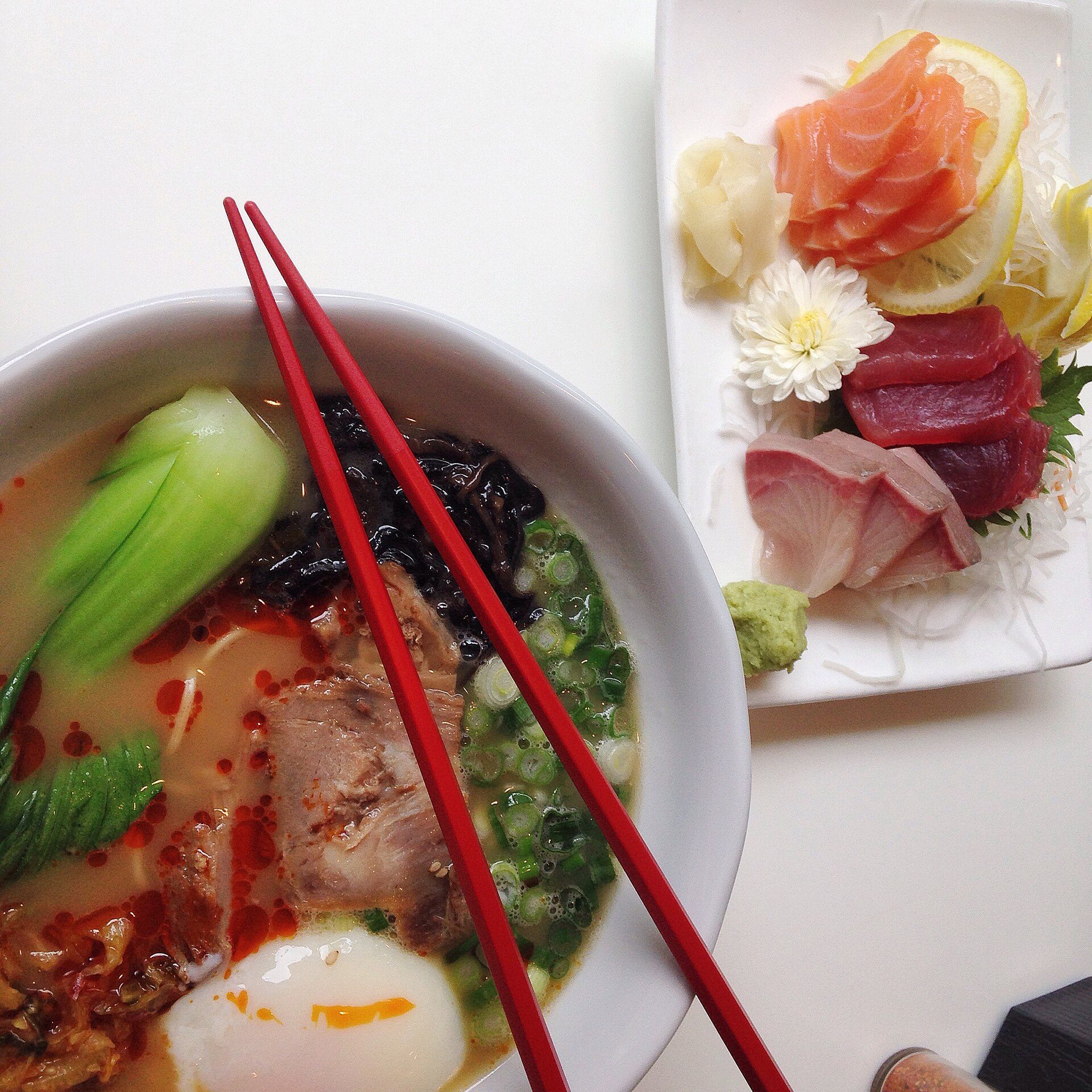
What helped me most was treating food search like part of the trip, not a problem to solve after arrival. Sounds weird, but it’s true.
Vegan in Japan: what actually works on the road
Vegan travel in Japan is easier now than it was even a few years ago, but it still needs a strategy. You won't always find a labelled vegan menu in a tiny ramen shop, and a lot of dishes hide 出汁 (dashi, fish stock / broth), 鰹節 (katsuobushi, dried bonito flakes), egg, or fish sauce. So the real trick is to build a system, not just hope for luck.
Let's be honest: convenience stores can save your day. Rice balls with ume, plain onigiri, edamame, nuts, tofu packs, salads without dressing, and fruit cups are often the fastest backup. My tip: if you spot a chain supermarket like Aeon, Seijo Ishii, or Life, stock up before a long train ride. From my experience...
Useful words that make food search faster
Here's the thing: a few romaji words can change everything. Learn vegan, vegan no tabemono, 出汁なし (dashi nashi, without dashi / fish stock), 肉なし (niku nashi, without meat), 魚なし (sakana nashi, without fish), and 卵なし (tamago nashi, without egg). If you're reading menus, 精進料理 (shojin ryori, Buddhist vegetarian cuisine) is the classic temple-style vegetarian cuisine, and it often fits vegan needs, though you should still ask about soup stock and seasoning.
Fun fact: in Japan, a dish can look completely safe and still use fish-based stock. That means a simple question like dashi haitteimasu ka? can save you from a hungry mistake. Basically, the more direct you are, the better your day goes.
Restaurant search in Japan: apps, maps, and local clues
Restaurant search is where many vegan travellers lose time, but the good news is that Japan has become much friendlier to digital planning. Google Maps is still the easiest starting point, especially in Tokyo, Kyoto, and Osaka, where vegan-friendly places are now concentrated around major stations and tourist districts. You can also use HappyCow, which remains the most practical global directory for plant-based travellers.
That brings us to one very useful detail: check the latest reviews, not just the restaurant page. Japan changes fast. A place that served a vegan curry in spring may switch menus in winter, and a lunch set can disappear without warning. No exaggeration: recent photos matter more than old blog posts.
How to search like a local
Trust me on this one: search both English and Japanese terms. Try vegan cafe, shojin ryori, sushi vegan, and ramen vegan, then compare results. If you can read a little Japanese, look for words like 野菜 (yasai, vegetables) for vegetables and okome for rice, but don't assume that means the whole dish is plant-based.
And it gets better: some chain restaurants now make life much simpler. Saizeriya has had vegan options in certain locations, MOS Burger has introduced plant-based items in select stores, and Coco Ichibanya often has customisable curries, though you still need to confirm ingredients. Highly recommended: use the official store websites before you travel, because regional branches don't always match.
I still remember exactly how much easier my last trip became after I saved restaurant pins in advance. One evening in Kyoto, I had three backup options near the same station, and that turned a stressful search into a relaxed walk through the shopping streets. My verdict: pre-planning beats wandering while hungry.
Hiroko Kato and the VRG perspective on vegan Japan
Here's the thing: one reason this topic keeps getting better is that advocates and writers keep pushing visibility forward. Hiroko Kato has been active in vegan outreach in Japan, and her work has been discussed by the Vegetarian Resource Group, or VRG, in its journal coverage of vegan travel in Japan. That matters, because local voices understand the small frictions tourists hit every day, from broth questions to labelling confusion.
VRG has long been a trusted source for vegetarian and vegan information, and its journal articles often reflect real travel conditions rather than theory. For Japan fans, that kind of detail is gold. You get the cultural side, but also the practical side, like how to speak politely when asking about ingredients, or why a restaurant may be happy to help if you show patience and a smile. Classic Japan, isn't it?
Why local knowledge beats generic advice
Let's be honest: Japan is not one single food landscape. Tokyo, Kyoto, and Nara have very different vegan scenes, and even within one city, station-area chains can be easier than small family-run restaurants. If you read travel reports from people like Kato and groups like VRG, you start noticing patterns, for example that temple areas often have shojin ryori, while big transport hubs are better for convenience-store survival.
What I especially like is how this kind of reporting helps learners too. You are not just memorising food words, you are learning how Japanese hospitality works in practice. A calm request, a clear explanation, and a little flexibility can open doors that menus never mention. From my experience...
Travel tips and tricks for vegan meals in Japan
Oh, almost forgot: carry a small note on your phone that says what you do not eat. You can show it in a restaurant, and it helps when your Japanese is still basic. A simple message like, I don't eat meat, fish, eggs, or dairy, is often more useful than trying to improvise under pressure.
Also, try to eat your biggest meal earlier in the day. Lunch sets are usually easier to find than dinner options, especially outside the major cities. And if you're heading into rural areas, plan around stations with supermarkets or department-store food floors, because those are your safest bets for bread, fruit, rice, and snacks.
Packing and planning tips that save time
Fun fact: a tiny travel kit can make a huge difference. Bring chopsticks if you want, plus a few protein snacks, instant miso alternatives you trust, and a reusable container. If you're staying in a ryokan, ask in advance whether the meal can be adjusted. Some places can help, but they usually need notice well before arrival.
My tip: make a map list before you land, then separate it by neighbourhood. If your hotel is in Shibuya, don't just save Tokyo-wide results, save places within one train stop. That cuts down on decision fatigue and keeps you from crossing the city after a long day. Wait, there's more.
For language learners, this is also a perfect chance to practice useful everyday Japanese. Learn to say arigato gozaimasu after a helpful explanation, and practice sumimasen before asking about ingredients. Small phrases matter, and people notice the effort.
Frequently Asked Questions
Is vegan food easy to find in Japan?
It is easier than before, especially in Tokyo, Kyoto, and Osaka, but planning is still important.
Which app is best for vegan restaurants in Japan?
HappyCow is the most useful global app, and Google Maps is great for checking recent reviews and photos.
Can I survive in Japan with basic Japanese only?
Yes, if you learn a few food words and carry a short explanation of what you do not eat.


