
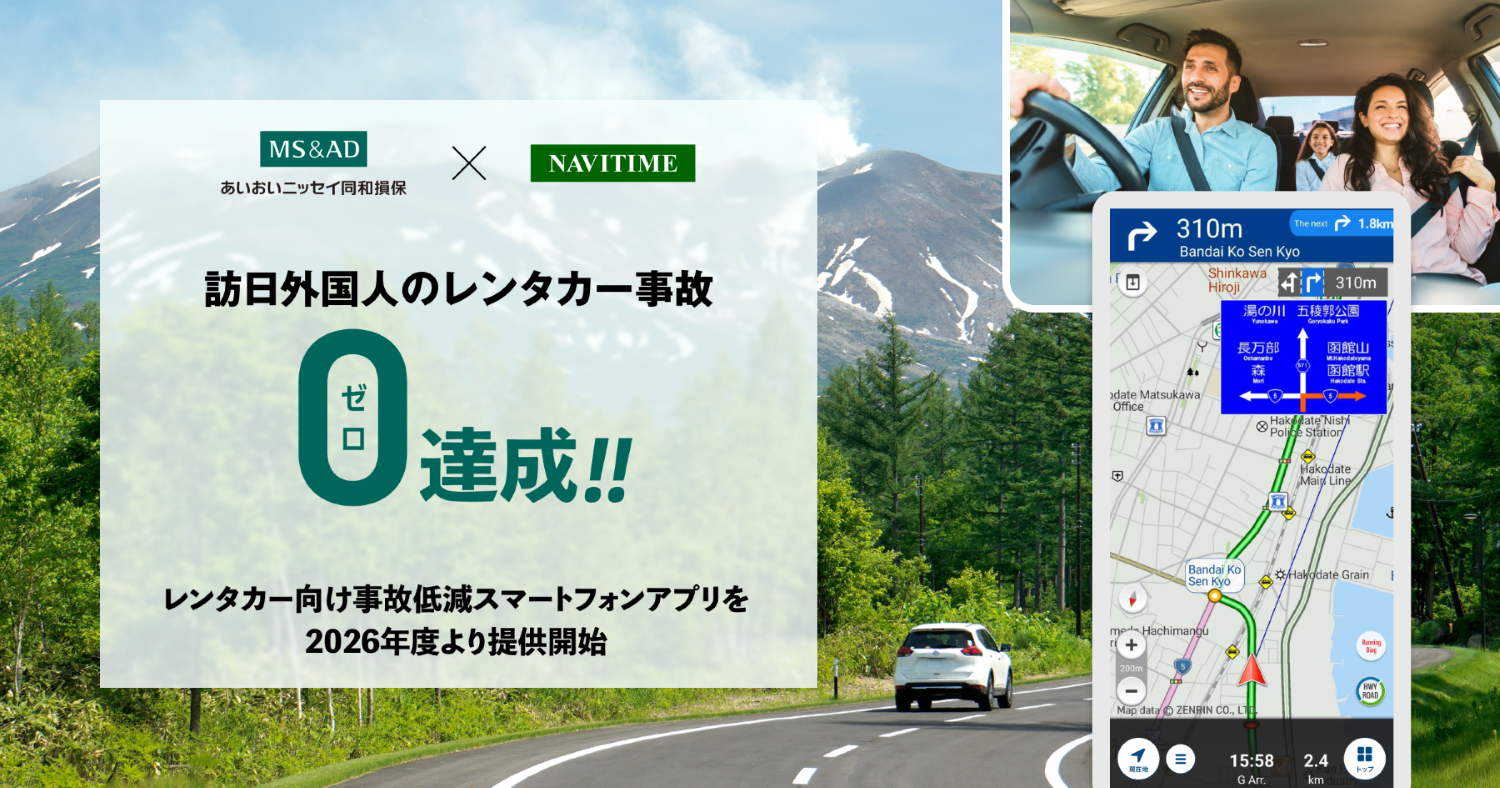
NAVITIME helps international drivers in Japan avoid rent-a-car accidents
Did you know that a simple navigation app can make a huge difference for visitors behind the wheel? That’s exactly the idea behind the latest NAVITIME JAPAN release, which is aimed at international drivers using rent-a-cars in Japan. The timing makes sense, because a lot of accidents happen not on fast highways, but in ordinary moments, like turning into a tight side street or misjudging a parking space.
Japan is a country where road rules can feel familiar and strange at the same time. You drive on the left, road signs can be packed with information, and in older neighbourhoods the roads may be so narrow that two cars can barely pass. No wonder many travellers are used to wider lanes, different markings, and a very different parking culture, see what I mean?
What the new NAVITIME JAPAN release changes
Picture this: you’ve just picked up a rent-a-car at a station near Narita or Kansai Airport, and you’re trying to reach a ryokan in the countryside. The route looks easy on a map, but the final kilometres can include tiny roads, blind corners, and tricky turns. NAVITIME JAPAN’s new release is designed to reduce that stress, especially for drivers who are still getting used to Japan’s road environment.
Take one common problem, for instance. Many international drivers don’t fully trust that their navigation app will warn them about road size, turning restrictions, or the kind of local road that makes parking and passing difficult. The app update focuses on helping users understand those risks before they become a scrape, a dent, or a full-on accident. And it gets better: this isn’t just about getting from A to B, it’s about making the entire drive feel less intimidating.
Why this matters for rent-a-car users
Rent-a-car accidents are a real pain point in Japan, especially for visitors who aren’t used to local traffic rules. A small mistake can be expensive, and rental counters often explain insurance options in a rushed, first-day-of-trip setting. What I especially like is that NAVITIME is trying to solve the problem earlier, at the planning stage, when travellers still have time to adjust their route or choose a safer parking spot.
Insider tip: if you’re planning a road trip in Japan, don’t just look at travel time. Check whether the route passes through dense city streets, mountain roads, or old neighbourhoods with limited space. That’s where apps like NAVITIME can be especially useful, because they give you a chance to avoid stress before you even start the engine. Personally...
International drivers in Japan need more than basic maps
What most people don’t know is that a map app that works fine in your home country can still leave you guessing in Japan. The issue isn’t only language, it’s also context. A road may technically be legal, but still be a terrible choice for a visitor who isn’t ready for a sudden one-way turn, a very tight entrance, or a parking area that’s much smaller than expected.



My tip: when you see route guidance in Japan, treat it like a local warning system, not just a line on a screen. For Japanese learners, this is also a nice chance to notice practical vocabulary like 道 (michi, road), 交差点 (kousaten, intersection), 駐車 (chuusha, parking), and 渋滞 (juuten, traffic congestion), words you’ll hear in driving and travel situations. If you can connect those terms to the real roads outside the window, they’ll stick much faster, sounds good, right?
Japan travel-tech that feels genuinely useful
Oh, almost forgot: this is exactly the kind of travel-tech feature that makes Japan easier to enjoy. Many travellers already rely on apps for trains, food, and sightseeing, but driving needs a different layer of support. NAVITIME’s release fits that gap neatly, especially for people who want the freedom of a car without the usual anxiety.
On the flip side, no app can replace careful driving, a calm pace, and a basic understanding of Japanese road etiquette. You still need to watch for pedestrians, cyclists, and the rhythm of local traffic. But a well-designed guide can lower the odds of a bad mistake, and that’s a big deal when you’re far from home and don’t want a rental bill ruining the trip.
Here’s the catch: Japan isn’t one single driving environment. Tokyo, Osaka, Hokkaido, Okinawa, and rural prefectures all feel different on the road. A good travel app has to work across that range, from city congestion to quiet mountain lanes. NAVITIME’s move suggests that it understands something many overseas visitors learn the hard way: driving in Japan isn’t difficult because of one giant problem, it’s difficult because of lots of small ones.
For Japan fans, this is a nice reminder that technology here often solves everyday friction points rather than chasing flashy features. A better route suggestion, a clearer warning, a less stressful parking decision, that’s the kind of help people actually use. Not bad, right?
If you’re building your Japan travel toolkit, this release is worth watching, especially if a self-drive trip is part of your plan. And if you like learning Japanese through real-world examples, keep an eye on navigation apps, road signs, and rental-car handbooks, because they’re packed with useful romaji-friendly words you’ll see again and again. more Japan news on jpnerd.com
Frequently Asked Questions
What is the main purpose of the new NAVITIME release?
It helps international drivers avoid common rent-a-car mistakes and reduce accident risk while driving in Japan.
Why is driving in Japan tricky for visitors?
Roads can be narrow, parking spaces can be tight, and traffic rules or local road patterns may feel unfamiliar.
Is this useful for first-time Japan travellers?
Yes. It is especially helpful if you plan to rent a car and want safer, less stressful route guidance.


