
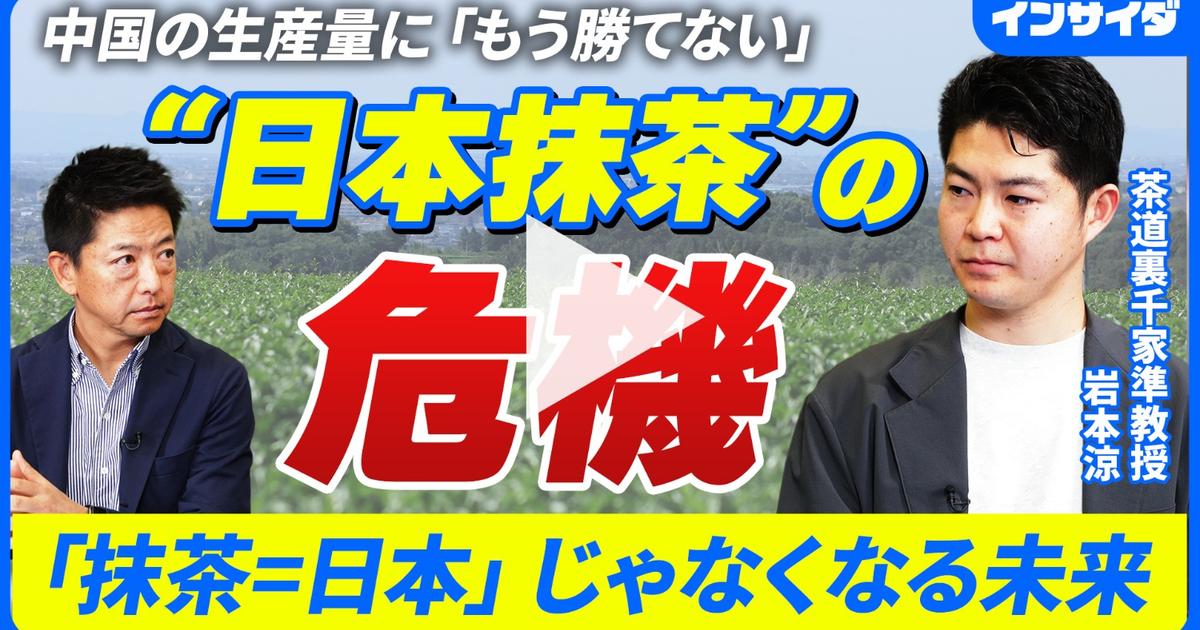
What most people don't know: this isn’t just a trendy drink story, it’s also about Urasenke, farm labour, and how long it takes to turn 碾茶 (tencha, tea leaves for matcha) into powder. And wait, there’s more.
Matcha in danger? The shortage behind the green powder
Ever wondered why 抹茶 (Matcha, powdered green tea) has become harder to find in some shops, even in Japan? The short answer is simple: demand has surged far faster than supply. And no, this isn’t just a “social media trend” problem, it’s a production problem that starts in the fields of Kyoto, Uji, and other tea-growing regions.

For years, matcha was a specialty product tied to tea ceremony, sweets, and a fairly small circle of devoted fans. Then the global appetite exploded. Cafes in New York, Seoul, London, and Sydney put matcha lattes on the menu, food brands started using it in ice cream, chocolate, and baked goods, and suddenly the world wanted the same bright green powder Japan had treated as something precious and seasonal for generations.
Here's the kicker: matcha isn’t made like ordinary tea. Farmers must grow tencha, shade the tea plants before harvest, steam the leaves, dry them, remove stems and veins, then grind the leaf material slowly into fine powder. That last step is painfully slow, and the best mills can’t simply “scale up” overnight. No exaggeration: quality matcha takes time, equipment, and a lot of careful handling.
Speaking of which, many tea makers are now dealing with older farming communities, limited new workers, and land that can’t be expanded at will. Once a tea field is gone, it’s not easy to bring it back. That means the boom in demand has landed on a system that already had structural limits. Personally, that’s what makes this shortage so interesting, and so fragile. Wait, there’s more.
Urasenke and the culture of matcha
What most people don't know: matcha was never only a drink. In Japan, it’s closely tied to 茶の湯 (chanoyu), the tea ceremony, where every movement, bowl, and season carries meaning. One of the best-known tea schools is Urasenke, based in Kyoto, and it has helped shape how many people inside and outside Japan understand matcha as culture, not just flavour.
Urasenke matters here because it reminds us what matcha used to be for. In ceremony, the tea is whisked with intention, served in measured portions, and enjoyed with 和菓子 (wagashi, Japanese sweets), often in a calm 畳 (tatami, straw mat) room. The whole experience is about restraint. That is almost the opposite of the modern matcha boom, where the same ingredient is being poured into oversized drinks and dessert menus everywhere.

My tip: if you’re learning Japanese, matcha is a great word to connect with cultural vocabulary. Try learning related terms like 茶碗 (chawan, tea bowl), chasen, wagashi, and おもてなし (omotenashi, Japanese-style hospitality). You’ll notice how one tea opens the door to an entire world of Japanese etiquette and aesthetics. Classic Japan, isn't it?
There’s also a tension here that Japanese tea fans feel strongly. Some tea masters worry that the rush for cheap, bright green powder can flatten public understanding of what good matcha actually is. High-grade usucha and culinary-grade matcha are not the same product, and that difference matters when people start expecting one standard for everything. Personally, I think that distinction deserves much more attention.
Japan’s matcha production and the supply chain crisis
A great example: the Japanese tea industry is highly regional, and production is concentrated in places like Kyoto Prefecture, Kagoshima, and parts of Shizuoka. Kyoto’s Uji area is the most famous name abroad, but it doesn’t have unlimited room to expand. Harvesting tencha is labour-intensive, and the best leaves are still selected by hand in many cases, which slows everything down.
The supply chain crisis is hitting at several points at once. Farms need workers. Mills need time. Packagers need inventory. Exporters need containers and stable transport. When one part gets delayed, the whole chain feels it. During the pandemic, shipping disruptions and labour shortages made that pressure worse, and now the lingering effect is visible in retail shelves and restaurant sourcing.
On the flip side, this shortage has also exposed a pricing problem. Matcha sold too cheaply can encourage overproduction of lower-quality tea, while premium producers often don’t see enough margin to invest in new fields or equipment. That means the answer isn’t simply “grow more”. If farmers can’t earn enough, production won’t become more resilient. That brings us to a difficult truth: the matcha world needs better economics, not just louder hype.

Across Japan, some producers are trying to adapt by improving contracts, investing in mechanisation where possible, and prioritising export markets that value quality over bulk volume. Still, matcha is not soy sauce. You can’t just flood the market and expect the same result. The leaf, the shade, the grind, the timing, all of it has to line up. Highly recommended: if you ever visit Kyoto, stop by a tea shop and compare ceremonial matcha with a convenience-store flavoured latte. The difference is huge.
What this means for learners and Japan fans
Guess what? The matcha shortage is also a useful lesson in how Japan works. A product can be globally famous, deeply traditional, and still vulnerable to boring practical limits like labour, logistics, and farmland. That combination is very Japan, in the best and most frustrating sense.
For language learners, matcha is a perfect entry point into real-world Japanese. You can follow news about the tea industry, read packaging labels, or ask at a cafe whether something is ichibancha-based, ceremonial grade, or intended for sweets. Those small phrases build confidence fast, and they also help you understand how Japanese consumers talk about quality.
My verdict: this shortage probably won’t kill matcha, but it may change it. Prices may rise, lower-grade products may become more common, and the best tea may stay reserved for customers who know what they’re buying. If that leads more people to learn the difference between convenience-store matcha and Urasenke-style tea culture, then at least some good will come out of the chaos. Personally...
Frequently Asked Questions
Why is matcha becoming harder to find?
Global demand has grown faster than Japanese production, and the supply chain for shade-grown tea is slow and labour-intensive.
Is this only a problem in Japan?
No, the shortage is being felt internationally, especially in export markets and cafes that use large amounts of matcha.
Will matcha disappear?
No, but prices, availability, and quality tiers are likely to change if production can’t expand responsibly.


