
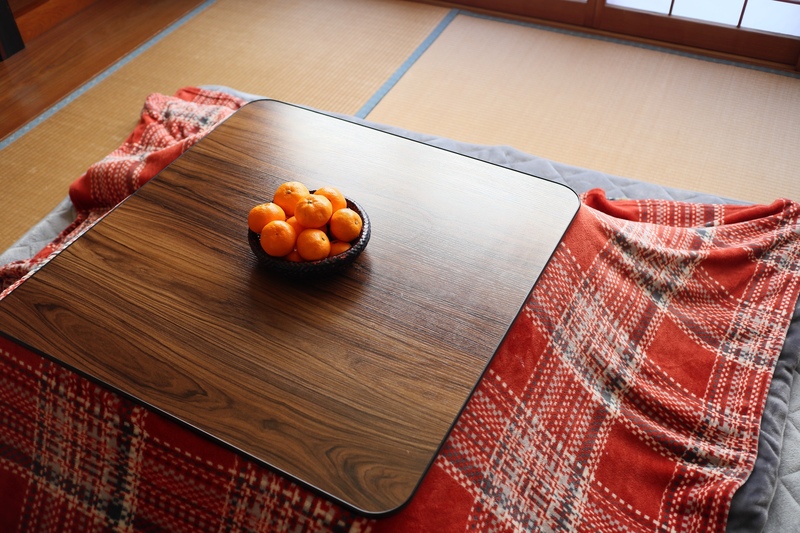
For Japanese learners and Japan fans, the 炬燵 (Kotatsu, heated table) is more than furniture, it’s a window into everyday life, family habits, and the rhythm of a Japanese winter. And yes, it really does feel as cosy as it looks.
Kotatsu: the heated table that defines a Japanese winter
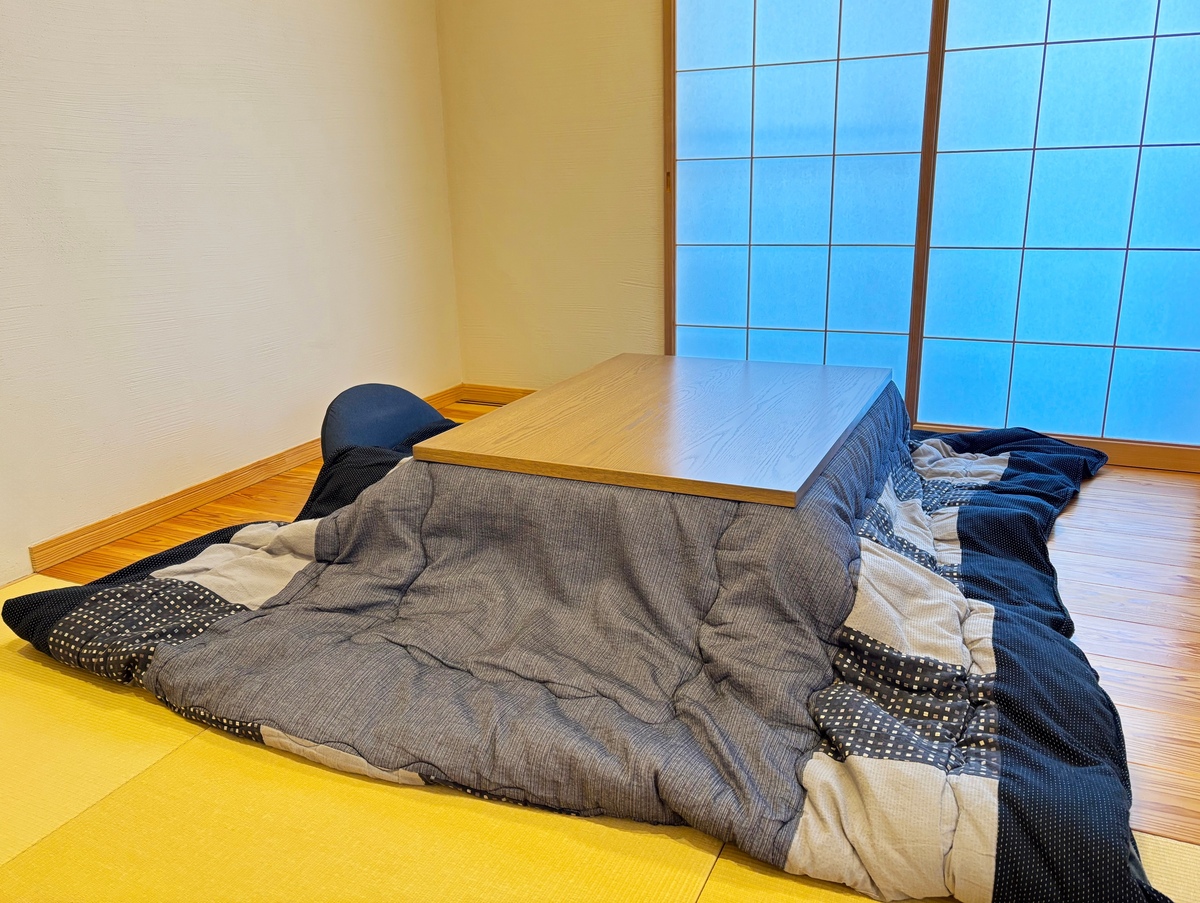
What most people don't know is that a kotatsu isn't just a table with a heater underneath. It’s a low wooden frame, a heat source mounted below it, and a thick blanket, called a futon in everyday speech when people talk about the covering for the legs, draped over the frame to trap warmth. Then a tabletop sits on top, so you can eat, read, work, or nap without leaving the warm zone.
Did you know that the word kotatsu comes from older Japanese heating customs? In the Muromachi period, people used a hearth in the floor, called an 囲炉裏 (irori, sunken hearth), and later a covered version appeared. By the 20th century, the electric kotatsu became common in homes across Japan, especially after postwar electrification spread through cities and towns.
Here’s the thing: Japan has cold winters, but many homes are still not heated like houses in some European or North American countries. Instead of warming the whole building, Japanese households often warm the room they’re using, or just the part of the body that matters most. That’s why the kotatsu stayed popular. It’s efficient, practical, and very hard to leave once you’re inside. And there’s more.
How a kotatsu works, and why it feels so good
Compared to back home, where central heating can make the whole house feel like a single climate bubble, the kotatsu is wonderfully focused. You sit on the floor, slide your legs under the blanket, and the heat rises around your feet and lower body. It’s basically the Japanese winter answer to “I want comfort now.”
The parts you’ll see in a real kotatsu
A standard kotatsu usually has four parts. First, a low table frame. Second, an electric heater attached underneath. Third, a thick blanket or quilt over the frame. Fourth, the tabletop that holds everything in place. Some models use infrared heaters, and modern versions often have adjustable heat settings, so you don’t end up roasting like a mochi.
Speaking of which, there’s a reason people joke that the kotatsu is dangerous in the best way. Once you sit down, it’s hard to get up. You’ll see people answering messages, watching TV, sorting laundry, and snacking all from the same spot. That’s not laziness, it’s winter strategy. From my experience, that’s exactly why so many travellers remember the kotatsu as one of their favourite Japanese home experiences. See what I mean?
Kotatsu as a Japanese winter tradition in daily life
Oh, I almost forgot: the kotatsu is also a social space. Families gather around it for dinner, games, and long chats. In winter, friends may sit on the floor together with hot tea, oranges, or senbei, and the whole room gets a calm, intimate feeling. It’s one of those customs that tells you a lot about Japanese domestic life without needing a museum label.

What I especially like is that the kotatsu changes the pace of the evening. In many Japanese homes, winter can feel quieter than summer, and the kotatsu becomes the centre of gravity. Kids do homework nearby, grandparents rest their feet, and everyone ends up slightly slower, slightly softer. That reminds me: if you visit Japan in winter, a family home with a kotatsu can feel more memorable than any flashy tourist spot.
Why it matters for Japan fans and language learners
If you’re learning Japanese, the kotatsu is a nice doorway into everyday vocabulary. You’ll hear words like 温かい (atatakai) for warm, 冬 (fuyu) for winter, 足 (ashi, leg; foot) for leg or foot, and 電気 (denki) for electricity. You may also come across phrases like kotatsu de neru, which means sleeping under or around the kotatsu, usually with a grin because everyone knows it happens.
Insider tip: when Japanese people talk about winter comfort, they often mention 鍋 (nabe, hot pot), oden, yuzu baths, and kotatsu in the same breath. These aren’t just things, they’re seasonal habits. That seasonal awareness is part of what makes Japanese culture feel so textured. It’s not only about events, it’s about repeated small rituals that mark the cold months. That’s why the kotatsu keeps showing up in anime, dramas, and family stories year after year. And there’s more.
How to experience kotatsu culture in Japan
Plot twist: you don’t need to own a kotatsu to enjoy one. Plenty of ryokan, guesthouses, and some rental homes in Japan offer them in winter, especially in colder regions or mountain areas. Traditional inns in places like Nagano, Niigata, and the Japanese Alps often lean into this kind of atmosphere, and it fits beautifully with the season.
If you want the full experience, pair the kotatsu with a winter snack and a slow evening. Japanese strawberries, mandarin oranges, and hot tea are classic choices. My tip: don’t fight the slowdown. The whole point is to relax, let your feet warm up, and enjoy the simple pleasure of doing almost nothing. This is my absolute hidden gem! It’s one of the easiest ways to understand how Japanese comfort culture really works. From my experience, it’s one of the easiest ways to understand how Japanese comfort culture really works.
And yes, the kotatsu has become a little symbol of winter life in Japan, not because it’s fancy, but because it’s so ordinary. That ordinary feeling is exactly what makes it special. When a piece of furniture shapes how people talk, eat, rest, and gather, it stops being just furniture and becomes culture.
If you’re building your Japanese vocabulary or planning a winter trip, keep kotatsu in mind. It’s a simple word, but it opens a whole world of daily life, family warmth, and seasonal habits that Japan does so well. more Japan news on jpnerd.com
In pictures
Frequently Asked Questions
What is a kotatsu?
A kotatsu is a low table with a heater underneath and a blanket covering the frame to keep your legs warm.
Why is the kotatsu so popular in Japan?
It is practical, cosy, and works well in homes where people warm only the space they are using.
Can visitors experience a kotatsu in Japan?
Yes, many ryokan, guesthouses, and winter rentals offer one, especially in colder regions.


