
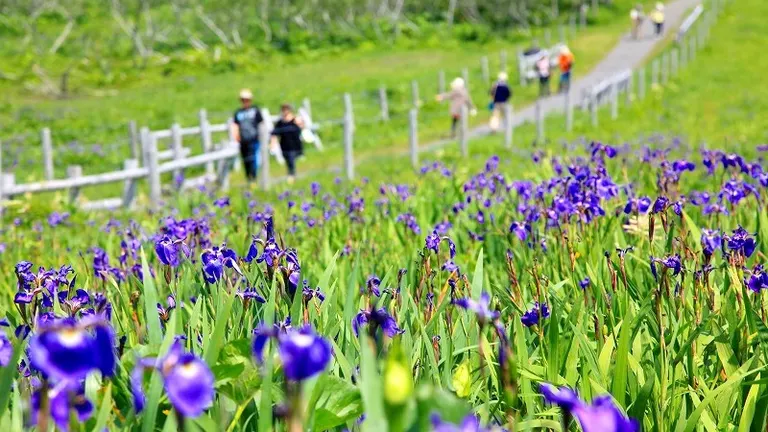
If you love regional 祭り (matsuri, festival), this is the kind of trip that rewards slower travel. It’s not just about seeing irises, it’s about getting there, noticing the scenery, and understanding why local festivals matter so much in Japan.



Akkeshi Ayame Matsuri: a Hokkaido festival with real local character
Did you know that the 67th Akkeshi 菖蒲 (ayame, iris) Matsuri is more than a flower event? It’s a seasonal snapshot of eastern Hokkaido life. Akkeshi Town, on the Pacific side of the island, is known for cool air, wetland scenery, and a landscape that feels different from the better-known tourist hubs in central Hokkaido. That alone gives the festival a distinct mood, calm but not sleepy, and very rooted in place.
The word ayame refers to iris, and in Japan flowers are often tied to the rhythm of the seasons in a way that feels almost literary. When locals gather for a matsuri like this, it’s not only about photos. It’s about appreciation, or 感謝 (kansha, appreciation; gratitude), for a place that blooms for a short time and then moves on. Classic Japan, isn’t it?
For Japanese learners, this is a nice example of how festivals often combine a seasonal keyword, a place name, and a number. In real news and local event listings, that pattern shows up all the time, so noticing it can help you read Japanese more naturally. There’s more, too.
Why Akkeshi Town makes this matsuri stand out
Akkeshi Town isn’t the kind of destination people usually visit by accident. It sits in eastern Hokkaido, and getting there means you’re already leaning into regional travel rather than a quick city break. That matters, because local matsuri in Japan often become stronger when they’re tied to a place that visitors have to intentionally seek out.
The festival’s setting gives it a sense of distance that actually adds to the experience. The venue is not right in the middle of a dense urban area, and the approach is part of the story. According to the event listing from domingo, the site is about 12 km from the town area, which makes this feel less like a casual stroll and more like a proper excursion. My tip: plan the trip with enough time to enjoy the journey, not just the event itself.
What the 12 km distance changes
That 12 km detail sounds small on paper, but in festival terms it changes everything. You’re not dropping into a station-adjacent venue and leaving in half an hour, you’re entering a landscape. No wonder, because the destination is surrounded by nature, and the route itself becomes part of the atmosphere.
For language learners, this is a good moment to notice how Japanese event coverage often treats distance as useful context, not just logistics. A phrase like 役に立つ情報 (yakunitatsu jooho, useful information) in a local listing signals practical info, while the mood is built through place names and seasonal references. That mix is very common in Japan travel writing, and it’s worth getting used to.
Forest of dakekanba and the natural setting
The best part is that the landscape around the festival includes a forest of ダケカンバ (dakekanba, Erman's birch), which adds a strong northern Japan feeling to the whole experience. Dakekanba means Erman’s birch, a tree that’s often associated with colder regions and pale, elegant trunks. If you’ve ever seen photos of Hokkaido forests in spring or early summer, you’ll know the look immediately: soft light, open woodland, and a slightly wild edge.



That natural backdrop matters because the Akkeshi Ayame Matsuri isn’t just decorating a town square. It’s presenting flowers in a setting that already feels alive. Trust me on this one: when nature and local celebration line up well, the result is much more memorable than a standard city festival with a few stalls and banners. Wild, isn’t it?
How the scenery shapes the festival mood
The irises and the birch forest work together visually, but they also shape the emotional pace of the visit. You slow down. You look around. You start paying attention to small details, like the way the light hits the flowers or how the trees frame the paths.
That reminds me: Japanese festivals often work best when they connect directly to the environment. Think of river fireworks, mountain shrine events, or plum blossom gatherings. The setting isn’t decoration, it’s the core of the experience. Personally, that’s what makes a regional matsuri feel more authentic than a big commercial event.
How to enjoy the Akkeshi Ayame Matsuri like a Japan fan
Before I forget, if you’re the kind of Japan fan who likes slow travel, this festival fits that style beautifully. It’s not about chasing famous landmarks, it’s about combining a local event with a landscape walk and a seasonal flower display. If you speak a little Japanese, even simple words like matsuri, hana, and mori will make the experience feel more connected.
My verdict: this is the sort of event that rewards patience. Bring comfortable shoes, check transport carefully, and don’t rush the flower viewing. If you can, pair the festival with time in Akkeshi Town itself, because the wider area is part of the story, not just the venue.
On the flip side, if you’re expecting a loud, high-energy summer celebration, this probably isn’t that. The Akkeshi Ayame Matsuri sounds more like a nature-first regional feature, which is exactly why it stands out in the first place. It’s Hokkaido doing what Hokkaido does best: wide skies, cool air, and a strong sense of place.
If you enjoy reading about local events across Japan, you might also want to keep exploring at more Japan news on jpnerd.com.
Frequently Asked Questions
Where is the Akkeshi Ayame Matsuri held?
It is held in Akkeshi Town in Hokkaido, in a natural area connected to local scenery and walking access.
What makes this festival different from other flower events?
Its setting is the big difference, especially the distance from town and the surrounding forest landscape.
Is this a good event for Japan travellers?
Yes, especially if you like regional festivals, nature, and slower, more local travel experiences.


