Tengu in Japanese Folklore: Not Quite Demons, Not Quite Gods
天狗 (Tengu, goblin-like mountain spirit) are one of those figures that sound straightforward until you look at the sources. In modern pop culture, they often appear as red, bird-like tricksters with enormous noses, but older traditions are messier and more interesting. The earliest tengu were strongly influenced by Chinese ideas about a sky-demon, yet in Japan they gradually became tied to mountains, ascetic practice, and local religious power.
That shift matters. Tengu weren’t simply decoration in a ghost story; they sat inside a lived religious landscape. In medieval tales, they could mislead arrogant monks, punish the proud, or appear as expert martial beings in the mountains. Sounds weird, but it's true. They were feared, respected, and sometimes invoked as if they knew things ordinary people did not.
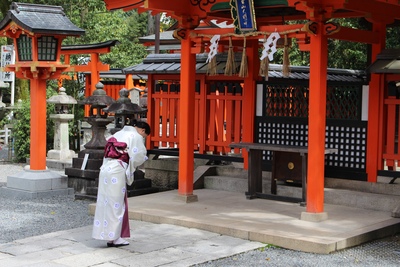
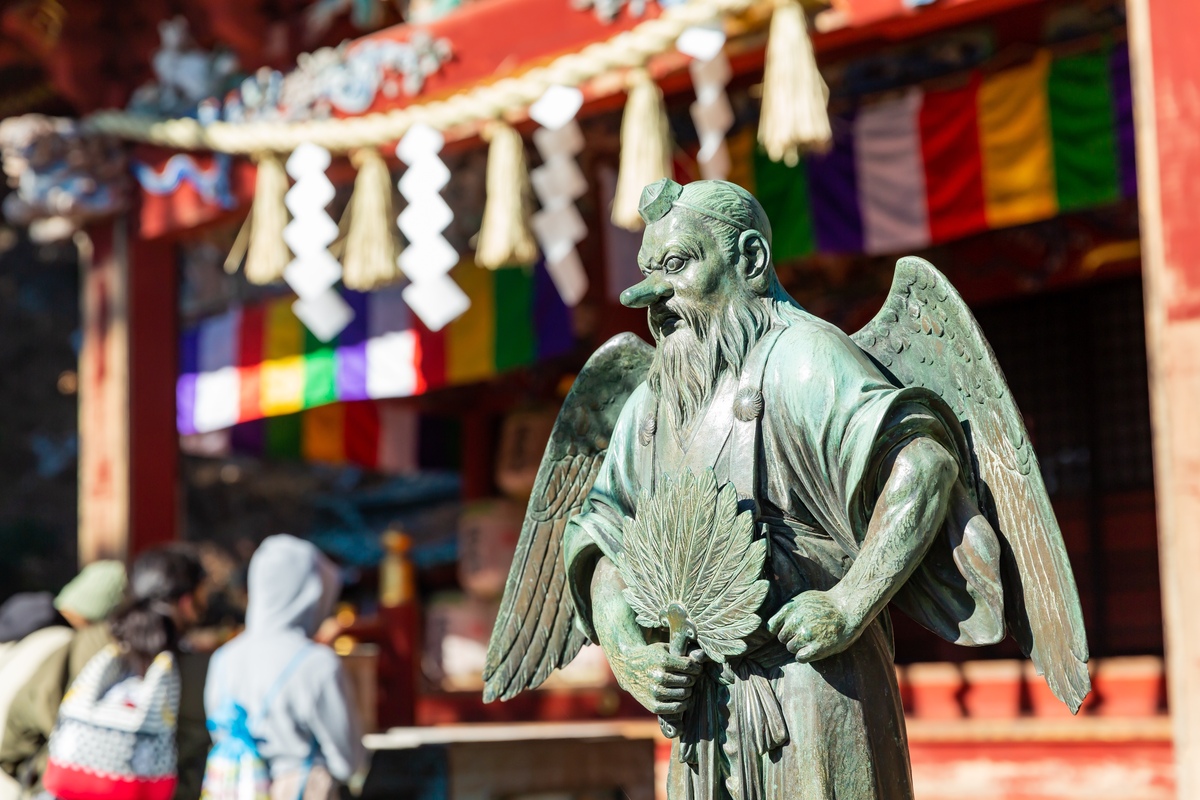
What our actual sources show is that tengu changed shape over time. By the late medieval and early modern periods, the rough division between 大天狗 (daitengu, greater tengu) and 烏天狗 (karasu-tengu, crow tengu) had settled into the popular imagination, with daitengu looking more human and karasu-tengu taking on a more bird-like form. The point isn’t neat taxonomy, because folklore rarely bothers to be tidy, but that Japanese communities kept reworking the figure to fit local concerns. Wait, there's more.
Mountains, Ascetic Practice, and the World of yamabushi
Picture this: a steep mountain path, cold air, and a practitioner climbing in isolation while ordinary life stays far below. Tengu are deeply connected to mountains because mountains were central to 修験道 (shugendo, mountain ascetic practice), the ascetic tradition associated with 山伏 (yamabushi), mountain ascetics who trained through austerity, endurance, and ritual discipline. If tengu seem like mountain beings, that’s because mountains in Japan were never empty scenery. They were spiritually active places, and sometimes dangerous ones.
No wonder, because mountain practice created the perfect setting for stories about extraordinary beings. Tengu could appear as rivals, teachers, or guardians of secret knowledge. In some legends, they train warriors or instruct monks in techniques that ordinary institutions do not control. In others, they’re a warning about pride, especially religious pride. The basic message is old and pretty sharp, if you like your folklore with a moral sting.
Places associated with tengu and mountain religion
Several mountains are especially associated with tengu in Japan. Mt. Kurama near Kyoto is probably the best known, thanks in part to its later place in popular culture and temple lore. Mt. Takao west of Tokyo also carries strong tengu associations, and you can still see tengu imagery in local temple and shrine settings there. Then there’s Mt. Hira and Mt. Hiko, among others, each tied to local beliefs, pilgrimage routes, and ascetic practice.
A great example: Kurama-dera in Kyoto uses tengu imagery openly, and that isn’t some random marketing flourish. It reflects a broader pattern in which mountain temples and shrines used tengu to signal sacred danger, protective power, and a certain refusal to be domesticated. Classic Japan, isn't it? Sacred spaces often speak in symbols that are part warning, part welcome.
Shrines, Temples, and the Red Mask Motif
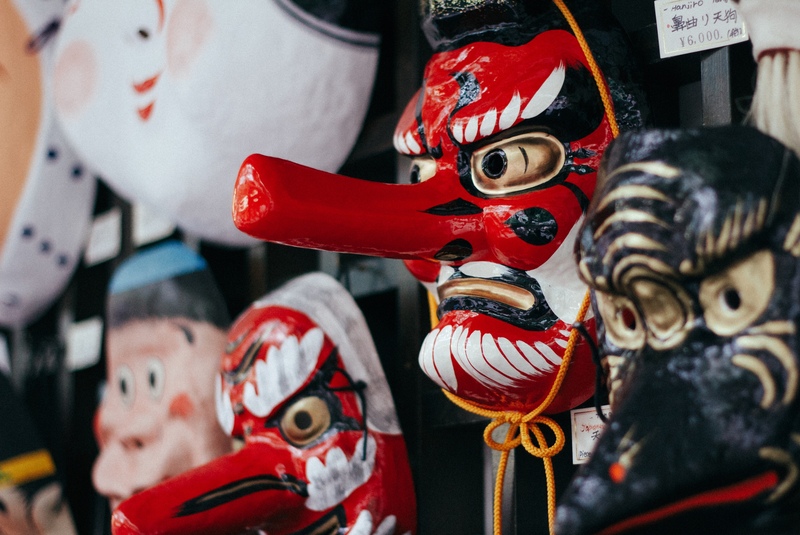
Let me show you why the red mask matters. The face of the tengu, especially the long-nosed version, became one of its most recognisable features, but that image isn’t the whole story. Earlier tengu were closer to bird demons or carrion birds, while later depictions increasingly emphasised the human face, long nose, red complexion, and fan. That transformation turned the tengu into a figure that is both alien and oddly aristocratic, which may be exactly why it stuck.
Why red? Partly because red is visually strong, and partly because Japanese religious imagery often uses colour to mark potency, danger, or liminality. A tengu mask, whether in a festival setting or as shrine decoration, signals a being that stands between worlds. It isn’t meant to be cute. It’s meant to look capable of causing trouble, while also keeping worse things away. That double job is very common in Japanese protective imagery, and tengu fit it rather neatly.
How shrines and temples use tengu motifs
At some sites, tengu masks appear on 絵馬 (ema, votive plaque), お守り (omamori, protective amulet) packaging, festival floats, or carved wooden plaques. At others, they show up in temple halls as a reminder of local legend. The specific meaning varies by place, which is why location matters so much here. A tengu at a mountain temple in Kyoto doesn’t function exactly like one at a neighbourhood festival in Saitama, even if the face looks similar from a tourist photo. My tip: if you see tengu imagery, look for the local story first and the souvenir second.
While we're at it, tengu also turned up in martial contexts. Sword schools and warrior legends sometimes linked tengu to secret skill or impossible speed. One famous modern echo is the connection between tengu and the young martial hero in later fiction, but the older tales are more grounded in religious authority and mountain discipline than in fantasy combat. The sources aren’t always tidy about this, which is how folklore ends up being more interesting than the brochure version. Personally, that’s the best reason to keep paying attention.
What Tengu Mean Now, and Why Learners Should Care
Basically: tengu survive because they solve several problems at once. They explain mountain danger, criticise arrogance, decorate sacred sites, and give local communities a memorable figure to point to when telling stories about power and place. That is a lot of work for one creature, but mythology has never been shy about overemployment.
For Japanese language learners, tengu is a useful word because it appears in temple names, folklore books, regional guides, and modern media. You’ll also run into related vocabulary such as yamabushi, shugendo, and omamori in travel writing and cultural explanations. If you're studying Japanese, this is a good reminder that words travel with their settings. A term like tengu isn’t just a monster label; it carries mountain history, religious practice, and local identity with it. Worth knowing, and that’s why this matters.
Imagine standing at a shrine gate in a mountain town and seeing a red-faced mask staring back at you. That image is doing historical work, not just visual work. It links the present to older ideas about sacred danger, discipline, and the fact that the mountains were never simply “nature.” They were inhabited, argued over, and narrated for centuries. Hand on heart: that is exactly the kind of detail Japan fans should be looking for.
In pictures
Frequently Asked Questions
What is a tengu?
A tengu is a folklore being from Japan, often linked to mountains, temples, and stories about pride or hidden knowledge.
Why do tengu have red faces and long noses?
Those features became common in later art and masks, and they help show the tengu as powerful, strange, and slightly dangerous.
Where can I see tengu imagery in Japan?
You can find it at mountain temples, local shrines, festival sites, and places with strong regional legends, especially around Kyoto and Tokyo.