Where Exactly Are the Iwamotoyama Tea Fields?
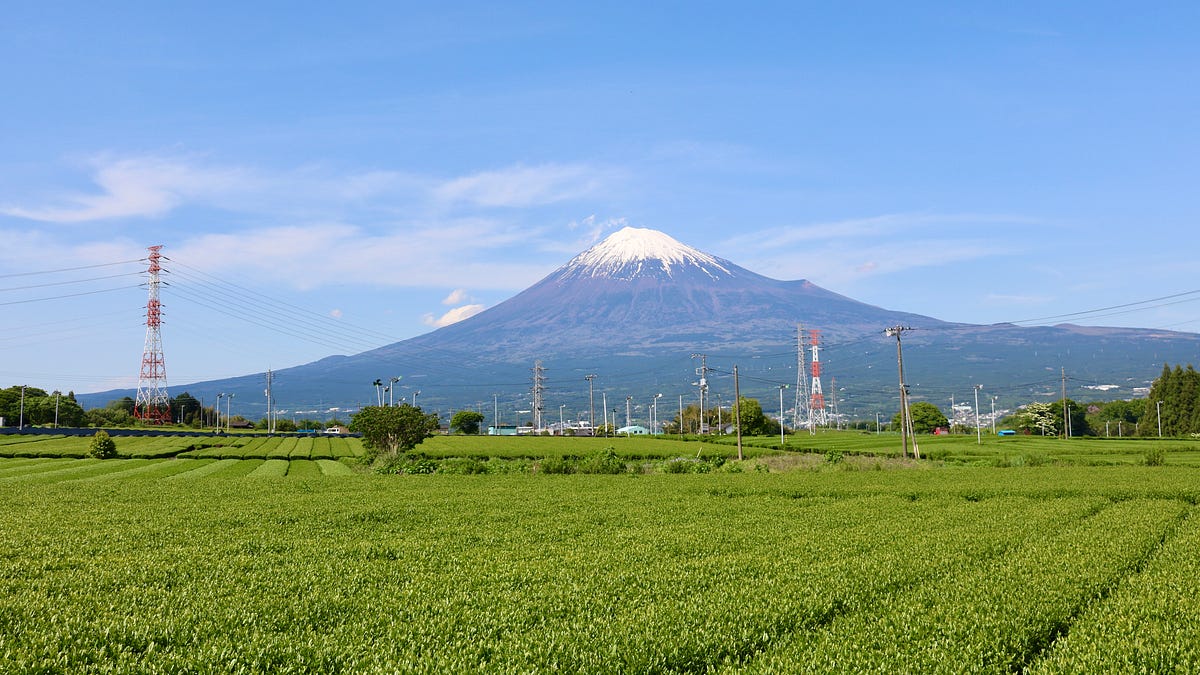
Fuji City sits in eastern Shizuoka Prefecture, roughly 120 kilometres southwest of Tokyo. It's not the most obvious tourist stop, but that's honestly part of the appeal. The Iwamotoyama area sits on the lower slopes above the city, and on a clear day, the view north is simply Mount Fuji, filling the entire sky. No buildings in the way, no power lines ruining the frame, just tea and the mountain.
Shizuoka is Japan's most productive 茶 (cha, tea)-producing region, responsible for roughly 40% of the country's total tea output. So, seeing tea fields here isn't a novelty crafted for tourists. It's the real agricultural backbone of the area, and that makes the experience feel grounded in a way that staged photo spots just don't.
Fun fact: the Japanese word for this kind of terraced hillside farmland is 里山 (satoyama, traditional rural landscape), referring to the transitional landscape between mountain and village. Walking through the Iwamotoyama fields genuinely gives you that satoyama feeling, with birdsong, the scent of fresh cha leaves, and a breeze off Fuji.
The Best Time to Visit: Spring and Early Summer
Let me show you why the timing matters so much here. The first 新茶 (shincha, new tea) harvest, meaning new tea, typically begins in late April and runs through May. During this window, the tea bushes burst into their brightest, most saturated green. Pair that with the lingering snow on Fuji's upper slopes and clear spring skies, and you've got a combination that serious photographers specifically plan trips around.
I still remember exactly the first time I saw photos of this spot online and thought it looked digitally enhanced. It doesn't. The contrast between the blue sky, the white peak of Fuji, and the almost neon green of fresh cha rows is genuinely that sharp on a good morning.
My tip? Aim for a weekday visit in early May, arriving before 9 am. The light is softer, the crowds are thinner, and the mountain is far more likely to be visible before afternoon clouds roll in. Fuji has a stubborn habit of hiding behind clouds after midday, so early risers are rewarded every time.
Spring vs Early Summer: Which Is Better?
To be fair, both have their charms. Late April brings the freshest tea colour and often cooler, clearer air. Early June can offer slightly lusher growth but risks more overcast days. Most photographers targeting the iconic tea-plus-Fuji shot choose the first two weeks of May as their sweet spot. If you're learning Japanese, this season is called 春 (haru, spring) (spring) blending into 初夏 (shoka, early summer) (early summer), and both terms come up constantly in travel writing about Shizuoka.
Photography at Iwamotoyama: What to Expect
The best part? You don't need any special permits or paid access. The tea fields are working farmland, so staying on the paths and respecting the crops is essential, but they're openly accessible to visitors. Several elevated vantage points along the hillside paths give you that classic layered composition: tea rows in the foreground, the city below, and Fuji commanding the background.
A wide-angle lens works brilliantly for capturing the full sweep of the rows converging toward the mountain. But don't underestimate a telephoto lens either. Compressing the distance between the tea bushes and Fuji's peak creates a dramatic, almost surreal image. Both approaches are legitimate here, simply brilliant.



By the way, morning mist occasionally settles in the valley below the fields in early May, adding an atmospheric layer to compositions. It lifts within an hour or two, so if you see it forming, get into position fast.
Getting There from Tokyo or Osaka
From Tokyo, take the Tokaido 新幹線 (shinkansen, bullet train) to Shin-Fuji Station. The journey takes around 50 minutes on a hikari or kodama service. From Shin-Fuji, the fields are accessible by taxi or rental car, as local bus options are limited. From Osaka, the same shinkansen line applies, with a journey of around 90 minutes. No exaggeration, the ease of access via shinkansen is one of the underrated advantages of this trip for international visitors.
Quick detour: while you're in the Fuji City area, the nearby Fujisan Hongu Sengen Taisha shrine is worth an hour of your time. It's one of the most historically significant shrines associated with Fuji worship, dating back over 1,000 years. But let's stick with the tea fields for now.
Japanese Culture and Language Connections
Visiting a working cha region is a genuinely useful cultural anchor for anyone learning Japanese. The vocabulary around tea in Japan is richer than most beginners expect. Beyond matcha and sencha, you'll encounter gyokuro (a premium shaded tea), bancha (everyday coarser tea), and the seasonal shincha mentioned earlier. These aren't just drink names; they reflect quality grades, harvest timing, and even social context.
Guess what? The Japanese phrase ocha wo ippai dozo, meaning please have a cup of tea, is one of the most common hospitality phrases you'll hear in homes and traditional settings across Japan. Knowing where that cha actually comes from, standing in a Shizuoka hillside field watching workers tend the rows, gives that phrase a completely different weight.
The kanji for cha is one of the first characters many learners encounter, and Shizuoka is quite literally where much of Japan's cha story begins. It's one of those moments where language learning and lived experience overlap in the best possible way. Not bad, right?
Wait, there's more. Shizuoka City, about 30 kilometres west of Fuji City, has a dedicated tea museum called the Cha no Sato, which explores the history and culture of Japanese tea production in depth. If you're spending multiple days in the region, it pairs perfectly with an Iwamotoyama field visit. My verdict? Shizuoka as a region is criminally underrated on the Japan travel circuit, and Iwamotoyama is the ideal entry point.
Frequently Asked Questions
Do I need to pay an entrance fee to visit the Iwamotoyama tea fields?
No entrance fee is required. The tea fields are working farmland that visitors can access freely, but you should stay on designated paths and avoid touching or damaging the tea plants.
What is the best month to see Mount Fuji clearly from the tea fields?
Early May is generally considered the best window. The sky tends to be clearer in spring mornings before clouds build in the afternoon. Visiting on a weekday and arriving early significantly improves your chances of an unobstructed view.
How do I get from Shin-Fuji Station to the Iwamotoyama tea fields?
A taxi from Shin-Fuji Station is the most practical option, taking around 15 to 20 minutes. Rental cars are also available near the station. Public bus connections to the fields are limited, so independent transport is recommended.