What is the Hokkai Heso Matsuri?
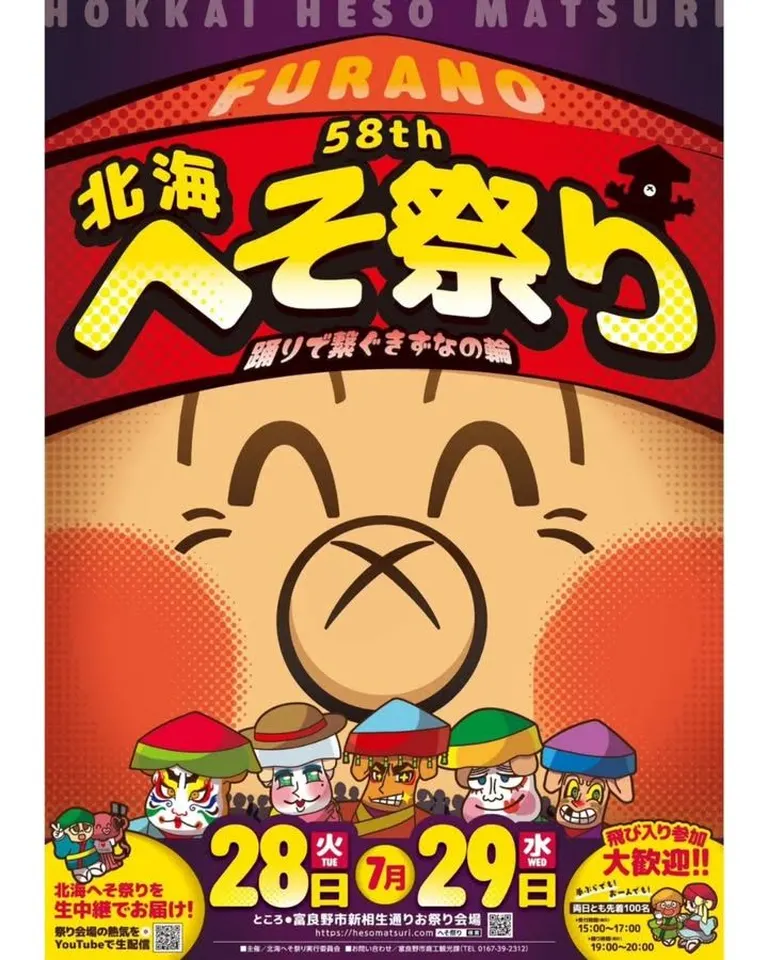
Guess what? The Hokkai 臍 (heso, navel) 祭り (matsuri, festival) is literally a belly-button festival. Participants paint faces around their heso and join parades that wind through central Furano. That sounds silly, and it is, in the best possible way.



Here's the deal: the festival highlights local creativity. People form teams, design costumes that emphasise the painted navel, and dance to original chants. The effect is both absurd and charming, which explains why the event draws attention from across 北海道 (Hokkaido, Hokkaido).
Where and when it happens
What most people don't know is that the festival takes place in Furano City, Hokkaido, usually in mid-July. Furano sits between Asahikawa and Biei, and it's best known for lavender fields, but the heso matsuri gives the town a completely different summertime personality. For the official event schedule and details, check out the event listing on Domingo.
Why Furano and Hokkaido love this summer tradition
Did you know that regional festivals in Japan often carry local humour? The Hokkai Heso Matsuri is a great example. It flips the idea of a refined procession into something exuberant and unpretentious. That brings us to the cultural point: Hokkaido has a frontier history, and Furano's festival reflects a community comfortable with play.
To be fair, the festival is more than belly painting. There are 屋台 (yatai, food stall) stalls, live music stages, and dance contests. Local businesses get involved, and the atmosphere is family-friendly during daytime hours, then rowdier at night. My tip? Go during the day if you want to watch the choreography closely. Convinced yet?
The performance element
Here's the catch: the choreography matters. Teams practice for months in advance. They coordinate costume motifs, percussion, and chants centred on the heso theme. The result is a series of short, high-energy performances rather than a single long parade. The best part? You can see teams competing for crowd applause and small prizes.
Planning your visit: travel, practical tips and language practice
Imagine arriving in Furano after a morning train from Sapporo. It takes around two to three hours by rail, depending on connections, and the landscape shifts from urban to wide skies. That slower pace fits the festival vibe. Not bad, right?



What to bring and expect
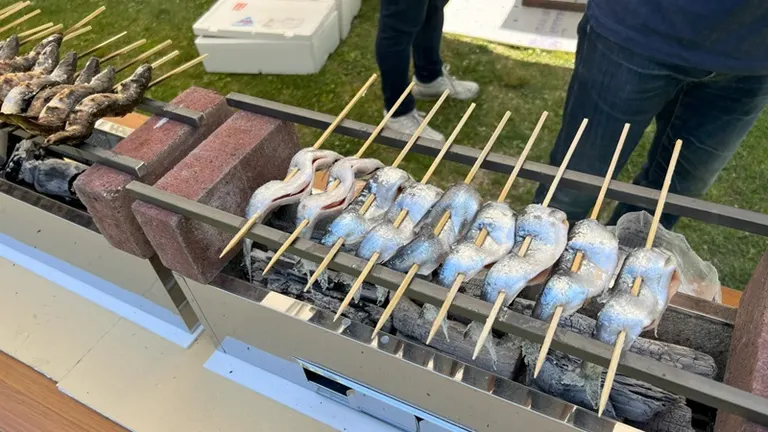
Pack sunscreen, a small towel, and comfortable shoes. There'll be crowding near the main stages, and having a clear meeting spot helps if you attend with friends. To be honest, the smell of street food is irresistible. Try some grilled corn or local Hokkaido dairy treats from a yatai. The best part? Local vendors often sell limited-time festival snacks you won't find outside Hokkaido.
Japanese learning connections
Want to turn the trip into a study opportunity? Learn and practice a few romaji words before you go: heso, matsuri, 踊り (odori, dance) (dance), yatai (food stall), and minato (harbour) might come up in conversation. Ask vendors simple questions, and you'll get friendly answers. What I especially like is that festival language is repetitive, so listening practice is high-yield. Try recording short clips of chants and then repeating them later for pronunciation practice. Highly recommended.
Why this festival is worth a detour
What I love about the Hokkai Heso Matsuri is the honest local energy. It's not polished like a city parade, and it's not trying to be an international spectacle. It's a regional celebration with an obvious Japan-niche appeal, and that makes it genuinely refreshing. My verdict? If you care about cultural texture, this festival rewards curiosity.
That reminds me: on my last visit, I ended up joining a small crowd trying to mimic a chant. I sounded terrible, but people laughed and taught me the next line. Small moments like that show why festivals are such good classrooms for language and cultural exchange. But that's not all.
Here's the deal: you don't need to be an advanced speaker to enjoy the event. Body language, smiles, and shared laughter go a long way. You'll leave with better listening stamina and a pocketful of romaji vocab. Not bad, right?
In pictures
Frequently Asked Questions
When is the Hokkai Heso Matsuri held?
The festival usually takes place in mid-July. Exact dates are posted each year on local event pages.
Is the festival family-friendly?
Yes. Daytime activities are suitable for families, with food stalls and short performances. Night events may be livelier.
Do I need Japanese language skills to enjoy it?
No. Basic romaji phrases help, but the festival is very visual and interactive, so you'll enjoy it without fluency.