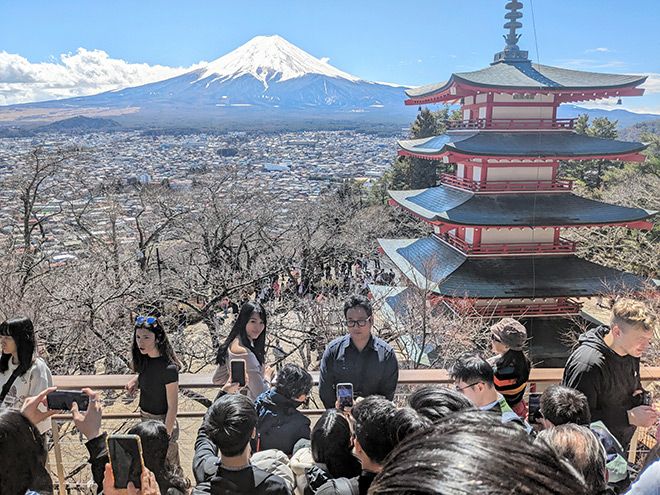
Why Mount Fuji photos spread so fast
Why are images of Mount Fuji framed by cherry blossoms so irresistible to people worldwide? For centuries, Mount Fuji has been an emblem of Japan, famously captured in Hokusai's "Thirty-six Views of Mount Fuji" around 1830. Modern photos tap directly into that visual history, amplifying a centuries-old motif into a viral sensation.
A great example is the view from Arakurayama Sengen Park. Chureito Pagoda sits above Fujiyoshida City in Yamanashi Prefecture, matching postcard expectations. A single share can attract hundreds more visitors the next day, creating a feedback loop. See what I mean?
The iconic spots: Chureito Pagoda and Lake Kawaguchi
That brings us to concrete places. Lake Kawaguchi in Fujikawaguchiko and the Chureito Pagoda overlook are two of the most photographed locations for sakura-framed shots of Fujisan. Chureito Pagoda was built in 1963 as a peace memorial and sits within Arakurayama Sengen Park, offering a classic layered composition of pagoda, blossoms, and the mountain behind it. It attracts photographers from Tokyo and abroad, often within a roughly two-hour train journey.
Sakura season and the visitor surge
It's early morning in Kyoto. On paper, cherry blossom season looks manageable, but in practice, when bloom timing lines up with good visibility of Mount Fuji, the area sees intense surges. Peak bloom around late March to mid-April at lower elevations near Lake Kawaguchi coincides with weekends and golden-weekend-like behaviour from tourists aiming for the perfect shot.
Quick detour: social platforms like Instagram and Reddit accelerate the problem. A single striking image shared across threads and feeds sends a clear signal, and the next weekend can bring hundreds to thousands of people to narrow mountain roads and small parks. My verdict? The dream photo often costs the locals their quiet spring. See what I mean?
Local complaints and concrete problems
Guess what? Residents in Fujiyoshida and Fujikawaguchiko have been vocal. Local people report illegal parking on narrow streets, traffic congestion that delays emergency vehicles, overflowing rubbish bins, and noise late into the night. Those are tangible harms that local governments can't ignore.



Compared to back home, these towns have limited infrastructure for massive day-trip crowds. Local businesses appreciate visitors, but many residents tell reporters they're tired of having their daily life disrupted, especially when visitors ignore simple rules like staying on paths and using public toilets. Convinced yet?
What authorities are doing
That brings us to policy. Yamanashi Prefecture and Fujikawaguchiko municipal offices have responded with stepped-up signage, patrols during peak days, and appeals to use public transport. And it gets better: volunteer teams and local tourism associations now hand out polite guidance in multiple languages during busy weekends to steer people to safer viewing spots and legal parking.
How visitors can be part of the solution
I still remember the first sakura morning I visited Kawaguchiko. The serene atmosphere made the visit special. My tip? Visit on weekday mornings, use the Fujikyu Railway lines and local buses, and avoid the narrow residential roads around Chureito Pagoda. Trust me on this one: public transport reduces stress for everyone.
While we're at it, learn a few local phrases or customs before you go, respect signage, and carry out any trash. What I especially like is trying regional food stalls near the lake after sunrise, when crowds are thinner and the view feels like yours for a moment. My verdict? Thoughtful travel keeps dream photos possible for the next visitor.
Frequently Asked Questions
Where was the viral photo taken?
Short answer: the photo shows Mount Fuji near Chureito Pagoda and Lake Kawaguchi in Yamanashi Prefecture, a classic spot for sakura shots.
Is it safe to visit during peak sakura season?
Short answer: yes, but expect crowds. Use public transport, avoid illegal parking, and follow local guidance to stay safe.
How can I visit responsibly?
Short answer: go early on weekdays, follow signs, use designated paths and toilets, and be respectful to residents and local rules.