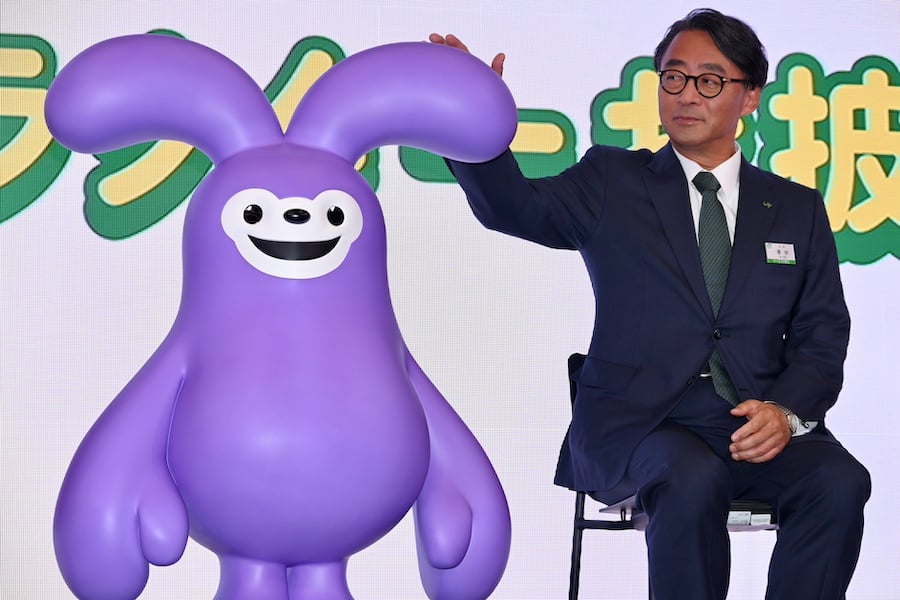
What makes this interesting isn’t just the automation, but the presentation: light-up eyes, a cute song, and a compact mobile bin that moves around where people actually walk. For Japanese learners, this is also a neat reminder that everyday Japanese station life uses a lot of practical vocabulary around garbage separation, cleaning, and public space.


JR East is testing a moving trash can at Shinjuku Station
Shinjukuma is the headline here. JR East is running a real-world test of a self-driving trash-can robot in the underground concourse at Shinjuku Station, and the schedule reported by local observers runs from September 8 to November 20. That gives the trial a very specific window, which matters because this isn’t a concept render or a marketing video. It’s a live station experiment in one of Tokyo’s busiest transit hubs.
The setup is simple, but the idea is smart. A trash bin that can move itself changes the job from “walk to the bin” to “bring the bin to the flow of people.” That sounds small. It isn’t. In a place like Shinjuku, even small changes to passenger movement and cleaning routines can have outsized effects.
What Shinjukuma actually is
Shinjukuma is a mobile rubbish bin with a playful design. Reports describe blinking or light-up eyes, plus a cute song that plays as it moves. That gives it a friendly, almost mascot-like presence, which feels very Japan in the best way. Utility first. Personality second. The two together make the machine less intimidating and easier to notice in a crowded station.
The name itself is also doing a lot of work. “Shinjuku” anchors it to the location, while “kuma” means bear in Japanese. So even before you see the thing, the name suggests something round, approachable, and a little bit silly. That kind of naming matters in Japan, where robots often need to feel less like industrial hardware and more like part of the public environment.
My tip: if you’re learning Japanese, keep an eye on these station-tech stories, because they tend to use very practical words you’ll actually see in the wild, like ゴミ (gomi, trash; garbage) for trash, 環境 (kankyo) for environment, and テスト (tesuto) for test. That’s real-world vocabulary, not textbook fluff.

Why this test fits Shinjuku so well
Shinjuku Station is the right place for this kind of trial because it’s huge, busy, and constantly under pressure. JR East has to manage crowds, cleanliness, signage, and passenger flow all at once. A roaming trash can may sound quirky, but it targets a very real operational problem: keeping waste collection visible and efficient in a place where people are always moving.
And the thing is, Japan already treats station cleanliness as part of the travel experience. You see it in the empty platforms, the tidy concourses, the careful separation rules, and the way staff keep everything moving with minimal friction. A robot bin like Shinjukuma is basically a tech-forward extension of that mindset. It doesn’t replace the system. It tries to smooth it out.
What this says about Japanese station tech
There’s a broader pattern here, and it’s easy to miss if you only look at the cute design. Japanese rail operators are increasingly willing to test service robots, automation, and small AI-driven tools in public-facing spaces. Not because every robot will become standard overnight, but because stations are controlled environments with clear needs and measurable outcomes.
That’s why this test is worth watching. If Shinjukuma reduces workload for staff, keeps bins available where passengers need them, and does it without causing confusion, JR East gets data it can actually use. If it fails, that’s still useful. Tokyo infrastructure experiments often matter as much for what they reveal as for what they deploy.
What I especially like is the scale. This isn’t a giant humanoid robot pretending to be a science fiction promise. It’s a trash can. A moving one. That restraint makes the whole thing more believable, and honestly, more useful.
Frequently Asked Questions
What is Shinjukuma?
Shinjukuma is a self-driving trash-can robot being tested by JR East at Shinjuku Station.
Where is the robot being tested?
The trial is taking place in the underground concourse at Shinjuku Station in Tokyo.
Why is this test interesting?
It shows how Japanese rail operators are using small, practical robots to improve station cleanliness and passenger flow.