For Japan fans and language learners, this is also a useful travel theme, since route signs, station names, and café menus in rural Kyushu often give you real-world Japanese reading practice. The best part is how quickly the landscape changes, from sea views to mountains, so the ride feels varied without needing a complicated plan.

Why the Oita-Kumamoto ride stands out
Oita and Kumamoto sit side by side in Kyushu, and that geography makes them a strong pairing for cyclists who want a route with variety. Fukuoka Now’s travel update frames the area as a practical ride zone, not just a scenic detour, which matters if you are planning a multi-day trip rather than a short day ride.

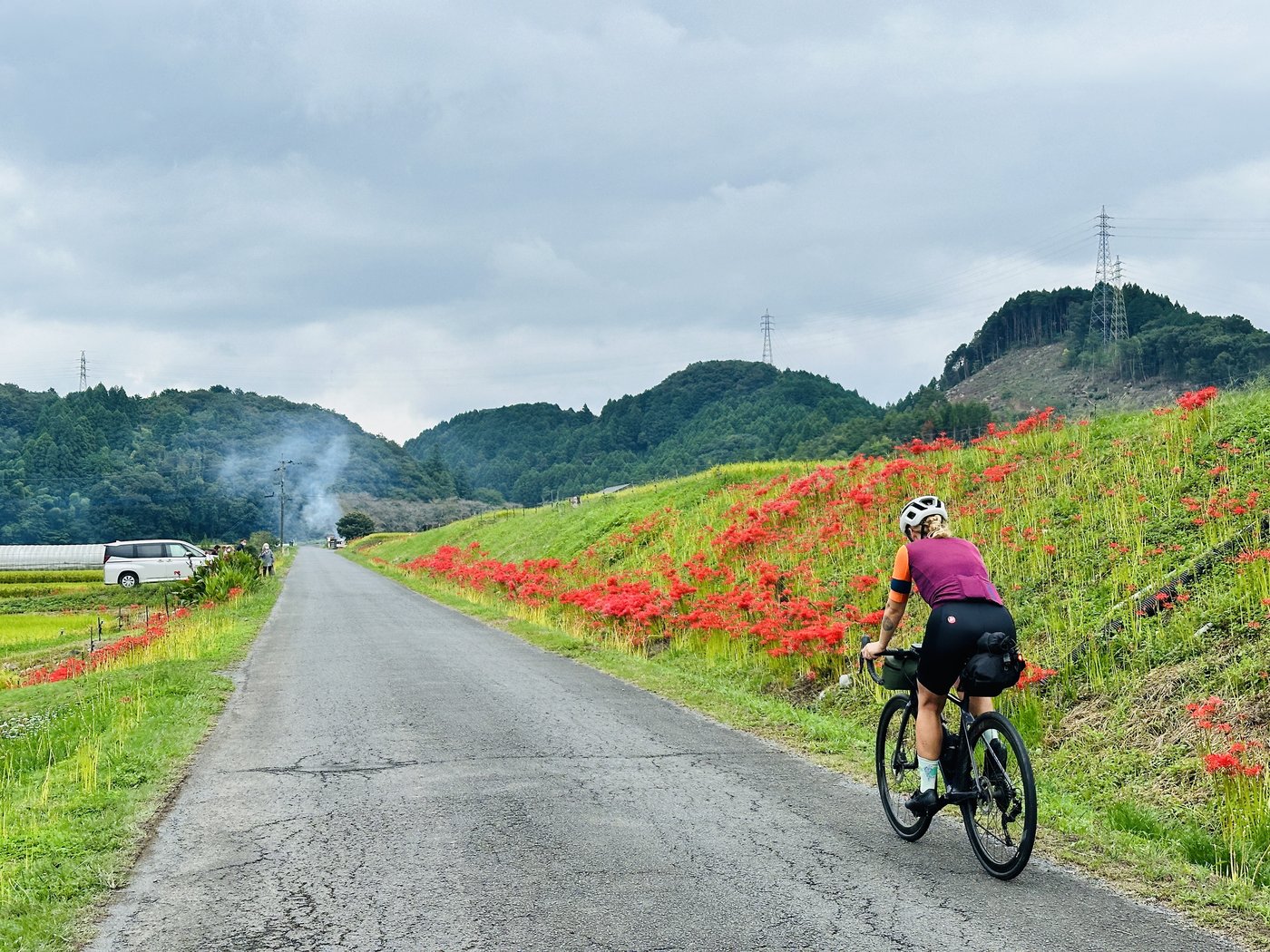
The appeal is easy to see. Oita has coastal stretches and hot spring country, while Kumamoto adds inland terrain, open roads, and access to mountain scenery. For riders, that means you can build a route with changing elevation, not just one long flat run.
My tip: if you like riding in Japan, keep an eye on local road names and station signs along the way. Words like 道 (michi, road), 駅 (eki), and 公園 (koen, park) show up everywhere, and they make the trip feel much easier to follow once you know the basics.

A route that works better with rest stops
One useful detail from the extra route material is the emphasis on stopping in a large park area on the Ohkushi Peninsula. That kind of pause matters on a Kyushu cycling trip, because the terrain can shift from relaxed cruising to heavier effort faster than you expect.
The park there offers a winery, camping site, fishing pier, cafe, hotel, tennis courts, a cycling road, and a souvenir shop. That’s a strong mix for a break, especially if you want to turn a ride into a slow travel day instead of trying to cover too much ground.
For Japan learners, this is also where travel vocabulary becomes useful in context. Terms like 観光 (kankou) for sightseeing, kyukyu for rest in some travel contexts, and お土産 (omiyage) for souvenirs appear naturally when you read local signs and brochures. You don’t need perfect Japanese to use them, just enough to spot the pattern.



How Kumamoto fits into the bigger cycling picture
Kumamoto has been showing up in sports and cycling news for another reason as well. In late 2026, Cyclowired published a race report about CJ Kumamoto Yoshimuta International 2026, which shows that the prefecture is not only a leisure destination but also part of Japan’s active cycling scene.
That matters because destinations with racing culture often have better awareness of bikes, road conditions, and rider needs. Even if you are not entering a race, you benefit from areas that already understand cyclists as regular users of the road, not just tourists passing through.
The prefecture also connects well with regional travel logic. If you are basing yourself in Fukuoka, or moving deeper into Kyushu, Kumamoto can be a smart midpoint before heading back toward Oita or farther south. It works as part of a loop, which is better than forcing a straight out-and-back ride every time.

What Japan fans should watch for on the road
Road cycling in rural Japan is often smoother when you plan around services instead of distance alone. Convenience stores, station areas, and roadside rest spots can matter more than a perfect mileage target, especially on routes that cross hills or quieter farmland.
The cultural detail is part of the fun. A ryokan stay, a local cafe stop, or a simple onsen break can turn a cycling day into a proper Kyushu travel memory. You don’t need a luxury plan for that, just enough time to slow down between sections.
Speaking of which, the Oita-Kumamoto idea works best if you treat it as a flexible travel corridor. The road can be the main attraction, but the places between the pedals are what make it worth the effort. That’s especially true in Kyushu, where local stops often give you more character than the fastest route would.
In pictures


Frequently Asked Questions
Is this route better for fast training or relaxed travel?
It works better as relaxed travel, because the mix of coastal roads, hills, and rest stops suits flexible pacing.
Why does Kumamoto matter for cyclists?
Kumamoto has both travel appeal and an active cycling scene, so it is useful for riders who want scenery and cycling culture in one trip.
Can Japanese learners get value from a cycling trip like this?
Yes. Road signs, station names, and local food and lodging vocabulary are all easy places to practise reading in context.