And that’s the part I find interesting. Fukuoka often gets described as compact, easygoing, and convenient, but once a place starts changing quickly, the real question becomes whether life on the ground still feels good for the people who live there, work there, and move through it every day.
What Kyushu Roundtable #7 was really asking
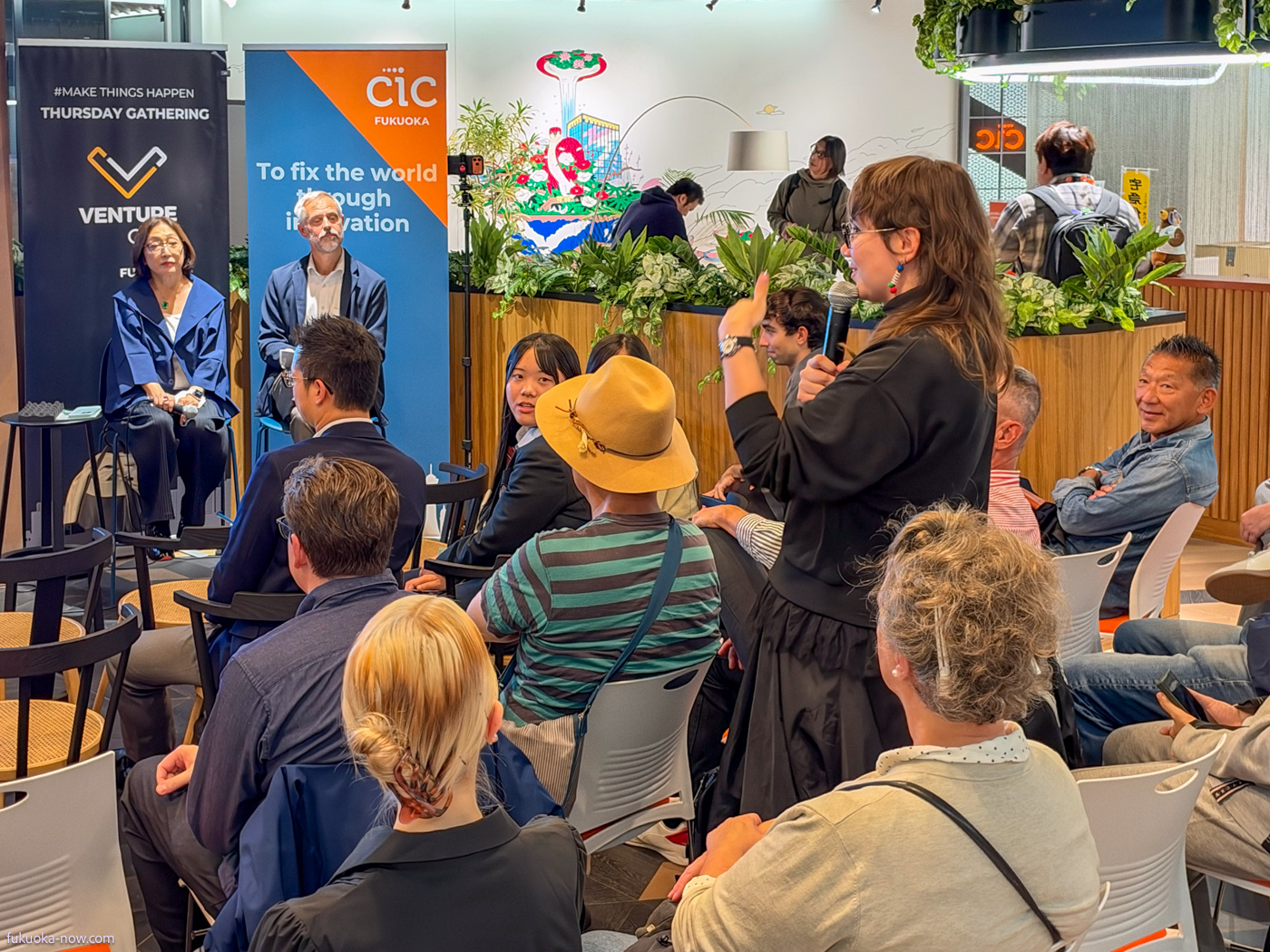
Kyushu Roundtable #7 in Fukuoka asked a practical question: what should residents actually gain from a growing city? Fukuoka Now says the roundtable explored housing, public spaces, transport, and the everyday experience of belonging, so this was less about flashy development and more about liveability.

That framing matters for travellers too. If you spend time in Fukuoka, you feel the city’s rhythm quickly, the train connections, the walkable neighbourhoods, the food, the parks, the small corners where people just exist comfortably. And when a city grows, those ordinary pieces are what can quietly improve, or quietly slip away.
For Japanese learners, this is a nice context for words you’ll hear often in city discussions, like 町づくり (machizukuri) for town planning, 生活 (seikatsu) for daily life, and 共存 (kyozon) for coexistence. They show up a lot in local news because Japanese urban debate often starts with the same basic idea: who is the city for, and how should it work?
Housing, public space, and the feeling of belonging
Housing sat near the centre of the conversation, which makes sense in a city that is attracting attention from both domestic movers and visitors. When a city becomes more popular, rents, supply, and neighbourhood character all start to matter at once, and not always in clean, tidy ways.

Public space is the other piece that changes how a city feels. A bench, a riverside path, a station plaza, a small park under the trees, these things do not sound dramatic, but they shape whether a place feels open or closed, relaxed or tense. Fukuoka has long been praised for being approachable, and the roundtable seems to have asked how that atmosphere can survive growth.
Belonging is harder to measure, but it may be the most important idea of all. A city can be efficient and still feel a little hollow, or it can be a bit messy and still feel warm. What many overlook is that everyday belonging is built from tiny interactions, readable streets, familiar stations, and spaces that don’t make you feel like you’ve wandered into somebody else’s private project.
Why Fukuoka keeps coming up in Japan travel conversations
Fukuoka is often where travellers first notice how easy regional Japan can feel. The airport is close to the city centre, the food scene is strong without being overhyped, and the city works as a base for wider Kyushu travel, from hot-spring towns to castle cities and coastal detours.


But beyond that, Fukuoka also shows a side of Japan that is less polished, more practical, and often more liveable than the usual megacity stereotype. That makes it a useful place to watch if you care about how Japanese cities evolve, especially outside Tokyo and Osaka. The changes happening here can hint at broader trends across Kyushu, where transport links, housing pressure, and local identity all have to coexist.
For a Japan fan, that mix is part of the charm. You get the easy travel value, but you also get a city where the details still matter, from how people move through a neighbourhood to how a shared space feels at different times of day. That is the kind of thing that makes a return visit feel different from the first one.
What this means for travellers and Japan fans
Take Fukuoka for instance: a place can look compact on a map and still have layers once you start paying attention. A station area may feel modern and efficient, while a nearby backstreet holds older shops, tiny restaurants, and the slower pace that makes a city memorable.

And that balance is why discussions like this are worth watching. They are not just for planners or residents. They help you understand why some Japanese cities feel easy to spend time in, and why others require a bit more effort to read.
My take is simple: if you travel in Japan with curiosity, you start noticing that progress is not only about new buildings or faster trains. It is also about whether a place still leaves room for human scale, small routines, and a sense of comfort. Fukuoka’s challenge is to keep that feeling while it grows, and that is a very Japan-shaped question.
So if Kyushu is on your list, keep Fukuoka in view not just as a stopover, but as a city whose everyday design says a lot about modern Japan. You’ll eventually find your own place in Japan, one street, one station, one quiet corner at a time. more Japan news on jpnerd.com
In pictures


Frequently Asked Questions
What was the main topic of Kyushu Roundtable #7?
The discussion focused on what residents should gain from a growing Fukuoka, especially housing, public space, transport, and belonging.
Why does this matter for travellers?
It helps explain why Fukuoka feels easy to move around in and why its everyday atmosphere is such a big part of its appeal.
Is this useful for Japanese learners?
Yes. It connects naturally with useful vocabulary around city life, planning, and daily routines.