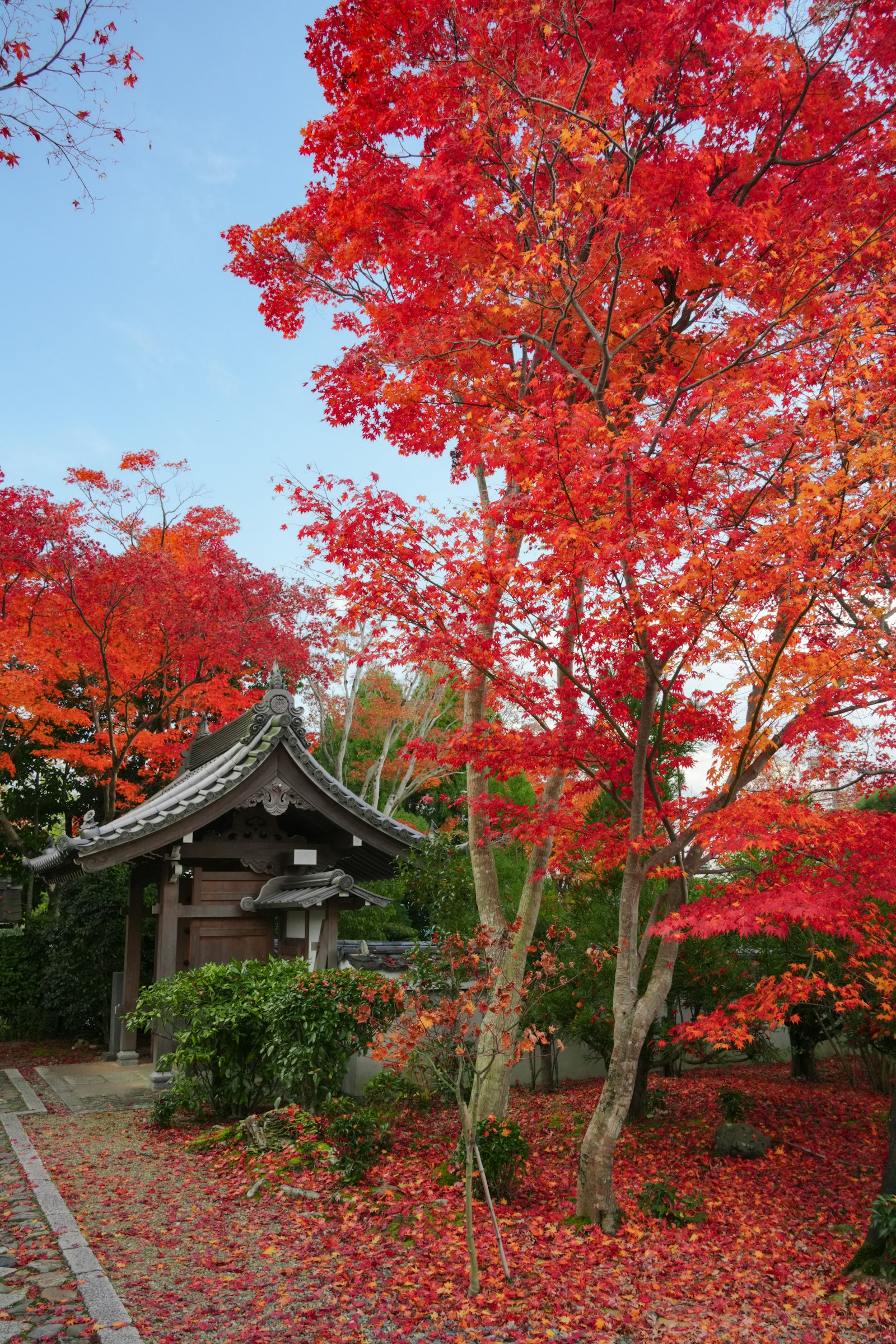
According to GaijinPot Travel, Eisho-ji sits in Kyoto’s Sakyo Ward and is known for its seasonal garden views, especially when moss and maples shape the grounds into a calm, photogenic stop. For Japanese learners, it’s also a handy place to notice temple vocabulary in context, from 禅堂 (zendo, meditation hall) to 枯山水 (karesansui, dry landscape garden), even when the setting is much smaller than Kyoto’s headline temples.
Why Eisho-ji Temple fits a slower Kyoto trip
Eisho-ji Temple is best approached as a quiet stop rather than a big-ticket sightseeing landmark. The temple is in Kyoto’s Sakyo Ward, and according to GaijinPot Travel it’s most appealing for its atmosphere, garden setting, and the way it slips into a day of low-key temple hopping without demanding much time.
That makes it useful for travellers who want more than the standard checklist. Kyoto has plenty of famous temples with heavy foot traffic, but Eisho-ji offers a calmer pace, which suits visitors who prefer looking, listening, and noticing small details. If you enjoy photography, sketching, or simply walking without a rigid schedule, this is the sort of place that can make a trip feel more personal.
For Japan enthusiasts, the appeal is cultural as much as visual. Temples like Eisho-ji help explain how Kyoto still carries layers of court culture, Buddhist practice, and garden design in one compact space. You’ll also run into useful vocabulary here, such as 寺 (tera) for temple, 庭 (niwa) for garden, and 紅葉 (momiji, maple leaves; autumn foliage) for maple leaves, all of which show up naturally when people talk about Kyoto travel.
Historical context and the temple atmosphere
Eisho-ji belongs to the long temple tradition that gives Kyoto so much of its character. The city is full of Buddhist sites that were shaped by patronage from noble families, and that background matters because it explains why so many temples feel tied to aesthetics as much as worship. Smaller temples like this often preserve a more intimate scale, which can be more revealing than a grander, busier complex.
What I especially like about temples in this category is that they encourage closer observation. You notice the entrance path, the relationship between architecture and planting, and how the buildings frame the surrounding space. That kind of design language is important in Japanese culture, where emptiness and proportion matter just as much as decoration.
Let’s be honest: not every Kyoto temple needs to be a world-famous icon to be worth your time. Eisho-ji is interesting precisely because it feels like a place where the mood matters more than spectacle, and that’s often the version of Kyoto that Japan fans remember best.
What to look for when you visit
The garden is one of the main reasons people go to Eisho-ji Temple. According to GaijinPot Travel, the grounds are especially attractive in seasonal change, which means cherry blossom season and autumn foliage can both improve the experience dramatically. Even outside peak seasons, the temple’s calm layout gives the visit a strong sense of balance.


Pay attention to how the temple uses space. Kyoto temples often pair wooden buildings with carefully managed greenery, and Eisho-ji follows that same tradition on a smaller scale. That combination is useful for learners trying to connect Japanese words with what they see, because the place itself becomes a vocabulary lesson in landscape, structure, and seasonality.
If you’re building a Kyoto temple route, Eisho-ji works well with other quieter sites rather than with the largest tourist magnets. The practical advantage is simple: there’s less pressure to rush, and the visit can stay focused on atmosphere rather than queue management or crowds.
Useful Japanese words for this kind of visit
Temples are one of the easiest places to learn everyday cultural vocabulary. A few terms worth noticing are tera, niwa, momiji, and お寺 (otera, temple (polite)), which is a polite way to say temple. You may also hear people refer to seasonal viewing, or 四季 (shiki, the four seasons), when they talk about why a site changes throughout the year.
My tip: read temple names and garden descriptions in romaji while you travel, then match them to what you see on-site. That simple habit makes Japanese feel less abstract, and Kyoto is a great city for practising it because the setting gives each word a visible meaning.
How Eisho-ji Temple compares with better-known Kyoto temples
Kyoto has no shortage of famous temple names, from Kinkaku-ji to Daitoku-ji, and even temples that have become cultural reference points far beyond Japan. Eisho-ji isn’t trying to compete with those places on scale or fame. Its value lies in how it distils Kyoto’s temple culture into a quieter, more manageable visit.
That distinction matters for planning. Larger temples can be rewarding, but they can also feel crowded and structured around the flow of mass tourism. Eisho-ji is better for travellers who want a softer rhythm and a bit more room to absorb the details. If you’re writing your own Kyoto itinerary, think of it as a place for observation, not a place to rush through.
For readers learning Japanese, this is also a reminder that not every meaningful destination has to be a headline attraction. Sometimes the smaller temple gives you better language practice, clearer visual cues, and a stronger sense of place.
Frequently Asked Questions
Where is Eisho-ji Temple located?
Eisho-ji Temple is in Kyoto’s Sakyo Ward.
What is Eisho-ji Temple known for?
It is known for its quiet atmosphere and seasonal garden views.
Is Eisho-ji Temple a good stop for Japan fans?
Yes, especially if you like calmer Kyoto sights and want to connect temple culture with Japanese language learning.