
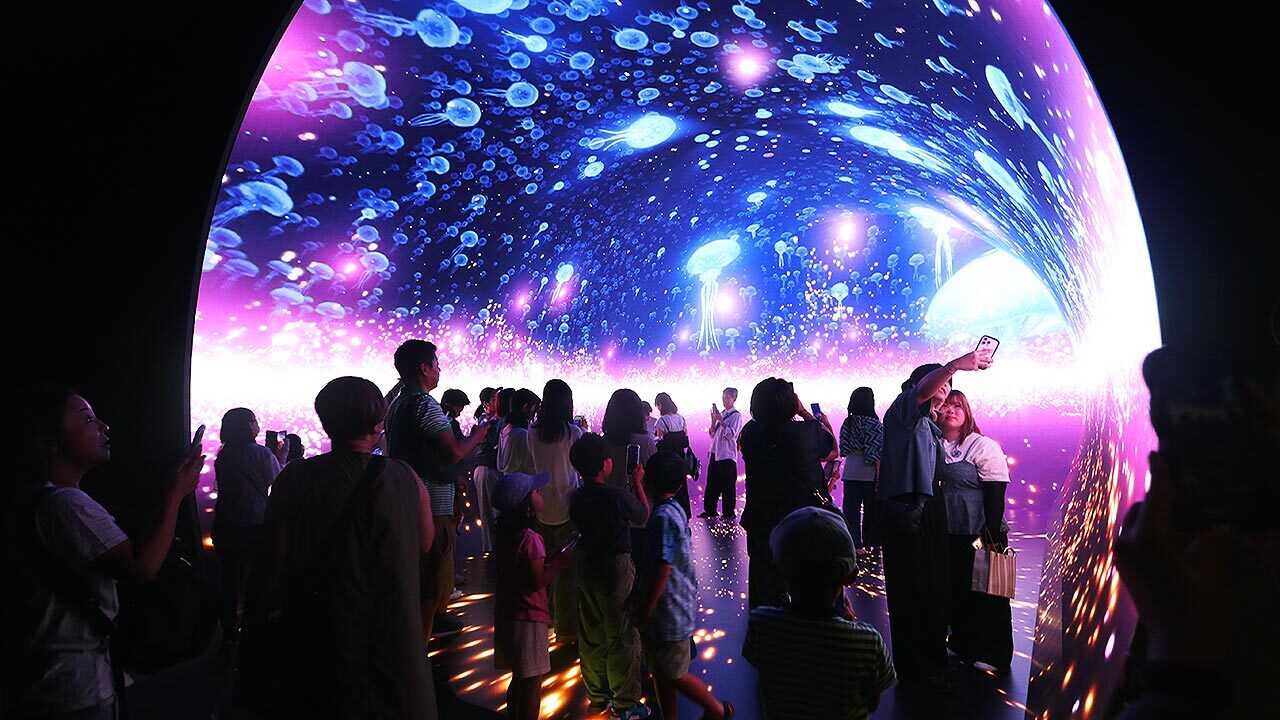
Both places lean into immersive design rather than traditional museum-style viewing, so you’ll want to think about them as experience spaces, not just galleries. That also makes them a nice fit for Japanese learners, since the surrounding travel vocabulary and signage often give you plenty of real-world reading practice.



Two new digital art attractions in Tokyo and Yokohama
Tokyo and Yokohama have gained two fresh stops for fans of immersive art, one in each city. The timing’s neat, because both cities already have strong entertainment districts, and digital art slots in naturally beside shopping, dining, and evening sightseeing.
The big idea is simple: these aren’t quiet white-walled galleries. They’re built around light displays, projections, sound, and interactive spaces, so the visit feels more like stepping into a moving installation. A great example of that is an attraction that can appeal to art lovers, anime fans, and first-time visitors who want something different from the usual temple-and-tower route.
For Japan enthusiasts, this also connects nicely with a few useful words you’ll see again and again in travel guides: 美術 (bijutsu) for art, 体験 (taiken) for experience, and 空間 (kukan) for space. If you’re learning Japanese, those labels can help you spot whether a place is designed for viewing, participation, or both. My tip: keep an eye out for event pages and ticket sites, because immersive spots often change content seasonally.
Why digital art keeps expanding in Japan
Why are these kinds of attractions popping up so often? The reason’s simple: Japan has a strong appetite for polished presentation, and digital art gives creators plenty of room to build atmosphere fast. It also works well in cities where space is limited, since an indoor installation can pack a lot into a relatively small footprint.
That brings us to Tokyo and Yokohama, two cities that already understand how to blend culture with commercial energy. Tokyo’s districts draw huge crowds for nightlife, shopping, and pop culture, while Yokohama has long sold itself as a more relaxed harbour city with a modern edge. Put digital art into that mix, and you get something that feels current without needing a huge historic building or a long museum circuit.
The best part is that these attractions often give visitors a reason to linger after dark. That matters in Japan, where evening sightseeing can be just as rewarding as daytime temple visits, especially if you like city lights, riverfront walks, or dinner nearby. Wild, isn’t it? A single digital space can turn into the anchor for an entire night out.
What Japan travellers should watch for
If you’re building an itinerary, check the opening hours carefully, because many digital art venues operate on timed entry or limited sessions. Some also require advance booking, and weekends can sell out quickly. Compared with traditional museums, the pacing can feel more like an attraction park visit, so allow a little flexibility.
Language learners can treat the ticket site itself as reading practice. Look for words like 入場 (nyujo, admission; entry) for admission, 時間 (jikan) for time, and 休憩 (kyukei, break; rest) for break. Even simple signage inside the venue can be useful, because it often mixes English with short Japanese labels. That’s why these spots are handy for travellers who want sightseeing and study in the same afternoon.



Tokyo versus Yokohama: how the two cities differ
Tokyo’s strength is scale. You can pair a digital art visit with areas like Odaiba, Shibuya, or Roppongi, where big-screen visuals and nightlife already feel part of the scenery. No joke: Tokyo can make almost any tech-heavy attraction feel bigger than life.
Yokohama, on the other hand, tends to feel a little softer around the edges. The harbour setting, bay views, and wider promenades give the city a more open mood, so a digital art stop there can feel like one part of a broader evening walk. Plot twist: that calmer pace may make Yokohama the better choice if you want less rushing and more breathing room.
Before I forget, both cities are easy to pair with food stops, and that matters more than people admit. After a light-filled exhibit, a bowl of ラーメン (ramen, ramen noodles), a cafe break, or a dessert run can round out the day nicely. What I especially like is that you don’t need a major detour to fit these into a standard Tokyo or Yokohama trip.
Is it worth adding to your Japan trip?
Yes, especially if you enjoy modern culture, photography, and places that feel designed for wandering. These new digital art attractions aren’t a replacement for shrines, gardens, or history, but they do give a trip more range. They also suit repeat visitors who’ve already seen the classic highlights and want something fresh.
For Japanese learners, they’re useful for another reason too: you’ll see real travel language in context, from ticketing to exhibit labels to city directions. That makes the whole outing a bit more memorable than reading vocabulary from a textbook. Highly recommended: bring a charged phone, because these are the kind of places where you’ll want to check access details, read signs, and maybe save a few reference phrases for later.
My verdict: if you’re heading to Tokyo or Yokohama soon, these digital art spaces deserve a place on your shortlist, especially if you enjoy modern Japan with a visual twist. They’re the sort of stop that can turn an ordinary evening into something you’ll actually remember.
Frequently Asked Questions
Are these digital art attractions good for first-time visitors?
Yes. They’re easy to combine with shopping, dining, and other sightseeing, so they fit neatly into a first trip.
Do you need to book tickets in advance?
Often, yes. Timed entry and weekend demand can make advance booking a smart move.
Are they useful for Japanese learners?
Definitely. You’ll see practical travel vocabulary, ticket information, and signage in a real setting.

