Overview
I first came to understand Gunma’s 温泉 (onsen, hot spring; a bathing resort built around natural hot water) not as a checklist of famous bath towns, but as a dense, lived landscape. The prefecture has more than 2,000 hot spring sources, a concentration that gives the region a particular rhythm: water is not scenery here, but livelihood, etiquette, medicine, architecture, and memory. The Onsen Culture UNESCO Bid is meant to frame that whole ecology as intangible cultural heritage, which is UNESCO’s way of recognizing practices passed down by communities rather than monuments fixed in stone.
That distinction matters. The bid is not only about mineral water in the abstract. It is about the people who keep the baths running, the 職人 (shokunin, craftsman; skilled artisan) who maintain the wooden structures, the local habits around washing and entering the bath, and the quiet social rules that make an onsen feel coherent rather than merely functional. In Gunma, the argument is that these customs deserve preservation because they are still being lived, not because they belong to a vanished past.
Why Gunma is central to the bid
Gunma Prefecture sits at the center of this effort because its geothermal terrain has produced a remarkably thick onsen culture over generations. The prefecture’s bath towns are not isolated attractions; they are part of a wider watershed of practice, shaped by geology and by the communities that settled around it. Kusatsu Onsen, Ikaho Onsen, and Shima Onsen are the best-known names, but they are also anchors in a broader network of daily bathing, seasonal gathering, and local knowledge.
Kusatsu in particular carries historical weight. It was already famous in the Edo period, when its sulfur springs were recommended for treating illness. That older medical reputation still lingers in the way people speak about hot water in Japan: not as a luxury, but as something restorative, almost civic. The UNESCO proposal draws on that history while also insisting on the present tense. The baths matter because people continue to use them, maintain them, and teach their logic to the next generation.
The living traditions the bid tries to protect
The core of the bid is the idea that onsen culture is made of repeated acts. There is the etiquette of bathing, which includes washing before entering the water and moving through the space with consideration for others. There is 浴衣 (yukata, light cotton robe worn in inns or after bathing), the casual cotton robe worn in many hot-spring inns, which signals a shift into a slower social register. There are the small food customs after bathing, when a drink or a simple meal becomes part of the experience, not an add-on. And there are rituals of care that are easy to overlook until they disappear.
Several practical forms of knowledge are central here. The first is 湯飲み (yunomi, handling or mixing hot-spring water; water management in baths), the mixing and handling of hot spring water, which requires attention to temperature and composition. The second is 湯焚き (yudaki, heating and managing bath water), the management of bath water so it remains usable and safe within a communal setting. These are not decorative traditions. They are embodied techniques, learned by watching, repeating, and correcting mistakes. A hot spring town survives through such habits as much as through its scenery.
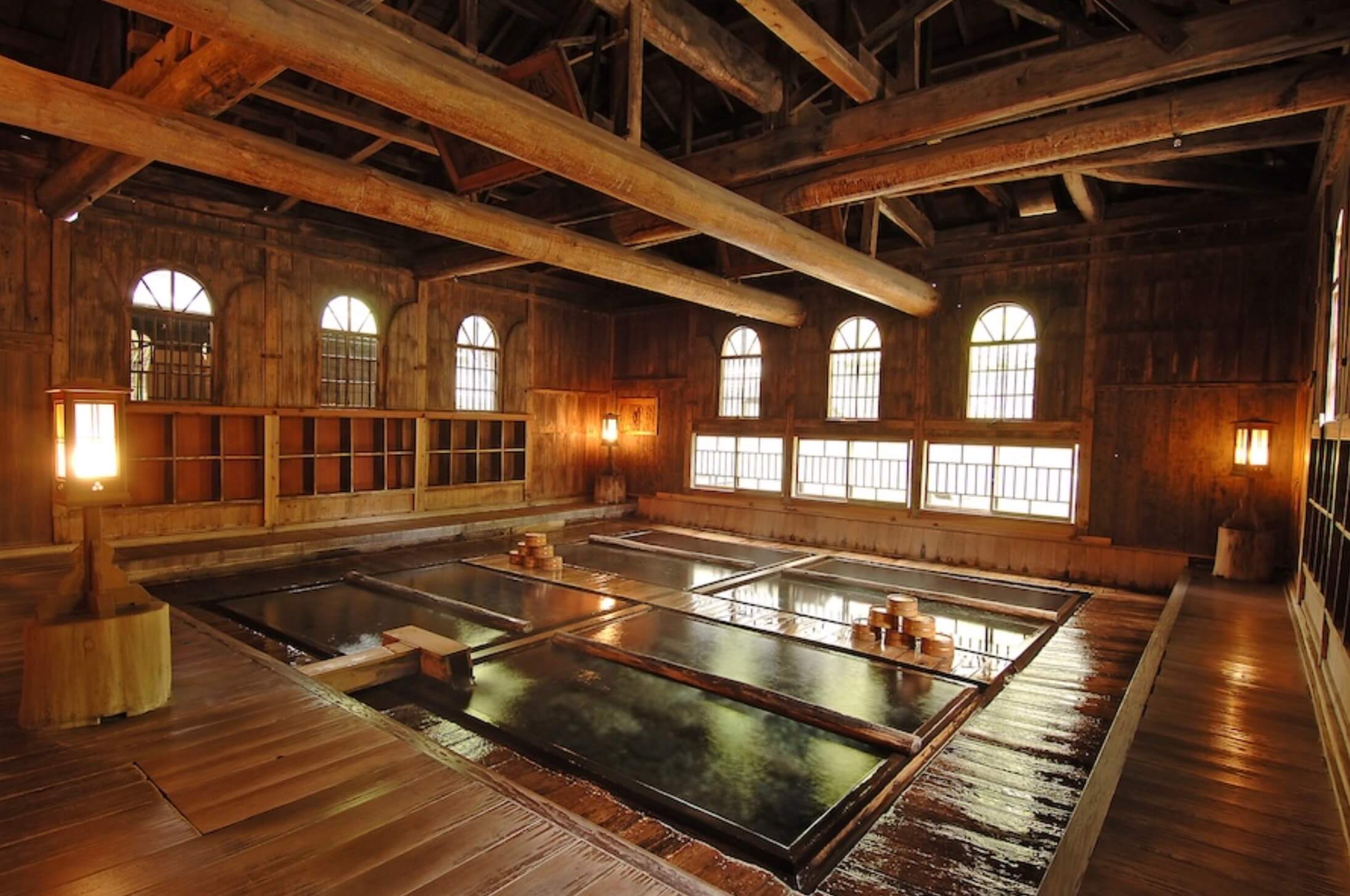
The bid also emphasizes architecture and place-making. Bathhouses, 旅館 (ryokan, traditional Japanese inn), and the surrounding streets are designed to support particular ways of moving, resting, and gathering. Even the layout of a town can express its onsen culture: the path from station to inn, the changing of clothes, the threshold between public street and shared water. I think of these spaces as shaped by おもてなし (omotenashi, thoughtful, attentive hospitality), the attentive hospitality that is never quite grand, but always deliberate.
What UNESCO heritage status would recognize
UNESCO intangible cultural heritage criteria focus on living practices that are transmitted within communities. That makes them well suited to onsen culture, which depends on continuity rather than spectacle. The goal is not to freeze Gunma’s baths in a museum-like condition. It is to protect the conditions that let them remain ordinary, useful, and legible to local people.
For that reason, the bid includes preservation plans aimed at resisting overcommercialization. That concern is not a rejection of visitors; it is a recognition that a bath culture can be thinned out when it is treated only as a product. If the rituals are stripped away, the buildings simplified, and the knowledge reduced to branding, what remains may still look like an onsen town, but it will no longer function as one in the older communal sense.
The Onsen Culture Conference in Gunma plays a role here as well. It is part of the effort to document and protect onsen as a living cultural form, gathering testimony, practices, and local understanding before they are lost or flattened. In that sense, the bid is as much archival as it is promotional.
How the major hot-spring towns fit into the story
Kusatsu, Ikaho, and Shima each contribute a different texture to the larger claim. Kusatsu is the place of strong waters and deep reputation, where the history of healing still shapes expectations. Ikaho is often associated with its stone steps and the layered feeling of a town built around movement and pause. Shima, set in a quieter valley, carries a more contemplative atmosphere, where the onsen seems woven into the landscape rather than set apart from it. Together they show that Gunma’s heritage is not uniform. It is varied, local, and dependent on distinct communities.
That variation is one reason the bid feels credible. It does not rely on a single emblematic bath. Instead, it gathers a range of practices that show how onsen culture changes from town to town while remaining recognizably linked. The common thread is not a brand, but a way of living with hot water.
How to begin learning more
For anyone approaching this topic for the first time, the most useful starting point is not a list of top baths but a closer look at the routines around them. Reading about onsen etiquette, the meaning of ryokan hospitality, and the history of Kusatsu in the Edo period gives the bid more shape than headlines alone can provide. It is also worth following local documentation from Gunma’s cultural preservation efforts, since UNESCO proposals depend on evidence gathered from the communities themselves.
If the aim is to learn Japanese through this subject, the topic is unusually rich. Search terms like Onsen Culture UNESCO Bid kanji and Onsen Culture UNESCO Bid japanisch lernen point toward a useful vocabulary of bathhouse life, regional history, and preservation language. The words are tied to practice, which makes them easier to remember than abstract lists. I have found that learning a culture through its rooms, its water, and its rules often leaves a deeper trace than learning it through slogans.
The bid is still a proposal, not a settled outcome. But even before any UNESCO decision, it has already done something valuable: it has asked people to see onsen less as a backdrop for travel and more as a craft of communal continuity. And so it became a plan.
Related searches and what they can tell you
- Onsen Culture UNESCO Bid release date: useful for following the timetable of the proposal process.
- Onsen Culture UNESCO Bid news: best for updates from Gunma Prefecture and cultural preservation groups.
- Onsen Culture UNESCO Bid leak: there is no confirmed leak in the available facts, so treat any such claims as unverified.
- Onsen Culture UNESCO Bid 2027: a search term to monitor if you are tracking likely future milestones or decisions.