
Overview
I've walked a fair amount of Japan on foot, which means I've also spent a fair number of nights doing the opposite: sitting still while the country moves past a window in the dark. The Sunrise Izumo and Sunrise Seto are how you do that properly now, because they're the only ones left. Every other regular overnight sleeper on Japan's conventional network has been retired over the years. These two haven't. They've been running jointly since 1998 — JR East, JR Central, and JR West behind the Izumo; JR East, JR Central, JR West, and JR Shikoku behind the Seto. That's four railway companies cooperating to keep a slow, unhurried idea alive for going on three decades. There's a specific texture to falling asleep in Tokyo and waking up somewhere else entirely. Make of that what you will. I find it reassuring.
One train, two destinations: how the coupling works
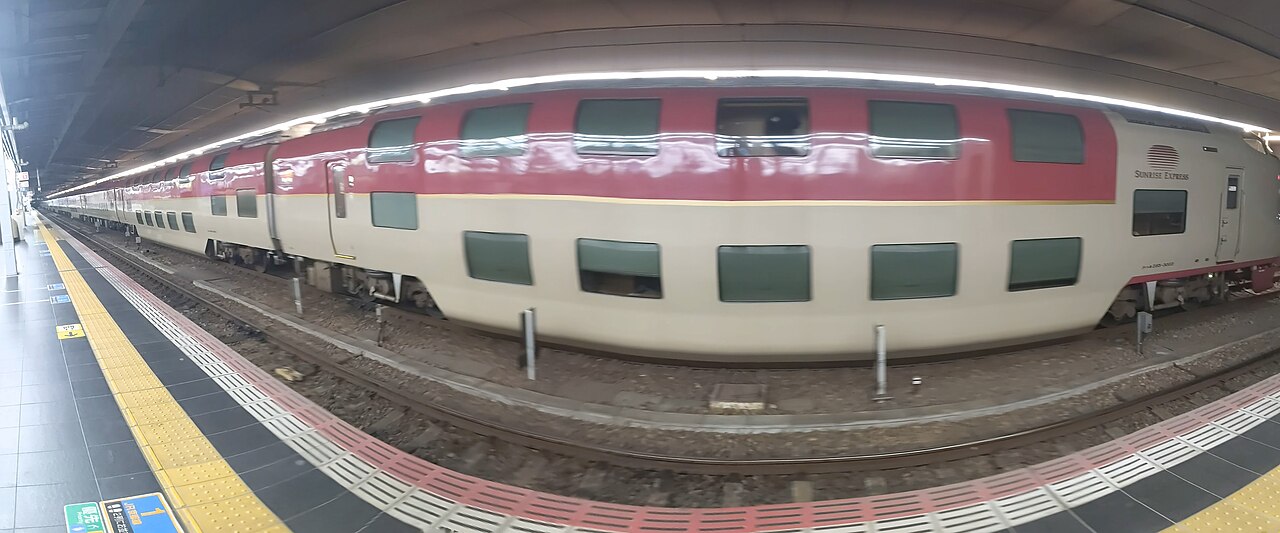
Here's the mechanic of it, and it's a good one. The two trains leave Tokyo Station — not Shinjuku, despite what half the internet seems to assume — coupled together as a single unit, somewhere around 21:50 to 22:00. For the next several hours they run as one train, through Yokohama, past Nagoya, past Osaka, until they reach Okayama around 06:27. That's where they split. The Izumo-bound section peels off toward the San'in coast and reaches Izumo-shi around 09:58 — call it twelve hours, door to door, from Tokyo. The Seto-bound section continues toward Shikoku and arrives in Takamatsu much earlier, around 07:27, a shorter run of roughly nine and a half hours. Two trains, two very different lengths of night, one coupling.
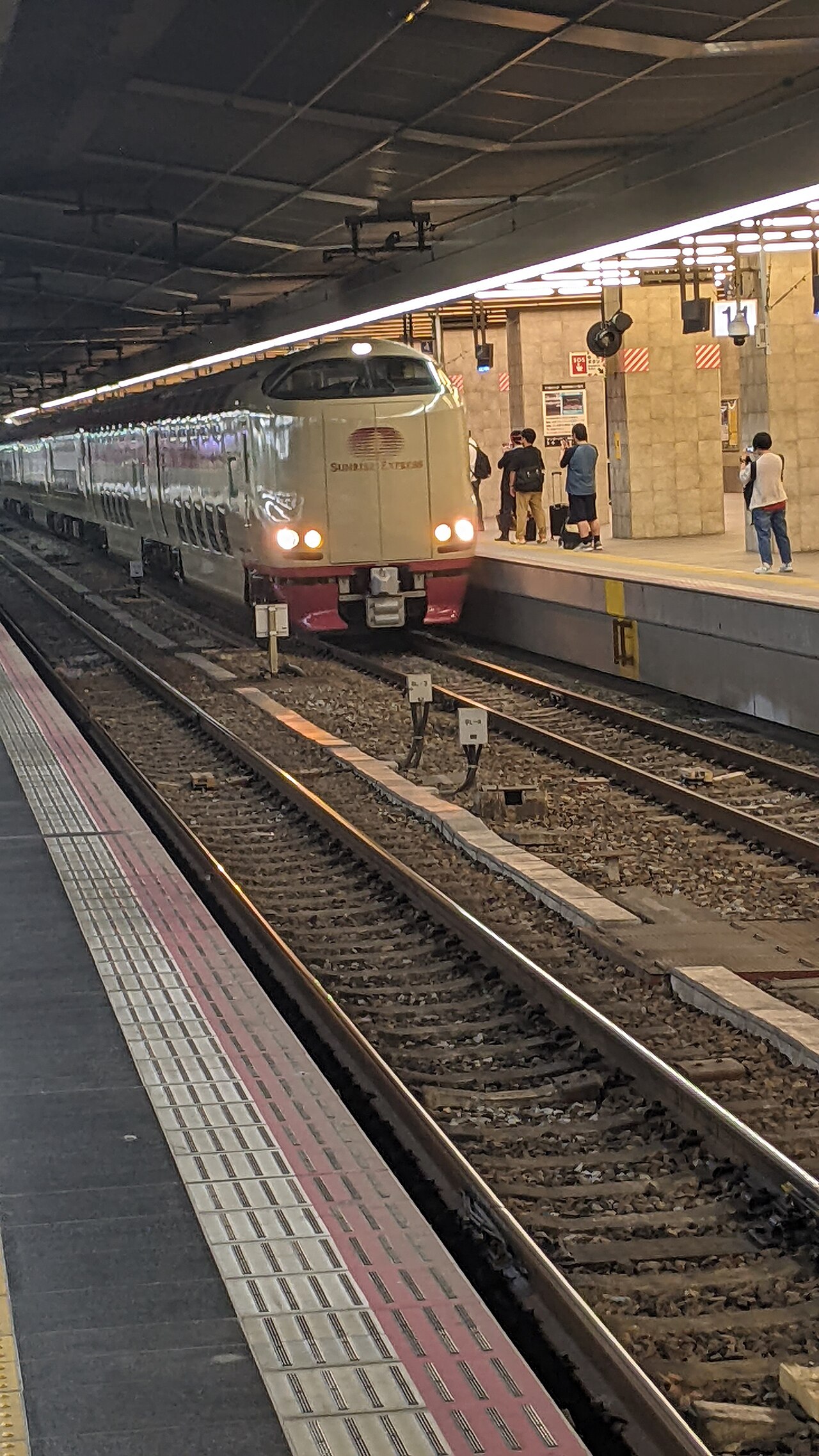
- Departs Tokyo Station nightly, around 21:50–22:00
- Runs coupled until Okayama, arriving there around 06:27
- Izumo section: Izumo-shi arrival around 09:58 (about 12 hours total)
- Seto section: Takamatsu arrival around 07:27 (about 9.5 hours total)
Nobinobi berths and private cabins
The berth that gets talked about the most is the 伸び伸び (nobinobi, stretched out, relaxed (here: open-style train berth)), and it's the one worth understanding before you book anything. Nobinobi means, roughly, stretch-out, and that's exactly the pitch: an open carpeted deck, no walls, no doors, no locks, arranged in a two-level grid with just enough low partition between bodies to suggest privacy without providing it. It's the capsule-hotel logic applied to a train car — communal, unglamorous, cheap. It's also the entry-level option and usually the first thing to sell out.
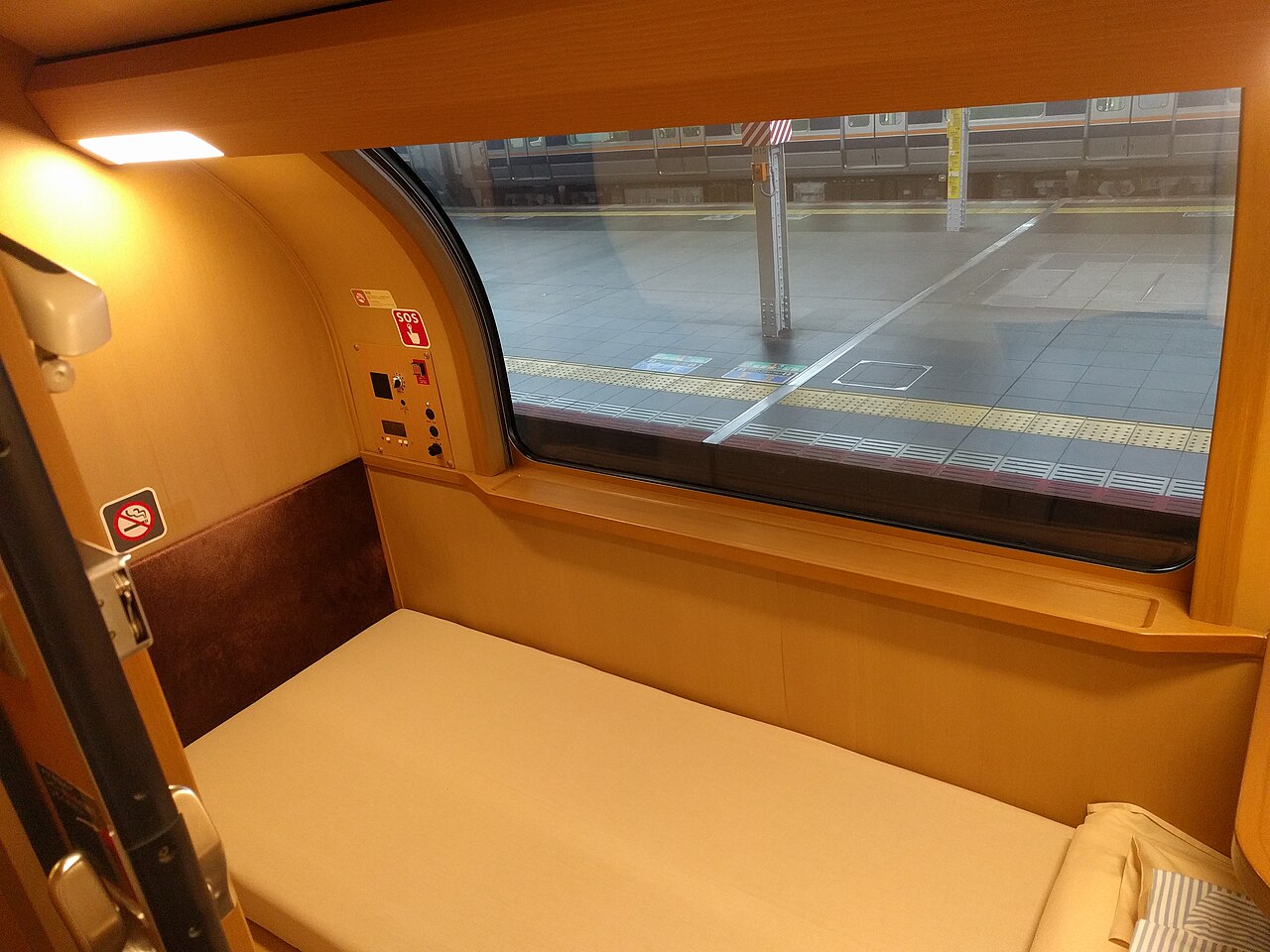
If that's too exposed for your taste — and some nights, mine too — there are private cabins as well, both single and twin. The one to know is Solo, the cheapest private compartment: a door that actually closes, a berth just wide enough for one adult and a bag, a small shelf, a power outlet, a reading lamp, and cushioned seating that folds into a bed. It costs more than a nobinobi berth and less than the Deluxe cabins further up the train, which makes it the compartment most people who want a door but not a splurge end up booking. There are showers on board too, for an extra fee — but only a couple of them serving the whole train, so budget your morning accordingly if a dozen other passengers had the same idea.
- Nobinobi: open pod-style berth, no door or lock, cheapest option
- Solo: private single cabin with door, shelf, outlet, and lamp
- Deluxe and other private single/twin cabins: higher comfort tiers above Solo
- Coin showers: available on board, limited in number
Fares and booking
Money, since you'll ask. Tokyo to Izumo in a Solo compartment runs to roughly 22,000 yen in standard season — about 22,110 yen once you stack the base fare, the Limited Express surcharge, and the sleeper fee together, which is the standard way Japanese rail pricing works and never gets less confusing no matter how many times you do it. Book ahead. Golden Week and the summer holidays will strip the cheap berths — nobinobi first, Solo close behind — well before you think you need to worry about it. I've been burned by less predictable trains than this one; don't assume a berth will be there just because the timetable says the train still runs.
Where to experience the Sunrise Izumo and Sunrise Seto
Board at Tokyo Station, ideally with dinner already eaten, since onboard offerings are thin — a vending machine, not a dining car, so plan your convenience-store run on the concourse beforehand. If Izumo is your endpoint, you're headed for Izumo Taisha and the San'in coast, arriving with the whole day still ahead of you. If it's Seto, you'll be in Takamatsu early enough for a proper 饂飩 (udon, udon noodles) breakfast before the shops are even open. Either way, the name does the work for you: you board in the dark in Tokyo, and somewhere past Okayama, if you're awake for it, the sun actually comes up over the Seto Inland Sea. That's the whole idea. It still works.
A few words worth learning before you board
A couple of terms worth carrying with you. Nobinobi, as noted, means stretch-out — useful shorthand once you're navigating a ticket machine or a conductor's quick explanation of where your berth actually is. 夜行列車 (yakou ressha, night train) is the general term for a night train; 寝台 (shindai, sleeping berth) is the word for a sleeping berth, and you'll see it on signage more than you'd expect. None of this is essential to riding the train, since staff and displays handle the bilingual basics well enough. But a night train is exactly the kind of slow, contained situation where a few words of Japanese stop feeling like homework and start feeling like company. More soon.
