Overview
Tatsuya Hamada's Post news points to a very practical shift in how JR East wants passengers to buy and use Shinkansen tickets. The headline here is not a flashy route launch or a new train model, but a quieter change in the background: special fares for Shinkansen e-tickets linked to the JRE POINT reward program, plus a test of a new purchase machine at Omiya and Utsunomiya stations. That may sound dry at first glance, but it matters in the way good transit changes always do… by making a trip smoother, a little cheaper for some riders, and less confusing for people who just want to get moving.
For travelers, this is the kind of update that can actually shape a day in Japan. If you understand how the fares, booking conditions, and station-based trial work, you can make better choices before you board. And if you are the sort of person who likes to see how systems evolve in Japan, there is a real story here about digital ticketing, reward programs, and the steady push toward more streamlined rail travel.
What JR East is changing
JR East started special fares for Shinkansen e-tickets tied to the JRE POINT reward program on 2026-06-01. In simple terms, this means some riders can use points as part of reward bookings for e-tickets, rather than treating every ticket purchase as a separate, purely cash-based transaction. The result is a more flexible setup for regular users who already collect points through JR East's ecosystem.
The special fares are not universal, though, and that detail matters. They apply only to specific Shinkansen routes, and they come with set quotas and booking conditions. So this is not a free-for-all discount window; it is a controlled program with limited availability. If you are looking at it from a practical travel angle, the key is to plan ahead and check eligibility before you count on the savings.
This is where a bit of 予約 (yoyaku, reservation; advance booking), meaning a reservation, becomes essential. These kinds of fare systems often reward people who prepare early rather than those hoping to buy at the last minute. And because the rules can vary by route and quota, the smartest approach is to treat it like a timed opportunity, not an everyday default.
Why the reward program matters for travelers
The JRE POINT program is the engine behind the special fares, and that makes it more relevant than it might first appear. JRE POINT can be used to pay for Shinkansen e-ticket reward bookings, which gives repeat travelers a way to turn their accumulated points into actual transport value. For commuters, frequent intercity riders, and people doing multiple trips through the JR East network, that can be genuinely useful.
There is also a broader travel lesson here. Japan's rail systems are often admired for punctuality, but the behind-the-scenes payment experience can still feel a little layered if you are new to it. These reward bookings help simplify that process for some users, and they show how digital rail travel keeps moving forward. If you are comparing different ticketing options, you may also want to keep an eye on related JR East developments like JR East's special fares for Shinkansen e-tickets and other station-level experiments that point toward a more app-friendly future.
For learners of everyday Japanese travel language, this is also a useful context for the word 駅 (eki, train station), meaning station, because so much of the system still revolves around station-based access even when the payment method becomes more digital. The balance between physical stations and digital tools is part of what makes rail travel in Japan feel so specific, and honestly, kind of fascinating.
The Omiya and Utsunomiya trial
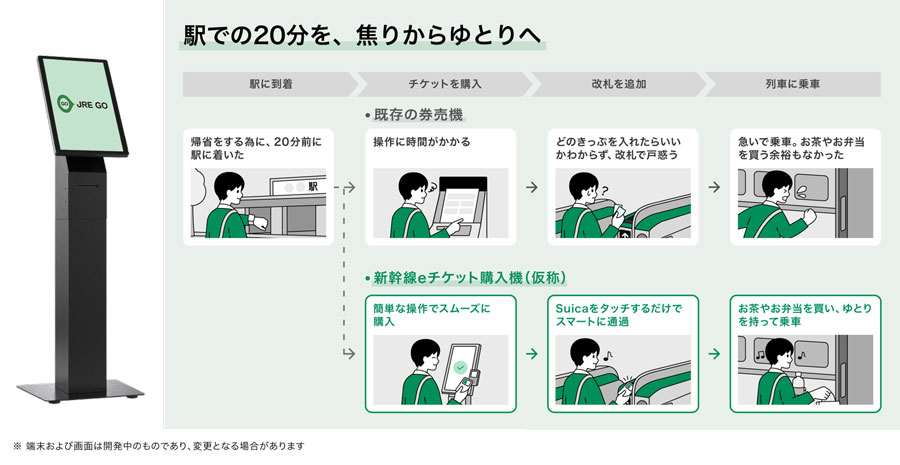
On 2026-06-23, JR East is testing a new Shinkansen e-ticket system at Omiya and Utsunomiya stations. The test centers on a Shinkansen e-ticket purchase machine intended to make ticket buying and reservations more digital and less cumbersome. That phrasing says a lot: the goal is not just to digitize for the sake of it, but to reduce friction for passengers who would rather spend less time figuring out fare steps and more time simply traveling.
This kind of trial is especially interesting because it sits at the intersection of convenience and habit. Many travelers still think of train tickets as something you either buy at a counter or manage through a familiar app flow. A station machine designed for e-ticket purchase suggests JR East is trying to bridge that gap, keeping the process accessible while nudging it into a more streamlined form. And yes, that is exactly the sort of quiet infrastructure change that can make a surprisingly big difference.
There is also a geographic logic to the test. Omiya and Utsunomiya are important travel hubs for passengers heading toward Tokyo or the Tohoku region, though that detail is noted from an unverified source and should be treated cautiously. Even so, the choice makes sense on a practical level: if a new ticketing system works well in busy interchange areas, it has a better chance of being useful elsewhere.
If you are following rail updates closely, this trial connects nicely to other JR East ticketing experiments such as the new Shinkansen e-ticket system test in Omiya. Put together, these developments suggest a steady shift toward fewer paper steps and more digital convenience… which, in Japan, usually happens with a lot of care rather than all at once.
What it means in real travel terms
For visitors, the practical takeaway is simple: if you plan to ride JR East Shinkansen services, ticketing options are becoming more varied, but also more specific. Special fares can be attractive, yet they depend on route, quota, and booking rules. The new machine trial may eventually make things easier at selected stations, but for now it is still a test, not a nationwide standard.
If you want to experience this part of Japan travel in a grounded way, focus on major JR East stations and the booking tools associated with them. That is where these systems live, and where their usefulness becomes real. A trip through a hub like Omiya or Utsunomiya can be more than a transfer; it can also be a look at how Japan keeps updating the everyday mechanics of rail travel.
And that is kind of the charm here. Not every important Japan story is about a giant reveal. Sometimes it is about the small, practical things that shape how you move, how you reserve, and how you pay. If you are learning how travel works here, keeping track of changes like these is part of the fun.
Related terms and how to think about them
For readers searching around Tatsuya Hamada's Post kanji or Tatsuya Hamada's Post japanisch lernen, the useful angle is not a language lesson about the post itself, but the travel vocabulary around it. JRE POINT is the reward program at the center of the special fares, yoyaku is the reservation process, eki is the station where the new system is being trialed, and Shinkansen is the high-speed rail network affected by the change. These are the terms that matter when you are navigating the update as a traveler.
And if you are looking at Tatsuya Hamada's Post guide style information, the best approach is to keep it practical: check whether your route is eligible, confirm the booking conditions, and pay attention to station announcements or JR East guidance if you are using the new machine. That is the real value here… not hype, just a clearer way through the process.
Frequently Asked Questions
What is Tatsuya Hamada's Post about in this context?
It refers to JR East updates about Shinkansen e-ticket special fares and a station-based e-ticket machine trial, both focused on making rail travel more practical.
Can JRE POINT be used for Shinkansen e-ticket bookings?
Yes. JRE POINT can be used to pay for Shinkansen e-ticket reward bookings, subject to the fare rules and booking conditions.
Are the special fares available on every Shinkansen route?
No. The special fares apply only to specific routes and are limited by quotas and booking conditions.
Where is JR East testing the new Shinkansen e-ticket system?
JR East is testing it at Omiya and Utsunomiya stations.
What is the point of the new e-ticket machine?
Its goal is to make ticket buying and reservations more digital and less cumbersome for passengers.