Overview
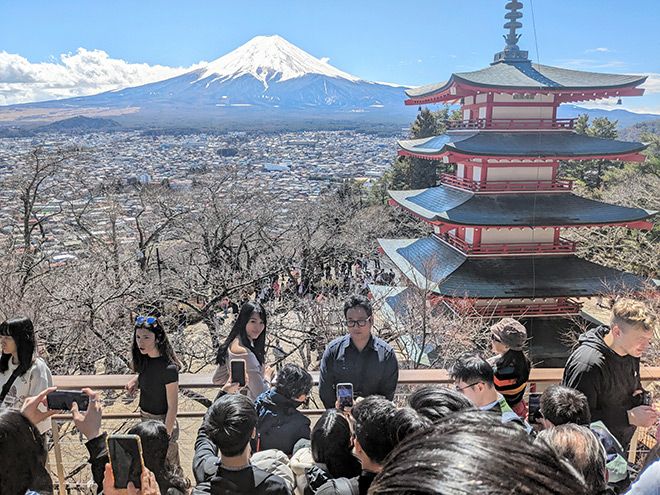
Mount Fuji has a strange double life. In postcards and travel dreams, it is cleanly iconic, almost abstract; in reality, the most popular viewing areas can feel compressed, noisy, and surprisingly fragile. That gap between image and place is where the current debate over overtourism Mount Fuji sits. The problem is not the mountain itself, but the concentration of visitors at a few famous access points, especially around Fujikawaguchiko and the Kawaguchiko lakeshore, where spring bloom seasons have drawn massive surges of people, cars, and cameras.
For practical travelers, this matters because the experience changes with timing. A calm visit can still be had, but it takes more planning, a little humility, and a willingness to move like a local rather than like a crowd. The Japanese idea of 予約 (yoyaku, reservation; advance booking), meaning a reservation or advance booking, is useful here: whether you are looking at transport, a stay, or a specific viewpoint, pre-planning reduces friction. So does an awareness of 事故 (jiko, accident; incident), meaning an accident or incident, because overcrowded roads and improvised parking are not just annoying; they are unsafe. That is the body of the issue, not the brochure version.
One useful recent datapoint is that a spring sakura festival near Mount Fuji was cancelled because the area had become too crowded; the decision was meant to reduce pressure on the site. Coverage such as Mount Fuji Overcrowding Eases After Sakura Festival Cancellation shows how even a well-liked seasonal event can become part of a wider management problem. That is not drama. It is logistics.
Why the Mount Fuji area became so crowded
The core attraction is obvious: Mount Fuji is one of Japan’s great symbols, and the cherry blossom season adds a second layer of visual appeal. Around Fujikawaguchiko, the combination of the lake, roadside viewpoints, seasonal flowers, and social-media-friendly sightlines has turned a few streets and overlooks into pressure points. The result has been blocked roads, overcrowded parking lots, illegal parking, littering complaints, and safety issues. This is where the texture of place changes from scenic to strained.
In practical terms, the demand is lopsided. Visitors cluster at the same moments, often for the same exact frame, rather than spreading out across the wider Fuji region. That is why a single viewpoint or festival can become the symbol of the larger problem. The issue is not just volume, but concentration. A place can absorb a lot, until it cannot.
How local authorities have responded
Local authorities in the Fujikawaguchiko area have used a fairly blunt but sensible toolkit: short-term parking bans, time-limited access controls, increased volunteer tourism management, special signage, information campaigns, and temporary closures of some viewpoints during peak hours. The goal is not to lock people out forever. It is to slow the crush enough that roads, pedestrians, and residents can coexist without the whole thing becoming a lumpy mess.
This is also where おもてなし (omotenashi, warm, considerate hospitality), the much-discussed style of considerate hospitality, becomes more than a slogan. Real hospitality sometimes means saying no, or at least not all at once. A managed viewpoint with clear signs and limited access can be more respectful than a free-for-all that leaves everyone irritated. If you are reading this as a visitor, the lesson is simple: follow the rules exactly as posted, and do not treat temporary restrictions as suggestions. They are the structure that keeps the place usable.
Getting there without making the problem worse
If you are planning a visit, the route you choose matters. Direct highway buses from Shinjuku to Kawaguchiko usually take about 1 hour 45 minutes to 2 hours, which makes them a straightforward option when timings line up. Travel via the JR Chuo Line to Otsuki plus the Fujikyu Railway is often longer in practice: roughly 2 to 2.5 hours if you use limited express trains to Otsuki and then continue by railway, or 3 to 3.5+ hours on local trains. In other words, it is not consistently the same as the direct bus, no matter how casually people repeat it.
That distinction matters because the experience of the day starts before you arrive. A bus can reduce transfers and keep the whole movement simpler; a train route may be more flexible, but it is not automatically faster. If you are aiming for a specific season or viewpoint, build in extra time. さじ (saji, a little margin; timing cushion), meaning a little timing cushion or margin, is worth having when crowds are in play. Leave earlier than feels necessary. Then leave earlier again.
What to see, and how to see it properly
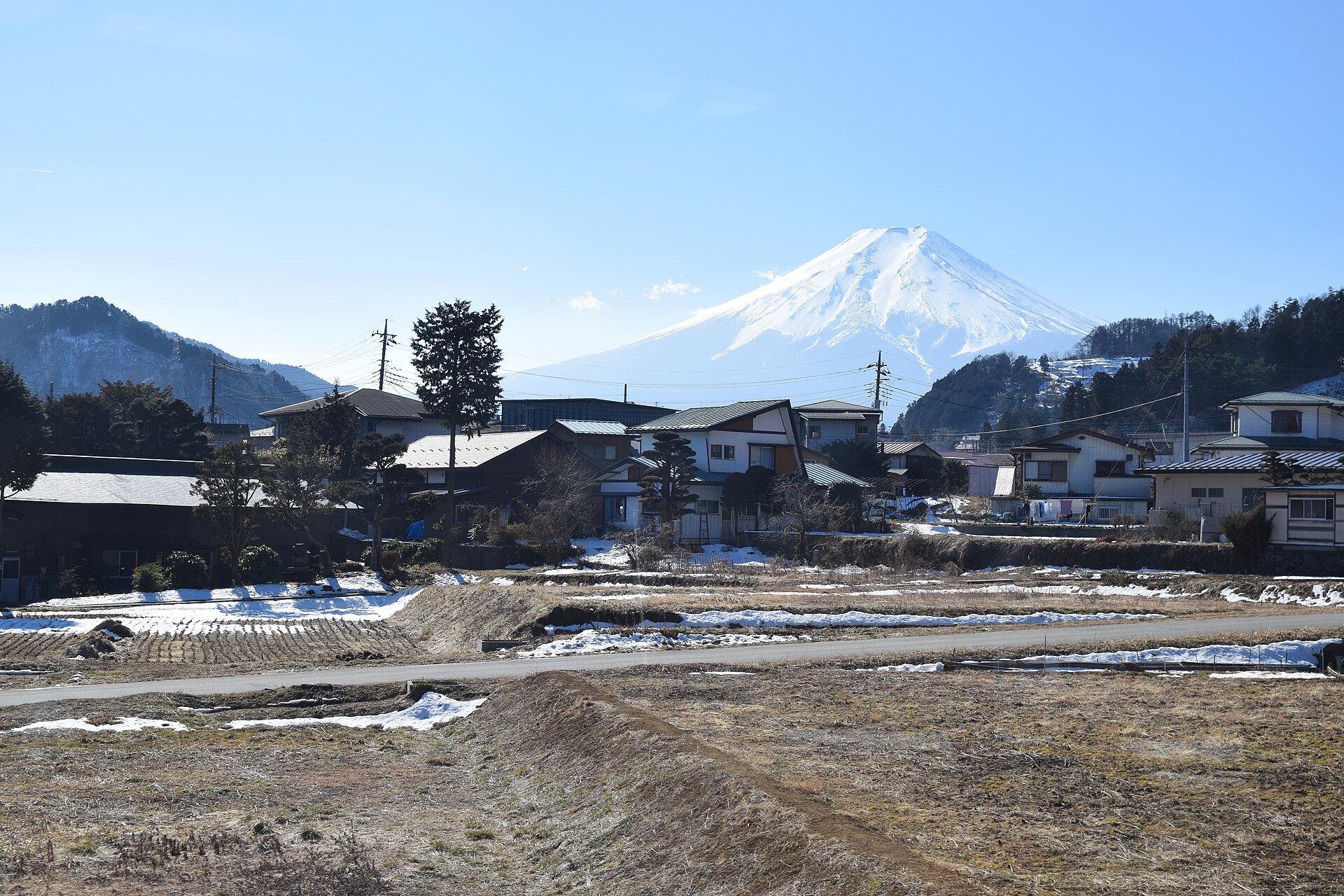
Mount Fuji itself is not the issue. The question is how you approach it. The wider region still offers rewarding ways to experience the mountain: lakeside walks, quieter mornings, and viewpoints that are not being fed constantly into the same online image loop. The famous frame with Fuji and a five-storey pagoda is a good example of why the most photographed places become fragile; they draw attention because they are unusually composed, and that composition is exactly what makes them vulnerable. When access needs to be curtailed during peak periods, that tells you the site has crossed from charming to overused.
For a better visit, I recommend thinking in terms of 回り (mawari, route; circuit; way around), a route or circuit, rather than a single target. Build a day that includes the lake, a meal, a slower walk, and a lookout that can handle visitors without everyone arriving at once. If you can go outside the most compressed blossom hours, do it. If you can accept a less famous angle, even better. The mountain does not need your help being beautiful.
Related places and why they matter
Several other sites around Japan have had to confront similar pressure, but Mount Fuji is unusually visible because the landscape is so iconic and the access points are so concentrated. The shorthand has become something of a national warning label. That is why an article like Fuji-Panik: Japan zieht bei Sakura-Massen die Reißleine still resonates: it captures the moment when a seasonal crowd becomes a management problem, and the management problem becomes a question of what kind of tourism Japan wants to sustain.
There is also a learning angle here, and it is not trivial. Search terms like overtourism Mount Fuji kanji or overtourism Mount Fuji japanisch lernen tend to bring readers toward practical vocabulary for travel news, signage, and public debate. That is a useful instinct. When you understand the language around access, safety, reservation systems, and crowd control, you understand the place more clearly. You are not just reading signs. You are reading the rules of the road.
Practical tips for a calmer visit
If you want the short version, here it is: go early, avoid the peak blossom crush if you can, and choose transport that fits the actual timing rather than the theoretical one. Keep your load light. Watch for temporary closures, especially around the most photographed areas. Respect parking restrictions and do not assume there will be room to improvise. There usually is not.
- Check access restrictions before setting out, especially in cherry blossom season.
- Use public transport where possible, and compare bus and train timings carefully.
- Book accommodation and transport with yoyaku in mind, not on the same day.
- Choose quieter viewpoints instead of joining the same crowd at the same hour.
- Follow signage and local volunteer guidance without argument. That part is easy.
Mount Fuji remains worth seeing. It just asks for better manners than a crowd usually provides. More soon.
Frequently Asked Questions
Why is Mount Fuji associated with overtourism?
Because visitor numbers have been heavily concentrated in a few popular areas, especially Fujikawaguchiko and the Kawaguchiko lakeshore, leading to blocked roads, crowded parking, littering complaints, and safety issues.
What has been done to manage the crowds?
Local authorities have used parking bans, time-limited access controls, volunteer tourism management, special signage, information campaigns, and temporary viewpoint closures during peak hours.
How do you get to Kawaguchiko from Tokyo?
Direct highway buses from Shinjuku usually take about 1 hour 45 minutes to 2 hours. The JR Chuo Line to Otsuki plus the Fujikyu Railway usually takes longer.
Why was the spring sakura festival canceled?
It was canceled because the area had become too crowded, and the cancellation was meant to reduce pressure on the site.
Is there a good way to experience Mount Fuji more calmly?
Yes. Go outside the busiest blossom periods if possible, travel with advance yoyaku when needed, use public transport carefully, and choose quieter viewpoints rather than the most photographed one at peak hours.