Overview: What Makes a Bento a Bento
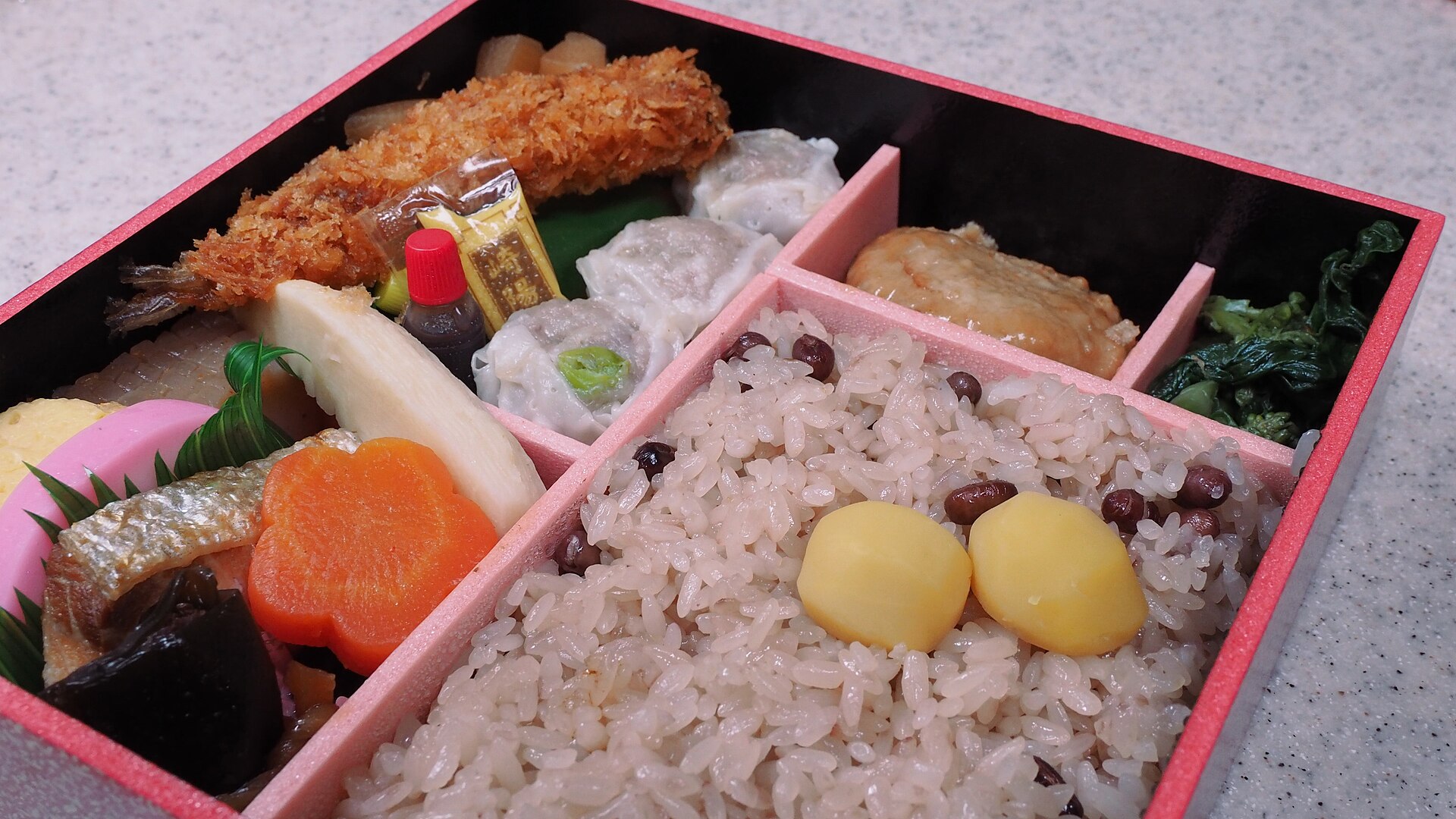
弁当 (bento, boxed lunch) is the Japanese word for a single-portion meal packed into a box and eaten away from the stove, at room temperature or cold. You will find it on school desks, in office break rooms, on train platforms, and increasingly, spread out on a picnic blanket under cherry blossoms. What separates a well-made bento from a box of leftovers is intention: portions are sized to be eaten in one sitting, ingredients are chosen to hold their texture and flavor for hours, and the box is arranged so the meal looks appealing before you take the first bite.
A useful principle to know if you want to build your own is go shoku, the five-color rule. A balanced bento typically includes something white (rice), red (tomato, salmon, umeboshi), green (broccoli, edamame, herbs), yellow (卵焼き (Tamagoyaki, rolled sweet-savory omelette), corn), and black (nori, sesame). The colors are not decoration for its own sake — they are a quick visual check that the meal covers a range of nutrients, and they are part of why bento has stayed a daily habit rather than a special-occasion dish.

The BENTO 2020 Trend and Sakura Picnic Season
Every spring, a wave of bento content resurfaces online under the banner "BENTO 2020." Sourcing on the trend is thin, and it does not appear to trace back to any government or ministry initiative — it reads as a grassroots, social-media-born movement that took hold in 2020 as more people were cooking and eating at home, and it has stuck around as a seasonal reference point for home cooks styling bento for sakura season. Whatever its exact origin, the effect is real: it nudged home cooks toward nostalgic, retro-leaning dishes and more deliberate styling, right as cherry blossom season turns Japan's parks into open-air dining rooms.
Sakura reaches high season in Tokyo from late March into early April, and that short window is prime time for 花見 (hanami, cherry blossom / flower viewing), or flower-viewing picnics, which means it is also prime bento season. If you plan a trip around cherry blossoms, expect to see bento boxes, not restaurant takeout, spread across blue tarps in the city's parks and along its riverbanks.
Nostalgic Yoshoku Dishes That Travel Well
The dishes associated with this trend lean toward 洋食 (yoshoku, Western-style Japanese food), Japan's homegrown category of Western-influenced comfort food, and the reasoning is practical rather than nostalgic alone: these dishes travel well and taste good cold, which is exactly what a picnic bento needs. Common choices include:
- Omuraisu — ketchup fried rice wrapped in a thin omelette
- コロッケ (Korokke, breaded deep-fried croquette) — breaded, deep-fried potato or meat croquettes
- Mini hamburgers — bite-sized patties that hold up well at room temperature
- Poteto sarada — Japanese-style potato salad, milder and creamier than its Western counterpart
- Tamagoyaki — rolled sweet-savory omelette, a near-universal bento staple
- Mini fried eggs
- Mini katsu with tonkatsu sauce — a smaller, bento-friendly version of the fried cutlet
None of these require last-minute plating. Cook them the night before, let them cool completely, and they hold their texture until lunchtime.
Packing and Food-Safety Tips for a Spring Picnic
Before you pack a spring bento, keep a few practical points in mind — this is the part that determines whether your lunch looks, and tastes, as good at the picnic as it did in your kitchen.

- Use pink, sakura-shaped paper cups and colorful eggs to dress up the box without extra cooking
- Toss sliced cucumber and avocado in a little lemon juice before packing; it slows browning and keeps colors bright
- Pack mayonnaise-based dressings separately in a small container and mix them in at the picnic site, rather than dressing the salad in advance
- Keep anything mayo-heavy, like poteto sarada, or anything with egg, chilled with an ice pack until you are ready to eat; these are the items most likely to spoil in the sun
None of this is complicated, but it is the difference between a bento that is safe and appealing three hours after you pack it, and one that is not.
Viral Bento Stories: A Caring Sibling and a Carpenter's Lunch
Bento also travels through Japan as a human-interest story, and two recent examples show why the format keeps resonating. An 18-year-old university student made headlines, and wide circulation on Yahoo Japan News, for a bento he packed for his 15-year-old sister, praised for its color balance and nutritional thought, the kind of care usually associated with a parent rather than an older brother. Around the same time, a 50-year-old carpenter posting under the handle @daikuno.bento drew attention, covered by the outlet LIMO, for his ebi to chingensai no chuka itame bento, a shrimp and bok choy stir-fry bento built with the same precision he presumably brings to his day job. Neither story involves a professional chef or a restaurant; both are ordinary people packing lunch with care, which is a large part of why bento resonates as a subject far beyond the plate.
Bento Abroad: Le Bento in Paris
Bento's reach now extends well past Japan. In Paris, the dish has taken hold as a genuinely popular lunch option, adopted into everyday French with a simple, unadorned name: "le bento." Nakamura Eriko, a Japanese woman who has lived in Paris for 27 years, is credited with helping popularize the format there, largely through the daily habit of packing bento for her children; her story was covered by the Japanese online magazine Tennen Seikatsu. For Parisians, the appeal is practical: bento offers a quick, nutritious, portioned meal that is sometimes cheaper than a baguette sandwich, without sacrificing variety or balance.
Where to Experience Bento in Japan
If you want to experience bento in Japan rather than just read about it, you have several entry points, depending on how much you want to plan.
- デパ地下 (Depachika, department store basement food hall), the basement food halls of department stores, sell an enormous range of prepared bento, often tied to the season, and are a reliable stop in any major city
- 駅弁 (Ekiben, train station boxed lunch), sold at train stations and on board shinkansen, are regional bento built around local specialties, a practical way to sample a region's food while traveling
- コンビニ (Konbini, convenience store) (convenience stores) sell bento around the clock, and quality is consistently higher than the price suggests
- Hanami picnics during sakura season, roughly late March into early April, are the most seasonal way to eat bento outdoors, the way many Japanese families do
- Cooking classes and homestays let you pack your own, if you want to learn the technique rather than just eat the result
However you come to it, bento rewards attention to small things: color, temperature, and how the food will taste hours after it is packed. That is the whole discipline in a single box.