
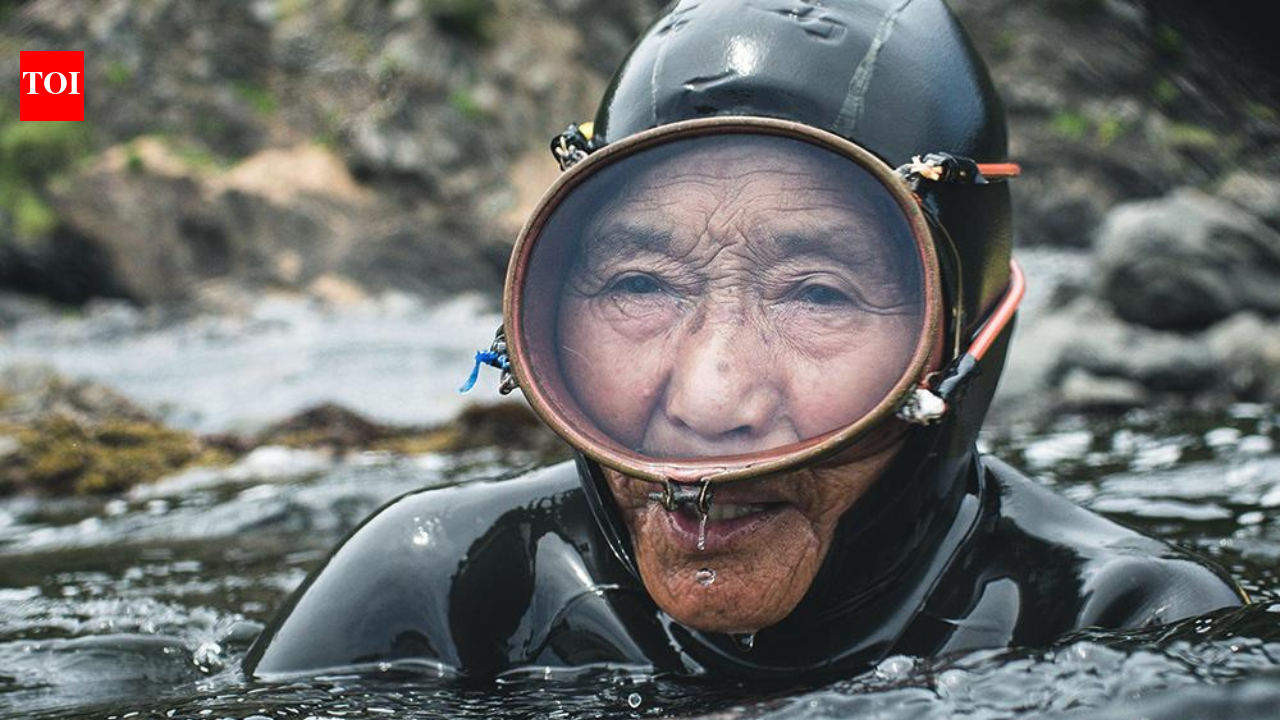
What stays with me isn’t just the endurance, but the calm discipline behind it. This is craft, weather, and memory held in the body. Really brilliant.
What most people don't know is that the word 海女 (Ama, women of the sea; female free diver) means "women of the sea", and it points to a living tradition, not a museum piece. Along the coast of Ise-Shima in Mie Prefecture, these free divers have long entered the water with no scuba gear, no oxygen tanks, and no flashy equipment, just breath, timing, and an intimate read of the sea.
The recent attention around Reiko Nomura, who is 80, has brought that world back into view. According to coverage from The Times of India and Los Andes, she still descends into cold waters to harvest shellfish and other seafood, carrying on a centuries-old practice. It’s the kind of story that makes me slow down. Age, risk, skill, and culture all meet in one breath. From my experience, those are the stories that stay with you longest.
Ama diving in Japan: breath, cold water, and inherited skill
Here's the thing: ama diving isn't casual swimming, and it isn't a stunt. It is a specialised form of free diving in which women, historically often in white diving clothes, entered the sea to collect abalones, turban shells, sea urchins, and seaweed. The work demanded strong lungs, sharp judgement, and a detailed understanding of tides, rocks, weather, and currents. In Japanese, the sea itself often feels like a place of relationship, not ownership, and ama practice reflects that attitude.
The reason is simple: the sea rewards patience and punishes guesswork. Ama divers learn where to pause, how to save air, how to read the surface before they go under, and when to stop. That knowledge was passed down through families and local communities, often from mother to daughter, or from elder divers to younger women watching from shore. I find that chain of learning deeply moving. It reminds me of other 職人 (shokunin, artisan; craftsperson) traditions I’ve seen across Japan, where skill is never just technical. It’s moral, social, and quietly exacting. Convinced yet?
Why the no-oxygen detail matters
To be fair, the phrase "without oxygen" gets repeated because it sounds dramatic, but the practice is more precise than that. These divers rely on breath-hold diving, not breathing equipment. They descend on a single inhale, work quickly, then rise to recover before going again. That rhythm is older than modern tourism campaigns and far older than viral headlines.
For Japanese language learners, ama is a helpful word to know because it opens a window onto the way Japan names work through relationship and place. You’ll also hear terms like 磯貝 (isogai), shellfish gathering in some contexts, and of course 海 (umi) for sea. These are small words, but they carry whole landscapes inside them. Personally, I love it when a language lesson arrives with salt on it.
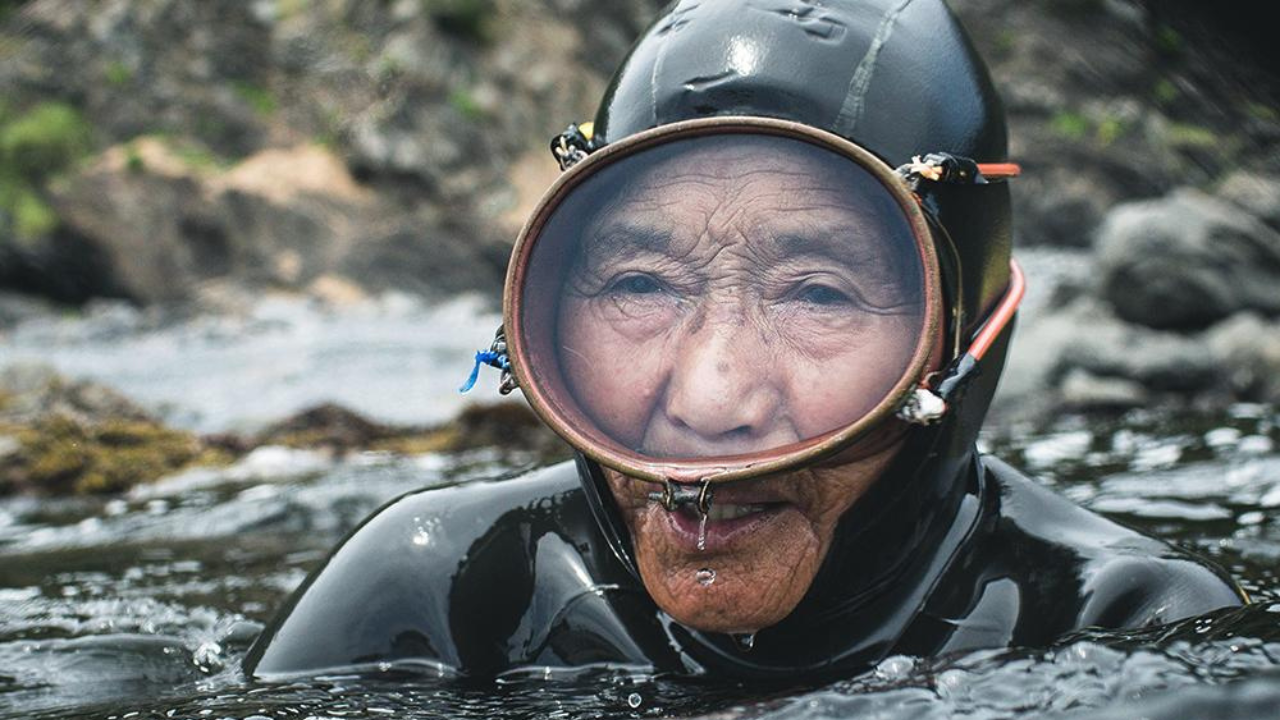
Reiko Nomura at 80: age, labour, and the body at work
Trust me on this one: seeing an 80-year-old still diving isn’t just a feel-good headline. It changes the frame completely. In many places, age is treated as a line after which physical labour becomes invisible. Here, age doesn’t erase skill. It concentrates it.
Nomura’s dives also remind us that ama work has always been physically demanding. Cold water tightens the body. Repeated entries and exits are exhausting. Conditions change fast. And yet the divers continue, shaped by routine and a kind of practical courage that doesn’t need an audience. I’ve always been drawn to Japanese craftspeople who work without spectacle, and this belongs to that same world. It’s labour that asks for humility, not performance. Wild, isn't it?
And it gets better: the age of the diver is part of what makes the story culturally important. Japan is a country where population ageing is often discussed in abstract terms, through statistics and policy. The ama story gives that reality a face, a voice, a body in the water. It shows older women not as a social problem to be managed, but as carriers of memory, skill, and local livelihood. That shift matters. It changes how we see both ageing and tradition. From my experience...
Ise-Shima tourism and the future of ama culture
Quick detour: Ise-Shima is already one of Japan’s most layered coastal regions, known for seafood, shrine culture, and scenic shorelines. The ama have become part of the area’s cultural landscape and, naturally, a draw for visitors. Some people come for the food, some for the view, some because they want to see a tradition that feels almost impossible in the modern world. But the best kind of tourism here is the kind that understands what it is looking at.
That means not treating ama as a photo op. It means recognising that these are working women, not performers. Their livelihood depends on the sea, the season, and the continuity of knowledge. Tourism can help sustain the story, but it can also flatten it if the market appetite gets too loud. I think the balance is delicate, and worth paying attention to. When I read about elderly ama divers still working, I think of Japanese cultural preservation not as freezing the past, but as keeping a practice alive while the shoreline changes around it. That's why the strongest tourism stories in Japan are often also stories of cultivation, restraint, and care. Not bad, right?
For me, the most striking part is the atmosphere around the practice. There’s the cold bite of the water, the small gather of breath before a dive, the practical movement of hands against rock and sand, and then the return to the surface. No theatrics. Just a human body meeting a difficult environment with trained composure. Imagine a narrow alley in Tokyo, but instead of lanterns and ramshackle charm, it’s the sea doing the teaching. I keep coming back to that image. It feels like a watershed in the old sense, a place where one kind of life meets another and leaves a mark.
Frequently Asked Questions
What is ama diving?
Ama diving is a traditional Japanese free-diving practice, historically carried out by women who harvest seafood without scuba equipment or oxygen tanks.
Who is the 80-year-old diver mentioned in the news?
The woman highlighted in recent coverage is Reiko Nomura, an 80-year-old ama diver from the Ise-Shima area.
Why is ama diving important for tourists and learners?
It connects nature, labour, and heritage, and it offers a vivid example of how Japanese traditions survive through local knowledge and lived practice.


