Overview
The Kaiserpalast Tokio sits right in the middle of the city, but it does not behave like a typical sightseeing spot. Most of the inner palace area is normally closed, while the Higashi Gyoen, or East Gardens, are open to the public and free to visit. That contrast is part of what makes the place so interesting: you are standing in a landscape that is deeply tied to the imperial history of Japan, yet the experience is deliberately calm, restrained, and accessible in a very Tokyo way.


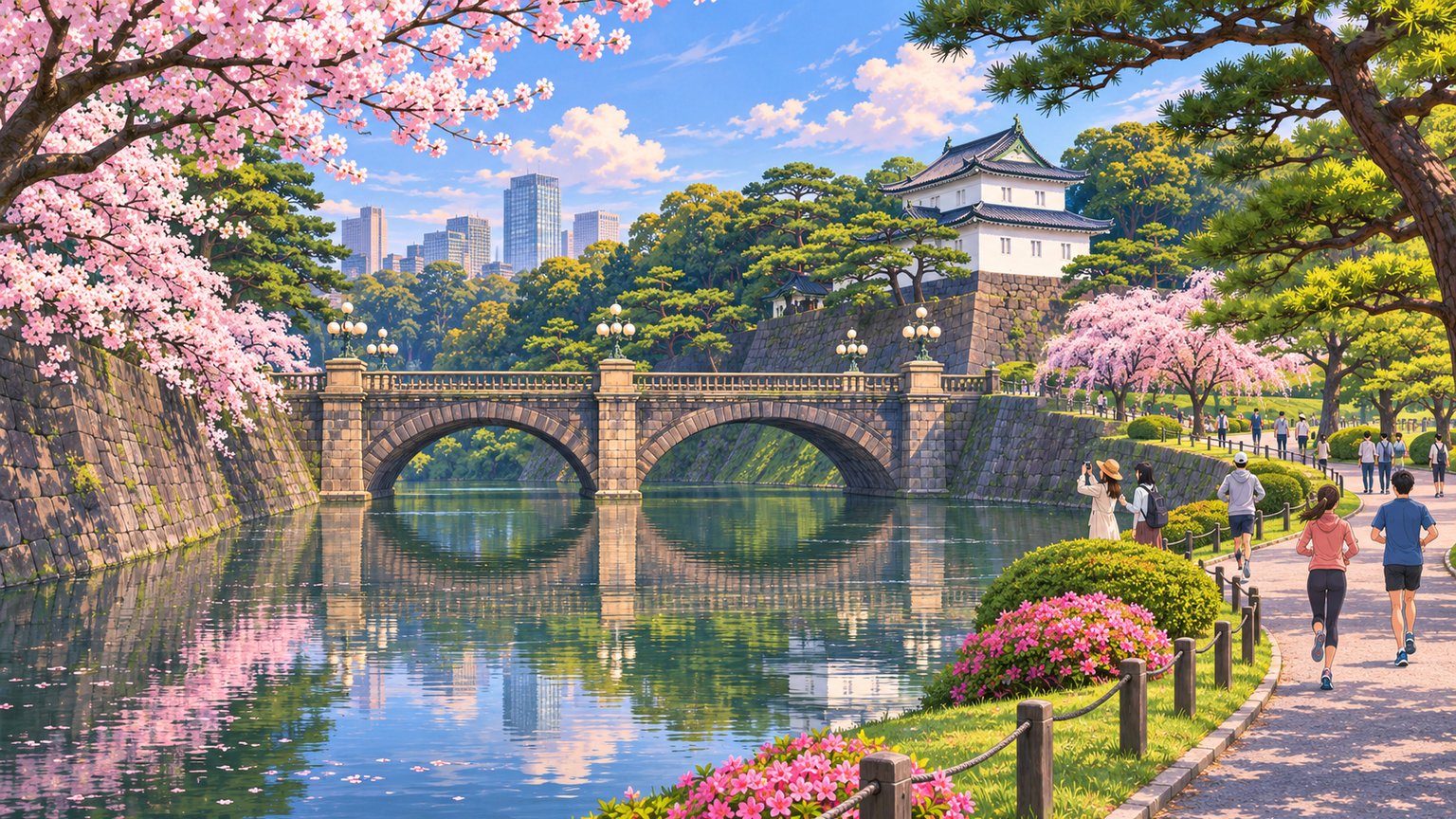
For travelers who like places with layers, this one rewards a slow visit. And for anyone who is building a trip around seasonal scenery, the grounds become especially memorable during cherry blossom season. The routes near the Nijubashi Bridge and through the gardens hold dozens of sakura trees, including Somei Yoshino, the most common cherry blossom variety in Japan, which usually blooms from late March into early April depending on the weather. If you are trying to understand how history, seasonal beauty, and everyday city life can overlap, this is a very good place to start.
If you are also looking for context beyond the grounds themselves, it can help to read a little more about the area before going. Related coverage such as Kaiserpalast Tokio zur Kirschblütensaison and the later note on the new cafe at Imperial Palace Tokyo shows how the site keeps evolving without losing its character.
What you can actually visit
The easiest way to think about the palace is this: the public area and the protected core are not the same thing. The East Gardens are the part most visitors can experience directly, and they are free of charge. Central palace areas, including the space around the inner palace, are normally closed off, so you should plan your expectations around the accessible sections rather than imagining a fully open complex.
That does not make the visit feel limited. In fact, the boundary is part of the appeal. The site gives you a sense of scale and history without turning the whole place into a theme park version of itself. For many travelers, that restraint is refreshing. Japan often does this well… creating space for public appreciation while keeping important places carefully protected. The result is a visit that feels respectful rather than crowded with gimmicks.
Cherry blossoms and seasonal hanami
The palace grounds become particularly attractive in sakura season. Several dozen cherry trees stand in the East Gardens and along the route toward the Nijubashi Bridge, making the area a meaningful 花見 (hanami, cherry-blossom viewing) stop in central Tokyo. Because the trees include Somei Yoshino, the timing is familiar to anyone who follows Japan’s spring bloom cycle, but weather still matters a lot. Late March into early April is the usual window, yet the exact best day can shift by a few days either way.
This is where a little patience pays off. Hanami is not only about the flowers themselves, but also about the rhythm of the season: people looking up, pausing for photos, and enjoying a shared moment in a place that is usually more restrained. If you are learning Japanese travel vocabulary, hanami is one of those words that comes up again and again, because it describes the whole culture of flower-viewing, not just the blossoms. The same goes for 予約 (yoyaku), meaning a reservation, if you are checking whether a special area or seasonal access needs advance planning.
The new cafe and visitor space
In November 2026, the Imperial Palace area added a cafe and a new visitor zone with a rooftop terrace and views, giving the grounds a fresh way to be experienced. This matters because it expands the visit beyond a simple walk through the gardens. You can now pause, sit, and take in the surroundings from a different angle, which is especially welcome in a place that has traditionally been more about movement and observation than lingering over a coffee.
For travelers, this is a useful development. It makes the site feel more approachable for a wider range of visitors, including people who want a slower pace, families, or anyone who prefers a break during a long walking day. It also reflects the reality that historic places in Tokyo keep adapting in subtle ways. Not everything changes at once, but small additions like a cafe can reshape how a place feels without overpowering its character.
Why the East Gardens matter
The East Gardens are not just a side attraction. They are one of the few public ways to experience the imperial grounds directly, and their popularity shows it. In 2025, the East Gardens drew 2.13 million visitors, just below the record of 2.23 million set in 2019. About 60 percent of visitors are now from overseas, which tells you something important: this is no longer only a domestic sightseeing stop. It has become a major point of interest for international travelers who want a quieter, more historically grounded place in central Tokyo.

And I think that helps explain why the site keeps resonating. It is not flashy. It is not trying to overwhelm you. It gives you room to notice details, from the layout of the grounds to the seasonal changes in the trees. That is a very Japan feeling of experience, really… not always immediate, but rewarding once you slow down enough to look properly.
How to plan your visit
If you are heading there for the first time, keep the visit simple. The East Gardens are the main public section and they are free, so there is no need to overcomplicate the plan. In sakura season, go with realistic timing and expect the atmosphere to shift with weather and crowd levels. If you want a quieter experience, arrive earlier in the day. If you want the most seasonal feeling, spring bloom days are the obvious draw, though the site is worth seeing outside that window too.
- Focus on the East Gardens, since they are the regularly accessible public area.
- Do not expect the central palace sections to be open on a normal visit.
- For cherry blossoms, check the bloom timing closely, especially in late March and early April.
- Plan a slower pace if you want to use the cafe and terrace area as part of the visit.
- Use the site as a calm cultural stop in the middle of Tokyo, not as a rush-through landmark.
Learning Japanese through place names and seasonal words
The Kaiserpalast Tokio is also a surprisingly good place to learn a few practical Japanese terms. The name itself is often searched by travelers as a learning keyword, and that makes sense, because places in Japan are full of vocabulary that becomes more useful once you see it in context. Higashi Gyoen refers to the East Gardens, 漢字 (kanji, Chinese characters used in Japanese writing) are the Chinese characters used in written Japanese, and おもてなし (omotenashi, hospitality; attentive service) describes the thoughtful hospitality culture visitors often notice in small details around public spaces. In a place like this, those words are not abstract. They attach to actual experience.
If you are doing Kaiserpalast Tokio japanisch lernen-style research, this is a nice example of how travel vocabulary and place-based learning can reinforce each other. You learn the words, then you meet them in the real world, and suddenly the map feels less distant. That is one of the pleasures of exploring Japan: the language and the place keep teaching each other.
Frequently Asked Questions
Is the Kaiserpalast Tokio open to the public?
Yes, but only parts of it. The Higashi Gyoen, or East Gardens, are open to the public and free to visit, while central palace areas are normally closed.
Do you need to pay to enter the East Gardens?
No. The East Gardens of the Imperial Palace are free to enter.
Is the Kaiserpalast Tokio a good hanami spot?
Yes. During sakura season, several dozen cherry trees in the East Gardens and near the Nijubashi Bridge make it a strong hanami destination.
When do the cherry blossoms usually bloom there?
The main Somei Yoshino blossoms usually bloom from late March into early April, though the exact timing depends on the weather.
What changed at Imperial Palace Tokyo in 2026?
A new cafe and visitor area with a rooftop terrace and views opened in November 2026.
Sources
- Imperial Household Agency official site — https://www.kunaicho.go.jp/
- Tokyo tourism information — https://www.gotokyo.org/
- Imperial Palace East Gardens visitor information — official visitor guidance and access details