
Overview
Dogo 温泉 (onsen, hot spring; natural hot-spring bath) sits in Matsuyama, the capital of Ehime Prefecture on Shikoku, and it has long been tied to the kind of everyday and literary life that makes Japanese travel so rewarding. It is often described as one of Japan’s oldest hot spring areas, with references going back as far as the 8th century, including the Manyoshu. That kind of history gives the place a different feeling from a modern resort bath. It feels lived-in, layered, and quietly important… the sort of place where the past never really left.
For readers who are trying to place it geographically, Shikoku is Japan’s fourth-largest island and tends to see fewer international visitors than Honshu or Kyushu. Ehime itself is known for mikan, those bright mandarins, and for a mild climate that makes coastal wandering pleasant even outside peak travel seasons. Matsuyama, meanwhile, is a sizeable regional city, with a population of roughly 497,000, so Dogo Onsen is not a remote mountain secret in the strict sense, but it still has that hidden, off-the-beaten-path feeling for many first-time visitors from overseas.
If you are building a trip around it, the basic route is straightforward enough to be practical and still a little scenic. From Okayama, the direct JR Shikoku Shiokaze limited express takes about 2 hours 50 minutes and crosses the Seto Ohashi Bridge without needing a ferry. Once you are in Matsuyama, a historic streetcar can take you toward the Dogo area. That is very much part of the charm. The journey feels like a gentle transition into a slower city rhythm rather than a rush to a destination.
The history that gives the town its character
Dogo Onsen’s cultural weight comes from more than just age. It has strong links to 旅館 (ryokan, traditional Japanese inn) culture and literary history, and that combination matters. A hot spring district is one thing; a hot spring district that appears in old writing, inspires postcards, and becomes part of a city’s identity is something else entirely. You can feel how the place has been absorbed into local memory and national imagination at the same time.
One especially interesting thread is its association with Natsume Soseki. Postcards connected to Soseki and Dogo Onsen point to a creative early phase in modern Japanese literature, when travel, observation, and public life all fed into new forms of expression. For anyone interested in Dogo Onsen Japanisch lernen, this is a lovely place to notice vocabulary in context too, because words like onsen, ryokan, and 予約 (yoyaku, reservation; booking), meaning a reservation, are not just textbook terms here. They are part of the real travel conversation around the district.
If you want a broader look at the local hot spring atmosphere and the surrounding Matsuyama area, the piece on Ehime travel around Dogo Onsen and Funaya in Matsuyama offers a useful companion angle, especially if you are mapping the neighborhood rather than just the bathhouse itself.
What the Honkan is like inside and out
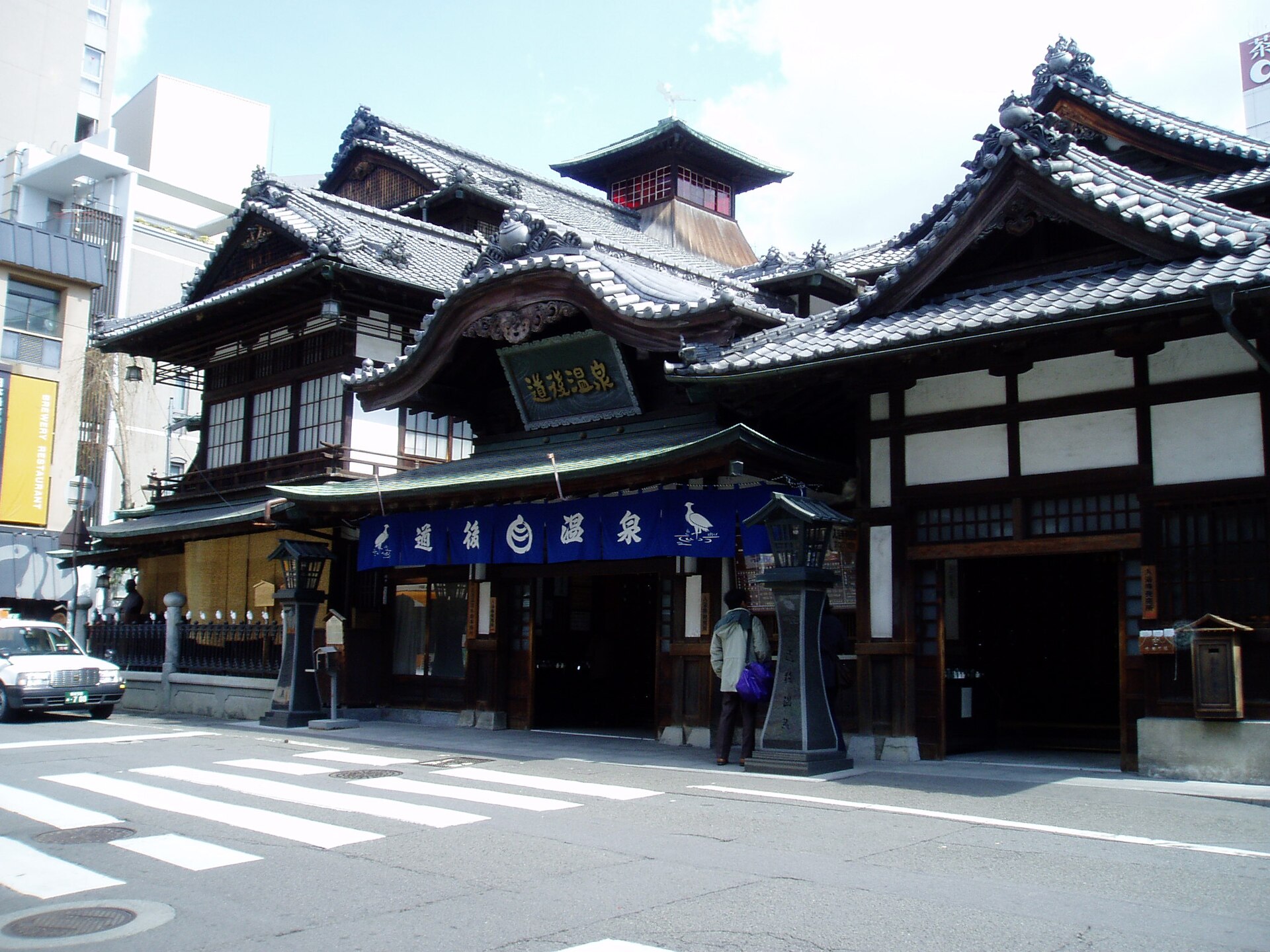
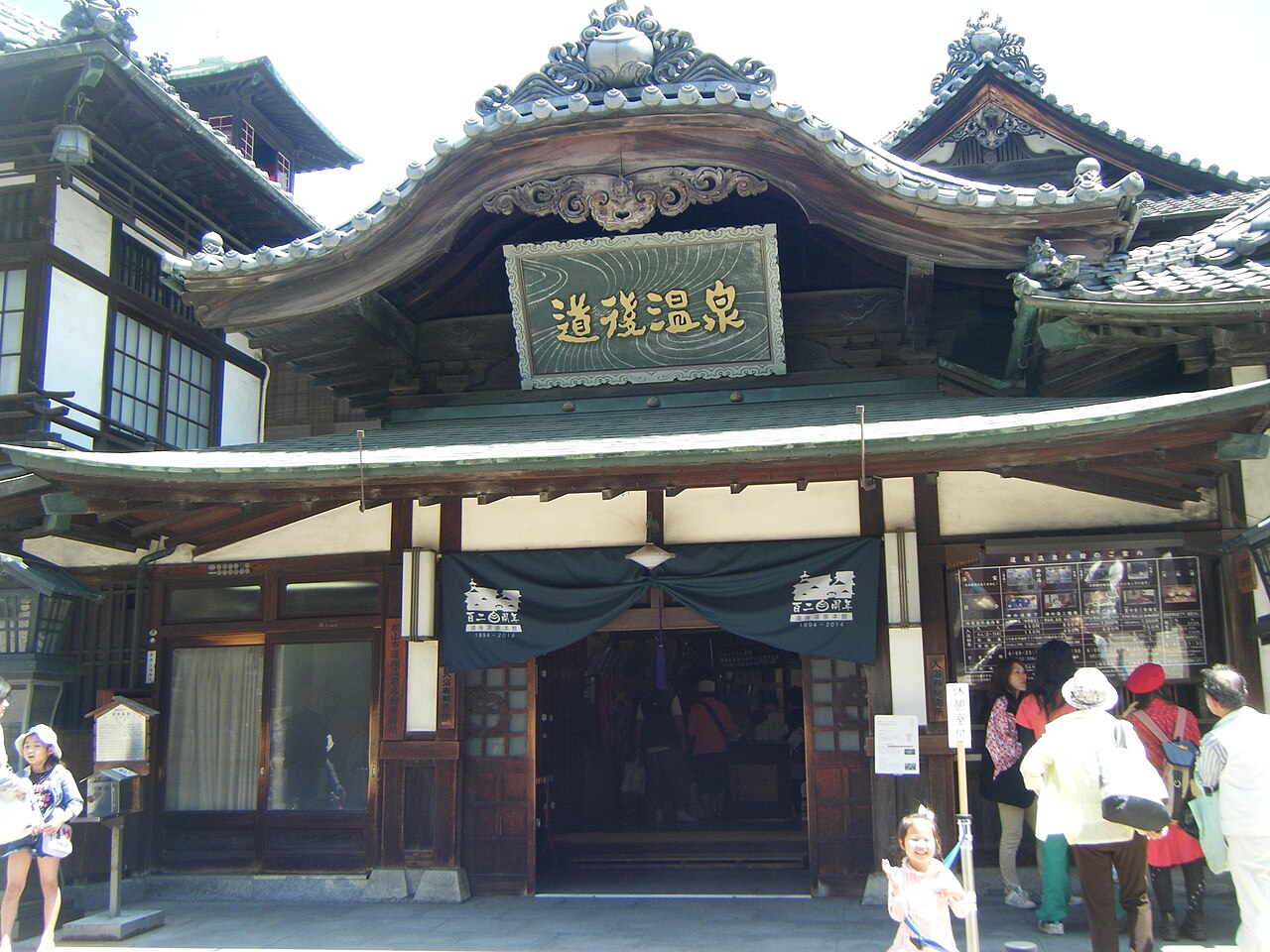
The best-known landmark here is Dogo Onsen Honkan, the main bathhouse building. It was built in 1894 and later received cultural recognition in 1994 as an important cultural property. In physical terms, it is a three-story wooden bathhouse with paper windows and multiple small bathing rooms, the kind of building that immediately tells you it belongs to a very specific era of Japanese public life.
There is also a sense of hierarchy and history built into the architecture. The complex expanded in 1899 with the addition of Yushinden, which served as an imperial bathing area. The Honkan even once had a room reserved for members of the Imperial Family. That detail alone says a lot about how public bathhouses could sit at the crossroads of everyday community use and elite ritual.
And what’s more, the building is considered one of Japan’s best-known public bathhouses and a cultural symbol of Matsuyama. This is not just a place to bathe; it is a civic landmark. When people talk about Dogo Onsen, they are often talking about the atmosphere around the Honkan as much as the act of bathing itself.
For readers who like getting into the details of the building as an attraction, the article on Dogo Onsen Honkan and Matsuyama’s bathhouse icon is a useful related read.
Why it still matters today
What makes Dogo Onsen worth caring about now is that it sits at the meeting point of preservation and living use. A lot of historical places can feel frozen, as if they are only meant to be looked at. Dogo Onsen is different. It remains part of the city’s present tense. Visitors come for the building, yes, but also for the wider idea of what a Japanese hot spring district can feel like when it has been loved for generations.
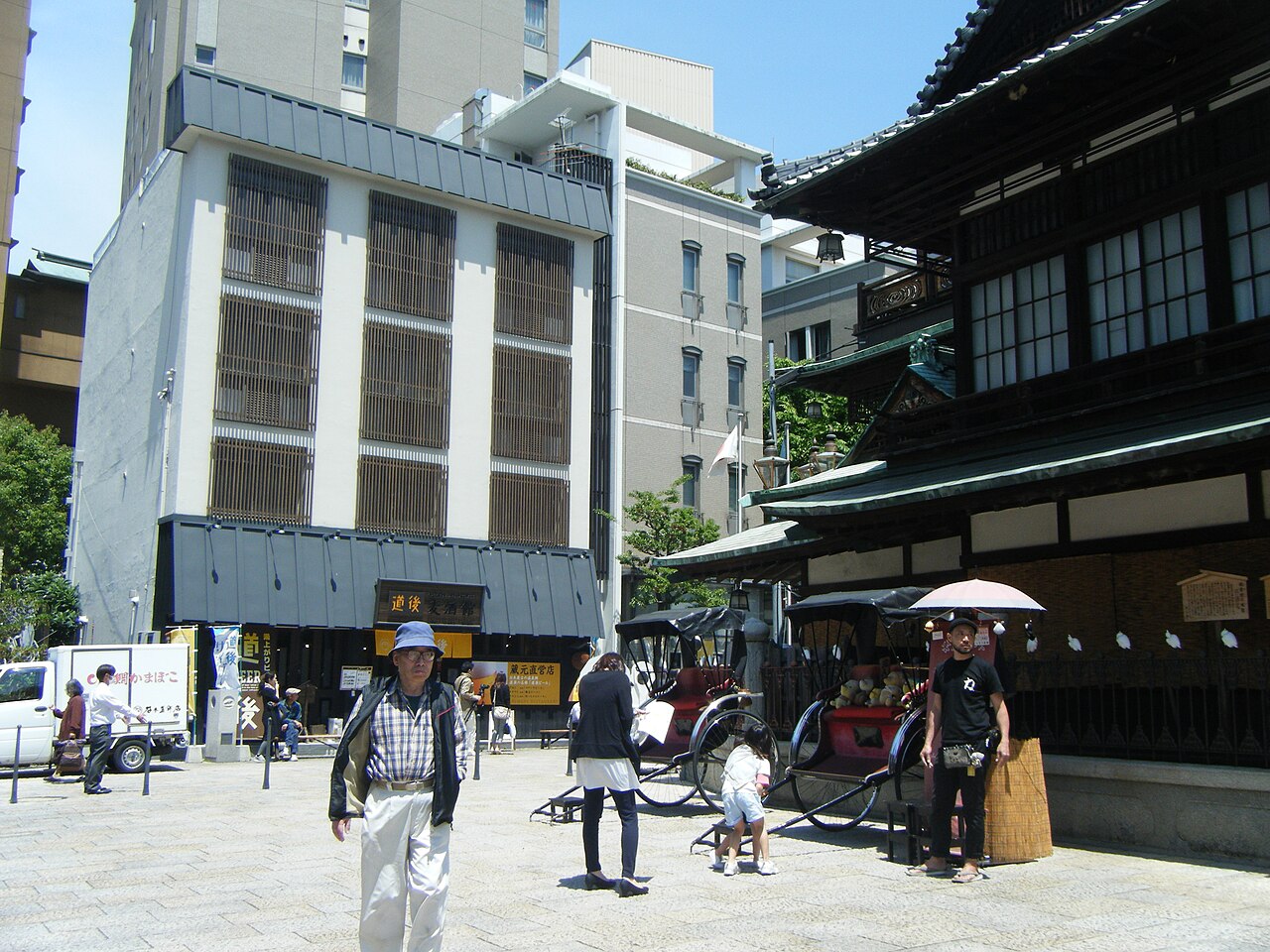
The surrounding district also rewards slower looking. The Okaido and Dogo area give you a city texture that fits the hot spring atmosphere: local movement, street-level activity, and the sense that people are going about ordinary life right next to an extraordinary landmark. That balance is what keeps places like this interesting long after the first photo is taken.
For anyone trying to learn the language of travel in Japan, this is a great setting to connect the words to the real world. Dogo Onsen 漢字 (kanji, Chinese characters used in Japanese writing) is a search many learners make because they want to recognize the name when they see it written, but even without diving into script yet, the spoken terms carry real usefulness. Onsen for hot spring, ryokan for traditional inn, and yoyaku for reservation are all the kinds of words that suddenly become much easier to remember once you are standing in a place where they matter.



How to experience Dogo Onsen in Japan
If you are planning where to experience it in Japan, aim for Matsuyama in Ehime and focus on the Dogo area. The Honkan is the central reference point, but the broader district is what gives the visit its flow. I would recommend giving yourself enough time to walk around the neighborhood, not just enter and leave. Places like this are often best understood in the pauses between the obvious landmarks.
Because Matsuyama is a fairly large city, Dogo Onsen also works well as part of a wider Shikoku route rather than as a one-off stop. The route from Okayama is convenient enough to make it feel very doable, and that matters for travelers who want a historic hot spring without straying into complicated logistics. A direct train and a streetcar ride is a very manageable combination, especially if you like the feeling of arriving through local transit rather than private transfers.
And if you are interested in the broader literary side of the area, there is a neat connection worth exploring through the Soseki material as well. The old postcards tied to Dogo Onsen point to a Japan where hot spring towns were not just leisure spaces but creative ones too. There is something very appealing about that, I think. A place that can hold bathing culture, literature, and urban life all at once tends to stay in memory for a long time.
Nearby context and regional flavor
Part of Dogo Onsen’s appeal comes from the surrounding Ehime context. Ehime is known for mikan, and the prefecture’s mild climate adds an easygoing note to travel there. Even winter visits can feel gentle, especially if you like walking through a city without fighting the weather every few minutes. That softness suits a hot spring destination very well.
Shikoku as a whole also gives Dogo Onsen a slightly less obvious travel identity. Because the island sees fewer international tourists than Japan’s biggest mainlands, the atmosphere can feel more open-ended and curious. You are less likely to feel as if every corner has already been packaged for visitors. That makes room for your own observations, which is usually where the best travel memories start anyway.
Practical takeaways before you go
- Dogo Onsen is in Matsuyama, Ehime, on Shikoku.
- The area is historically significant, with literary references going back to the 8th century.
- Dogo Onsen Honkan was built in 1894 and recognized as an important cultural property in 1994.
- The building includes a three-story wooden structure, multiple small bathing rooms, and the imperial Yushinden addition from 1899.
- The district is easy to combine with a broader Matsuyama or Shikoku itinerary.
- Travel from Okayama is possible by direct JR Shikoku Shiokaze limited express, followed by local streetcar access in Matsuyama.
Where to read more
If you are following the local story in more depth, it can be helpful to read around the site-specific history and the wider Matsuyama context. The older literary and architectural layers really do add up, and that is part of what makes Dogo Onsen feel like a hidden gem even though it is one of the country’s most famous bathhouse districts. Sometimes the places everyone knows best are still full of small discoveries, and that is exactly the sort of travel I love.
Frequently Asked Questions
Where is Dogo Onsen located?
Dogo Onsen is in the Dogo area of Matsuyama, the capital city of Ehime Prefecture on Shikoku.
Why is Dogo Onsen historically important?
It is described as one of Japan’s oldest hot spring areas, with literary references dating back to the 8th century, including the Manyoshu.
What is special about Dogo Onsen Honkan?
Dogo Onsen Honkan is a three-story wooden bathhouse built in 1894, later recognized as an important cultural property, and it is one of Japan’s best-known public bathhouses.
How can I reach Dogo Onsen from Okayama?
A direct JR Shikoku Shiokaze limited express train takes about 2 hours 50 minutes from Okayama to Matsuyama, and a historic streetcar can then be used in the city.
Is Dogo Onsen useful for Japanese learners?
Yes. It is a good place to encounter practical travel vocabulary such as onsen, ryokan, yoyaku, and to search for Dogo Onsen kanji in real context.
Sources
- Japan National Tourism Organization, Ehime and Shikoku travel information — https://www.japan.travel/en/destinations/shikoku/ehime/
- Dogo Onsen official information — https://dogo.jp/
- Matsuyama City tourism information — https://www.city.matsuyama.ehime.jp/
- JR Shikoku route and access information — https://www.jr-shikoku.co.jp/
- Shiokaze travel guide — https://ekitan.com/en/article/shiokaze
- Matsuyama population estimates — https://opengov.jp/en/population/estimates/ehime/matsuyama/
