Overview
The capsule hotel is one of those Tokyo fixtures that gets flattened into a punchline before anyone's actually slept in one — coffin hotel, people call it, usually people who haven't. I've slept in a handful, across several years and several budgets, and the honest report is: it depends entirely on which one you walked into. That range, from grim to genuinely well-designed, is the whole story here, and it maps almost exactly onto a split that's been playing out on TikTok lately, where one viral clip shows a rock-bottom pod stay plagued by mould and noise complaints, and another shows a design-forward property with the kind of lighting and storage that makes you reconsider your own apartment.



Where the Whole Idea Started
Credit for the format goes to Capsule Inn Osaka, in the Umeda district, which opened its doors on February 1, 1979. The architect was Kisho Kurokawa, and here's the detail that trips up almost everyone who writes about this: Kurokawa is also the man behind the Nakagin Capsule Tower in Ginza, Tokyo, and the two buildings get merged into one in casual retelling constantly. They are not the same building. Nakagin, completed in 1972, was a residential and office tower built from stacked modular units — a housing experiment, not somewhere you could book for the night. Capsule Inn Osaka, seven years later and a few hundred kilometers west, was the actual hotel: the first one, full stop. The concept, in Japanese, is カプセルホテル (kapuseru hoteru, capsule hotel) — a straightforward loanword — and it was built for サラリーマン (sarariiman, salaryman, salaried office worker), the salaried office workers whose last trains had already left. Give them somewhere cheap, clean, and horizontal to land for six hours before the next shift. That was the entire design brief, and it's held up remarkably well for an idea that could easily have stayed a one-off gimmick.
What You Actually Get Inside the Pod
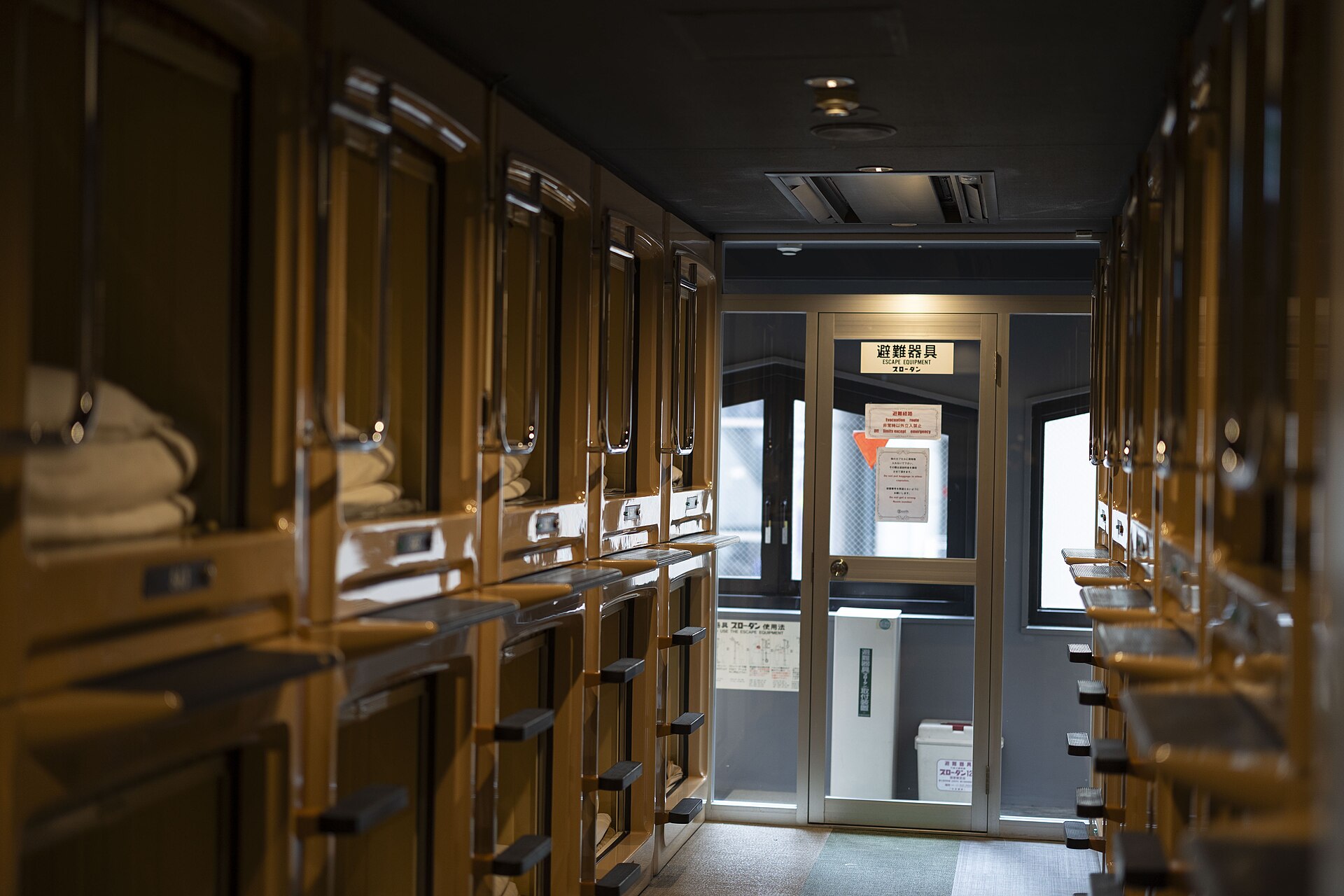
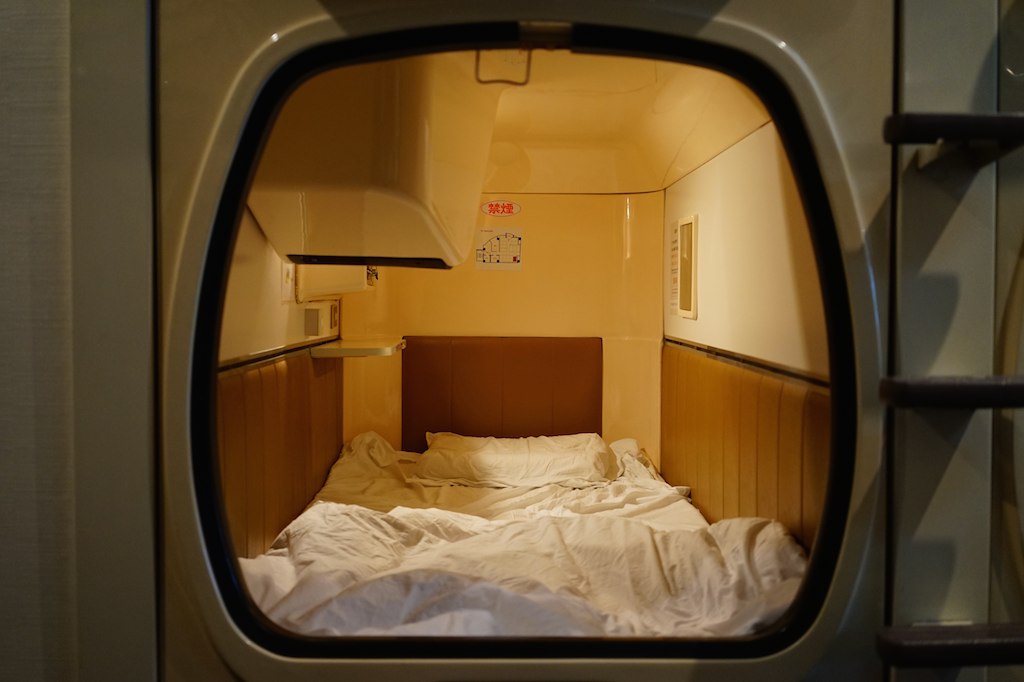
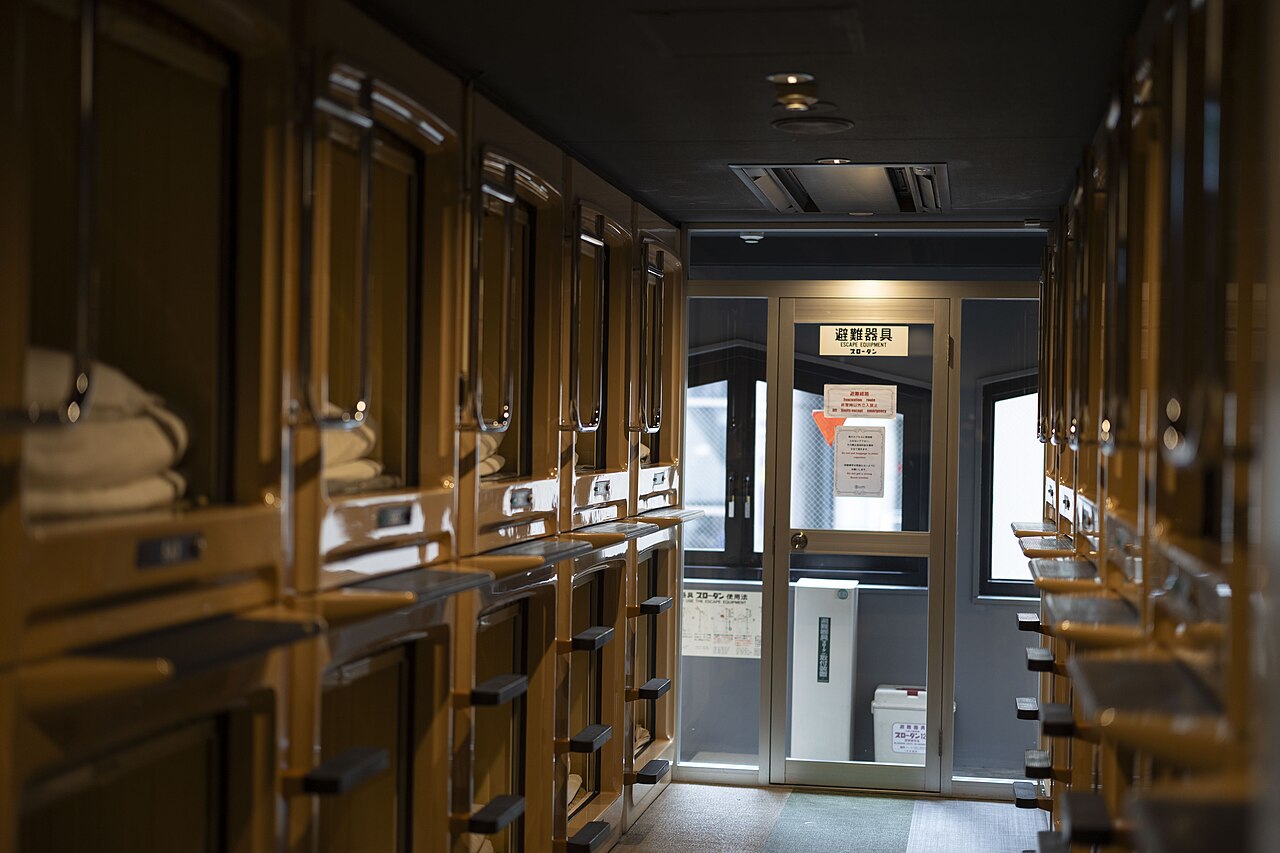
A standard capsule isn't a room. It's closer to a padded shelf with a curtain or a hatch: a mattress, a light, sometimes a small screen, enough headroom to sit up and not much more. Bags and shoes go in a locker elsewhere in the building; the pod itself is for sleeping, not living.
- A single pod-shaped berth, roughly shelf-sized, with a thin mattress and a reading light
- A separate locker bay for bags, shoes, and outerwear
- Shared bathrooms, and often a communal bath or shower area
- A curtain or hatch-style closure rather than a lockable door
Recent TikTok coverage has put a fine point on how much variation sits inside that basic template. A widely circulated clip from creator JessicaJayneTurner tested one of the cheaper end options, with capsules reportedly measuring roughly 2 by 1 meters in a stacked layout — thin futon, small pillow, and an air-conditioning unit said to cycle loudly about every twenty minutes. I'd treat those specifics as unverified rather than settled fact; TikTok reviews are TikTok reviews, and this one is still making the rounds unconfirmed. But the complaints attached to it — thin walls, inconsistent hot water, weak ventilation, visible mould — line up with a pattern you'll find scattered across third-party booking sites for the budget tier generally: plenty of 1- and 2-star ratings citing exactly those issues. Advertised rates on that end sat somewhere around ¥2,500 to ¥3,500 a night, occasionally dipping under ¥3,000 on discount listings — call it $18 to $25. Cheap, yes. Cheap in the way that occasionally means what you think it means.
The other side of the same trend, showcased in a TikTok from creator beardedtravels, points at a different tier entirely — clean lighting, clever storage worked into a tight footprint, pods built to actually block sound, and shared lounges or spa-style bathing areas that turn a night into something closer to a small 温泉 (onsen, hot spring) trip with a bunk attached. Take the specific property as one traveler's account rather than a verified claim, since that report is also unconfirmed, but the broader shift it represents is real and worth knowing before you book a pin on a map sight unseen.



What It Costs to Sleep in a Pod
For context on where those TikTok extremes sit relative to the mainstream: established capsule chains like Nine Hours and First Cabin typically price a night somewhere between ¥3,500 and ¥6,000. That's the middle of the road — clean, quiet, no surprises — and noticeably more than the rock-bottom option that went viral. Price and comfort aren't perfectly correlated in this category, but they're not unrelated either. If a listing sits well under the standard-chain floor, ask why before you ask how to get there.
Trying One for Yourself
If you want the texture of this without gambling on a mould report, start with a known chain and read recent reviews rather than the aggregate score.
- Nine Hours — locations in central Tokyo, near Narita Airport, and at Kyoto Station
- First Cabin — several Tokyo properties aimed at business travelers and curious visitors alike
- Independent budget hostels — cheapest on paper, but check current guest reviews closely before committing a night to one
Book directly where you can, and go in knowing this was never meant to be a hotel room in the Western sense. It's a bunk, a locker, and a bath, built for one night's recovery before you're back on the street with your pack. That's more or less what it was in 1979, and what it still is now, however good the lighting has gotten.