Overview
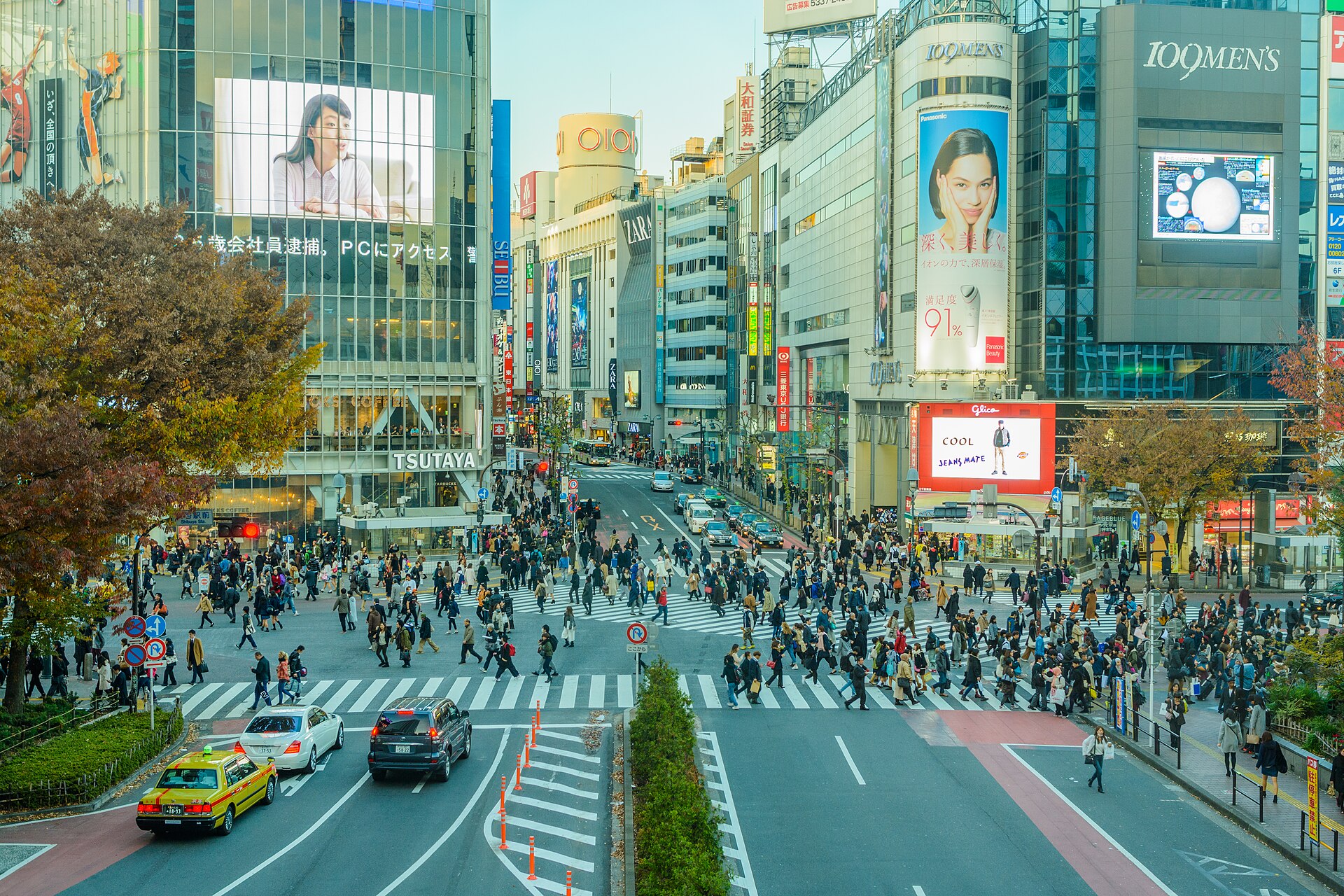
Shibuya Scramble Crossing sits directly outside the Hachiko Exit of Shibuya Station, and if you have spent any time near a departures board with Tokyo footage playing, you already know it by sight even if you have never stood in it. It works on a simple, almost stubborn principle: every vehicle light around the intersection turns red at once, and for roughly a minute, pedestrians own the whole space, cutting straight across, on the diagonal, wherever they like. That single mechanical choice is the whole reason the corner became famous, and it is worth understanding before you fold yourself into the middle of it.



Getting to the Hachiko Exit
You reach the crossing the way most of Tokyo reaches anything: by train. The Yamanote Line will get you there, as will the Saikyo Line and a handful of other private railways that also run into Shibuya Station. Once inside, follow the signs for the Hachiko Exit — it is the default, unmissable route out, and station staff seem to assume you are heading for it even when you are not. On the other side of the ticket gates stands the Hachiko statue, an official meeting point at Shibuya since 1934, a year before the dog it commemorates died. Hachiko's loyalty — waiting daily for an owner who was not coming back — turned into one of the city's more durable rituals: "meet me at Hachiko" still means something specific and reliable, decades on. From the statue, the crossing itself is a few steps away.
How the scramble actually works
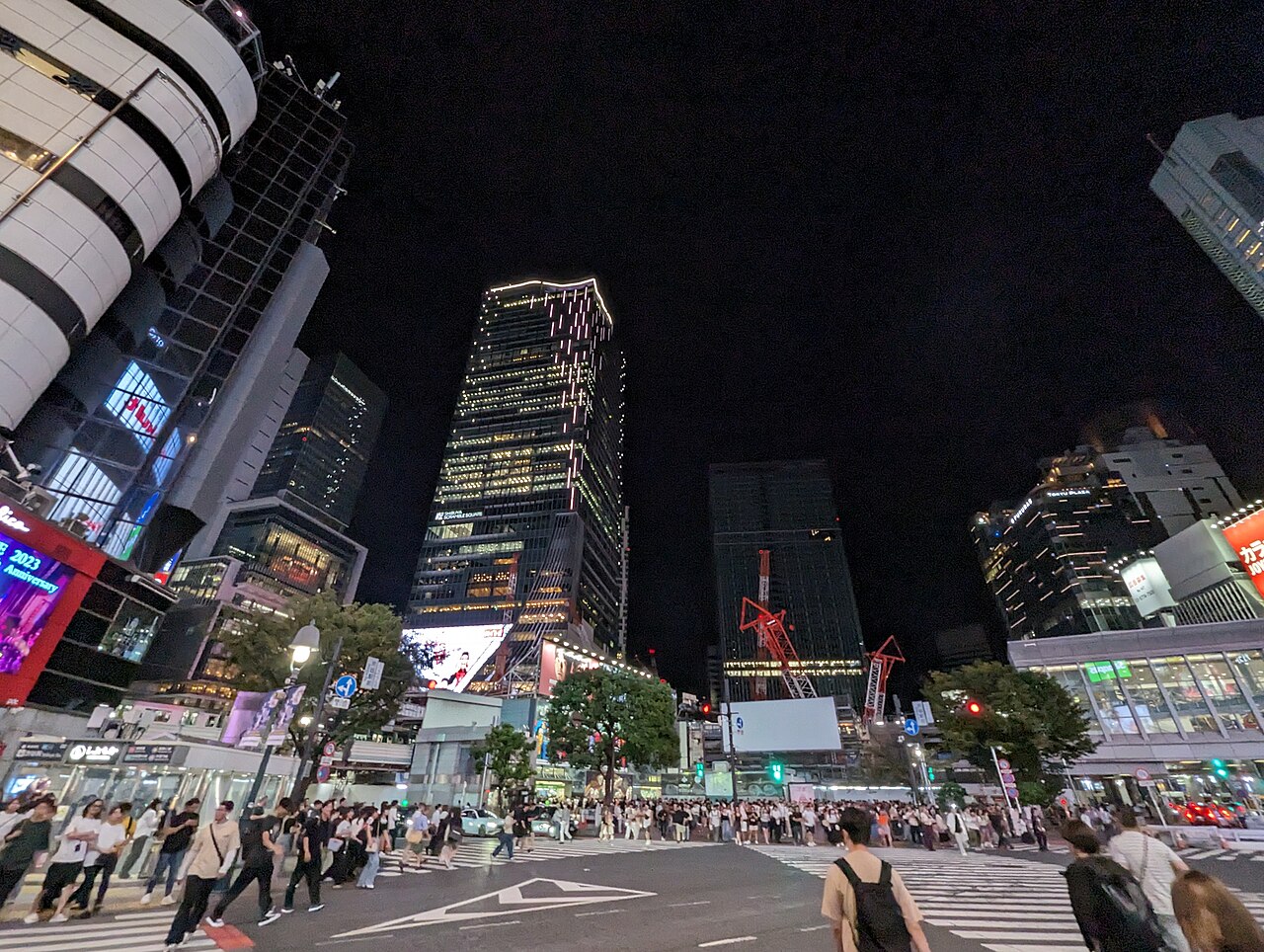
The mechanics are what separate this from an ordinary crosswalk. Instead of staggering pedestrian phases the way most intersections do, Shibuya halts every direction of car traffic at the same moment, then opens the whole intersection to foot traffic at once — straight across, side to side, corner to corner. On a heavy evening, something like 2,500 people are estimated to cross within a single light phase, though the figure shifts depending on who is counting and which day of the week it is. Other counts put ordinary peak days closer to 3,000 people moving through together in one cycle. Either way, you are one body among a genuine crowd, and the first time through, the temptation is to freeze. Don't. Everyone is aiming for a gap; commit to a line and hold it, and the crowd resolves itself around you the way water does around a rock.
Best vantage points and when to go
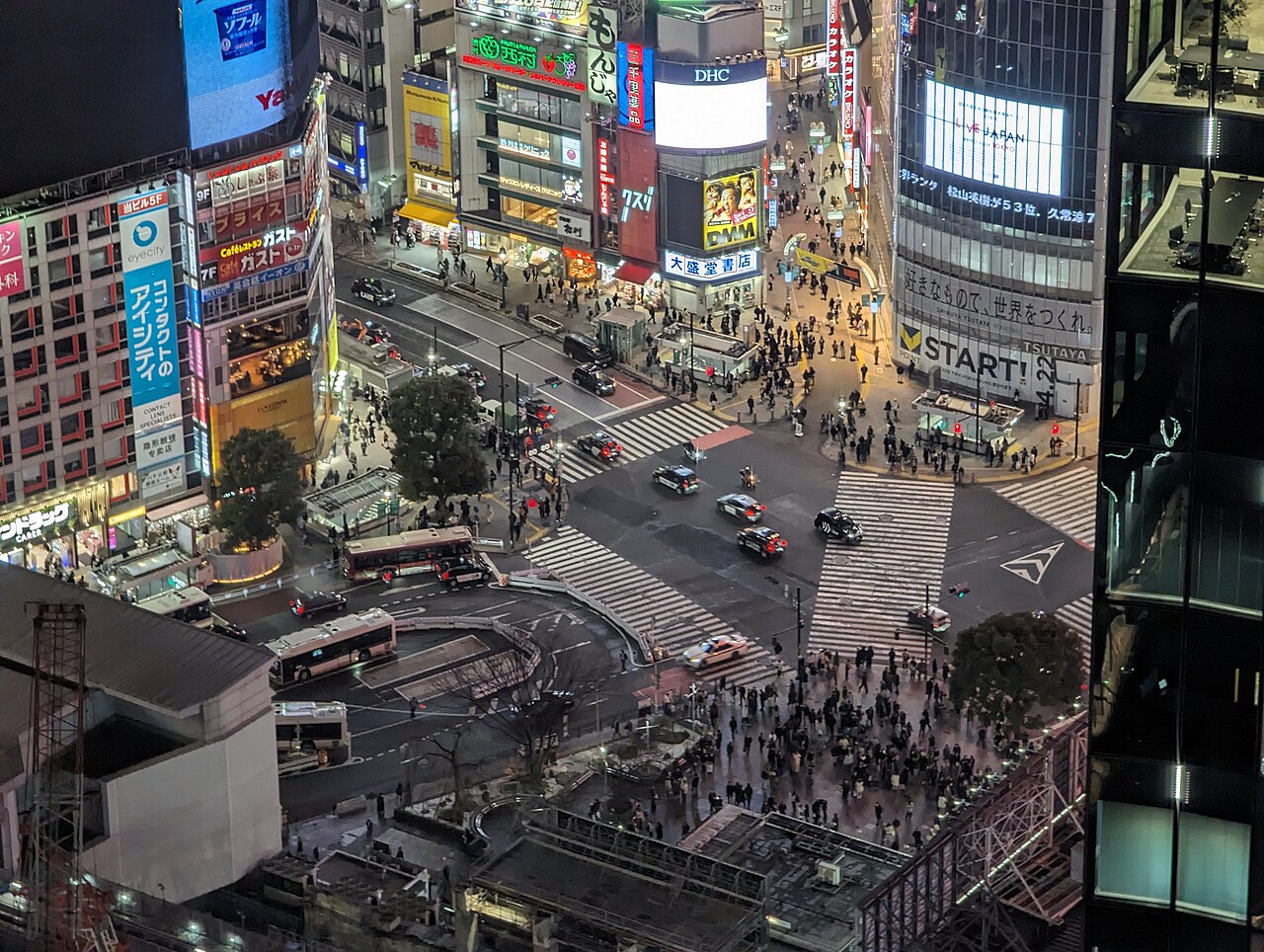
Evening is the strongest time to experience the crossing, full stop. Once the neon signage overhead lights up, the whole intersection gains a texture it simply does not have at noon. For elevation, Shibuya Sky, the observation deck atop Shibuya Scramble Square that opened in 2019, gives you the full geometric view from above — ticketed, and often worth booking ahead. Closer to street level, the second floor of the Starbucks inside the Tsutaya building, directly across from the crossing, remains the most famous window seat in the neighborhood, which also means it is routinely packed, with a small queue for the good spots. Fewer visitors know about the pedestrian bridge connecting Shibuya Station to the Mark City complex; it offers a more diagonal angle on the crossing, and because it is a functional walkway rather than a designated photo spot, it tends to have noticeably fewer tourists filling your frame.



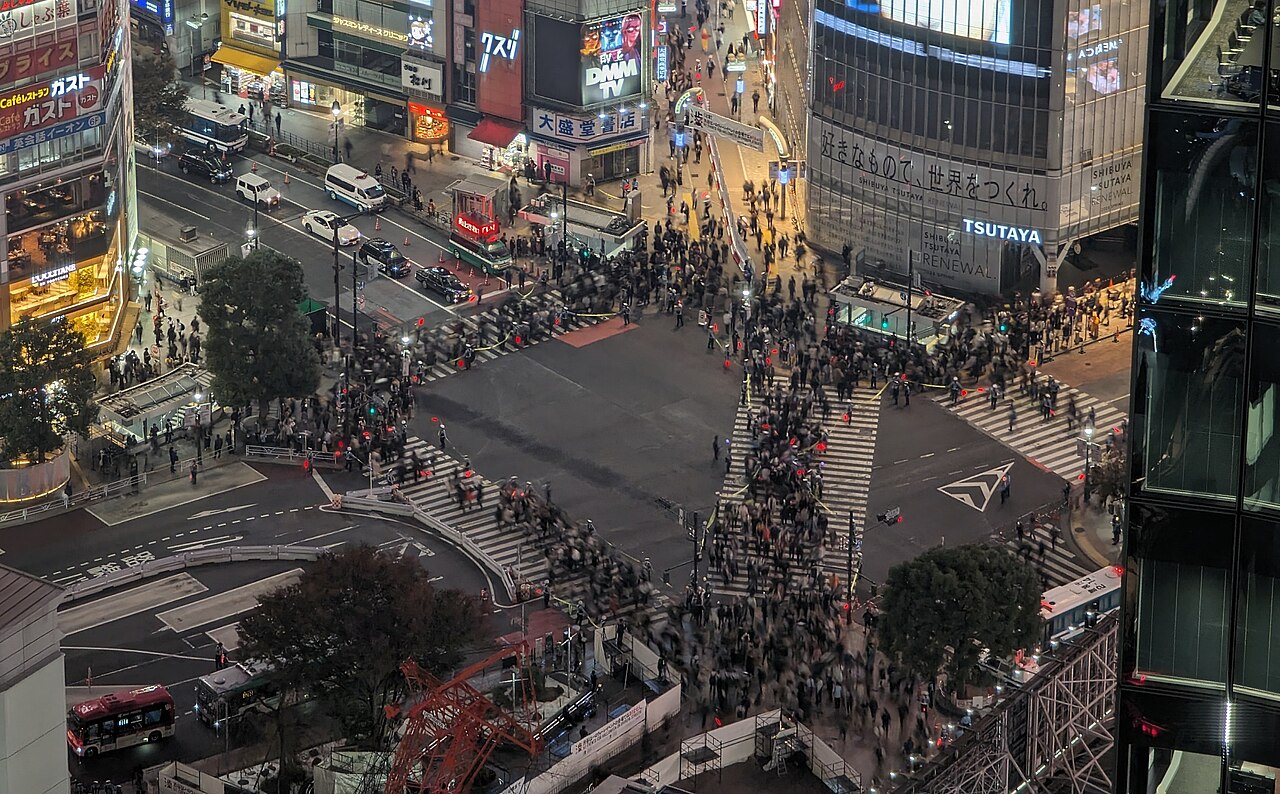
- Shibuya Sky observation deck — highest vantage point, ticket required, best for seeing the full pattern of the crossing from above
- Starbucks, 2nd floor of the Tsutaya building — eye-level views, popular and often crowded, arrive early or expect to wait
- Mark City pedestrian bridge — a diagonal angle, functional rather than scenic, generally quieter
- Street level, evening — where you actually feel the scale of it, once the signage is lit
Golden Week and the crowd question
Golden Week — the cluster of national holidays that lands in late April and early May — is when Japan travels domestically en masse, and Tokyo absorbs more of that movement than almost anywhere else. Shibuya feels it directly: restaurants full, hotel rooms gone weeks out, the neighborhood's economy running at full tilt while its infrastructure strains to keep pace. There are reports that pedestrian volume at the crossing during Golden Week 2026 pushed past previous peak-day figures on several days, setting new highs — worth flagging as unconfirmed for now, since the sourcing behind those specific numbers is thin and I would rather say so than pretend otherwise. If you want the crossing at its most extreme, that week delivers it. If you would rather feel the mechanism without the crush, an ordinary weekday evening does the job just as well.
A few words worth carrying with you
Part of the appeal of a spot like this, for those of us picking up Japanese as we go, is that it hands you working vocabulary for free. 交差点 (Kousaten, intersection) is intersection — you will see it on signage everywhere, not just here. 横断歩道 (Oudan hodou, crosswalk) is crosswalk, specifically the striped lines under your feet. 駅 (Eki, station) is station, and 出口 (deguchi, exit) is exit, so Hachiko-guchi, the Hachiko exit, is really just those two words fused into a place name you will use daily if you are staying anywhere near Shibuya. None of it is complicated. It just sticks better once you have stood in the middle of a few thousand people and needed to know, quickly, which way the exit was.