Overview
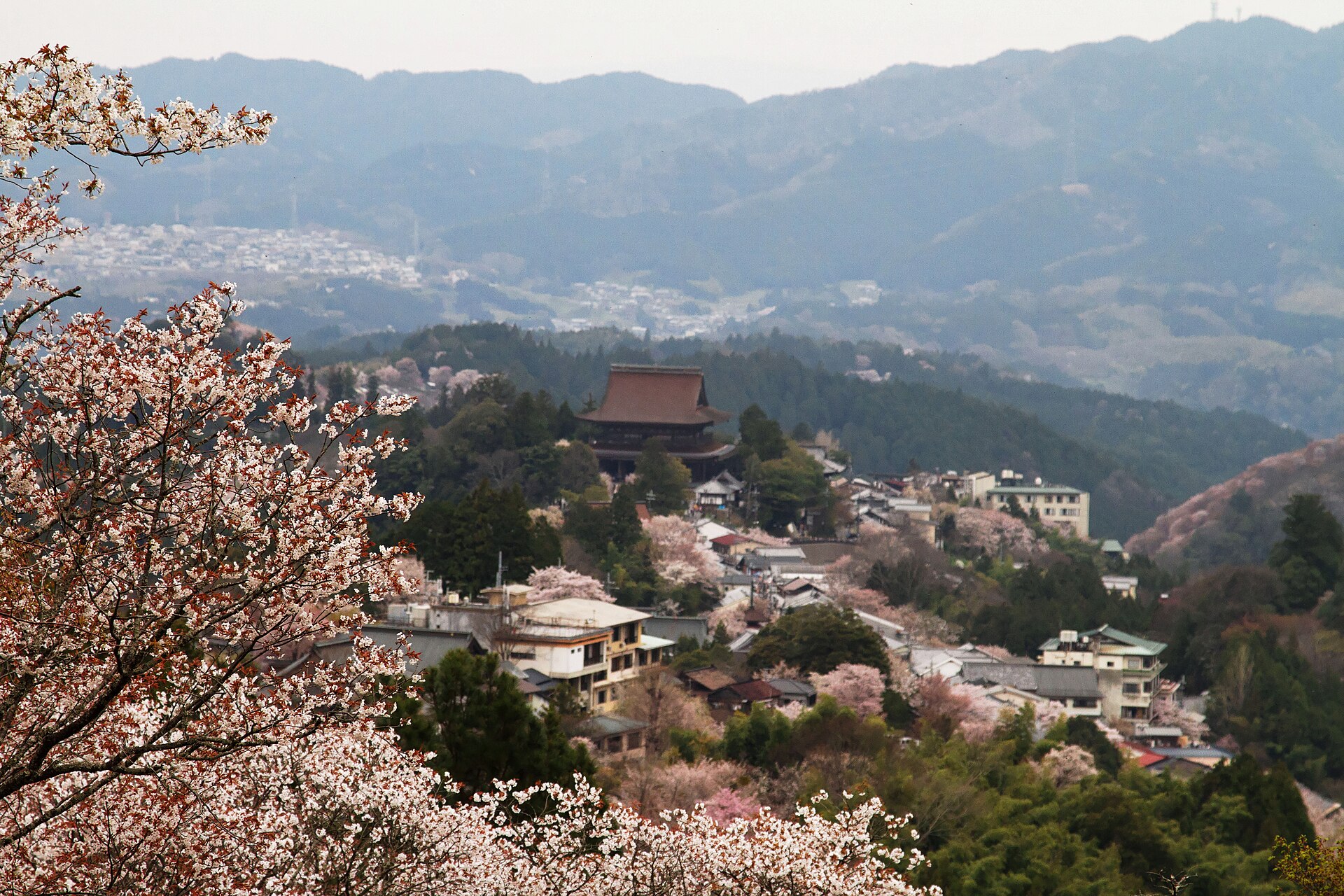
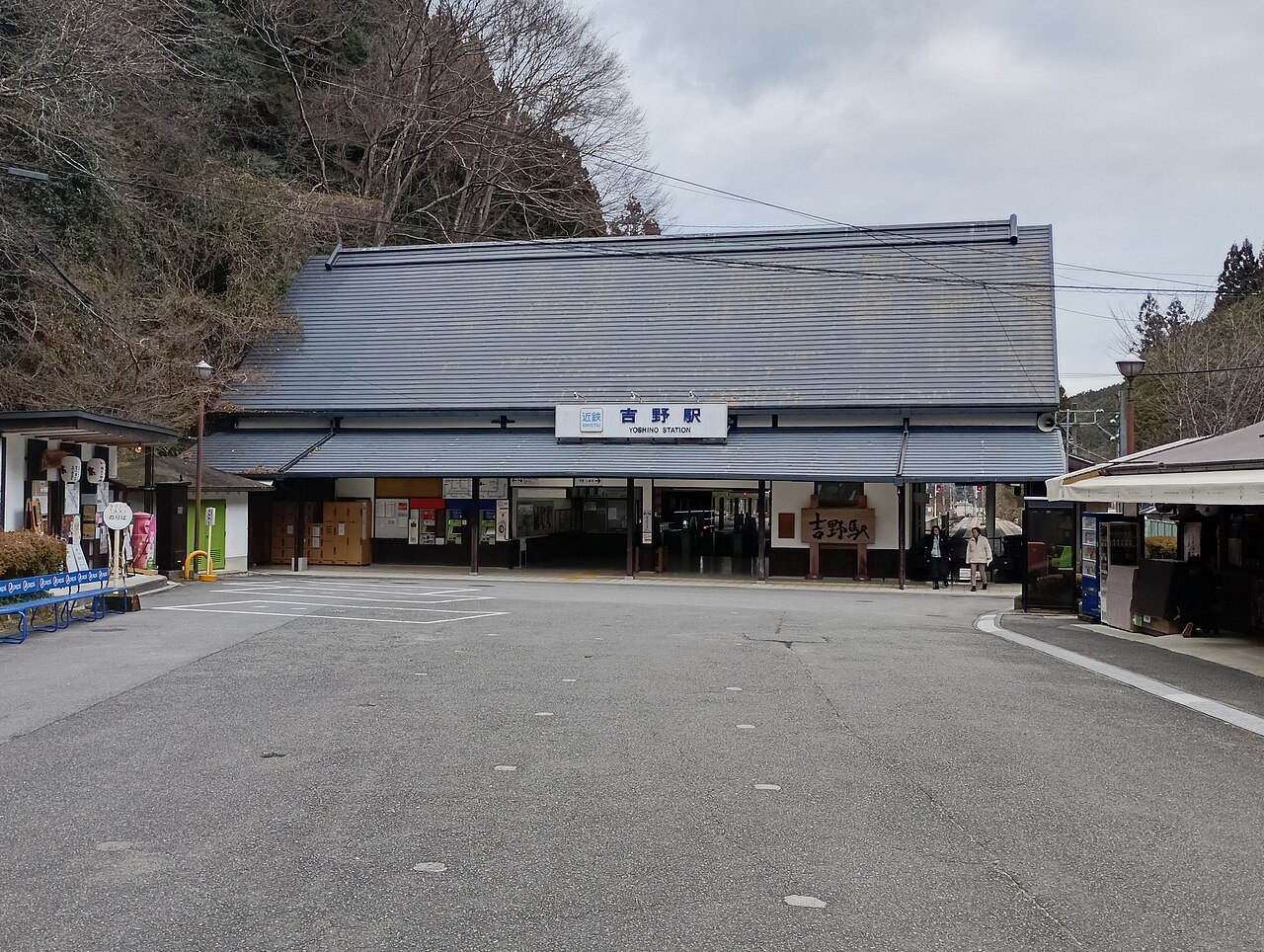
About 40 kilometres south of Nara City, there's a mountain village that turns into one of the country's most talked-about 桜 (sakura, cherry blossom) destinations every spring, and yet somehow still feels like a discovery when you're standing in it. That's Yoshino, or Yoshino-yama if you want the fuller name locals use. I remember getting off the train at Yoshino Station the first time, half expecting a tidy plaza with a gate and a gift shop, and instead finding a narrow mountain road climbing straight up into the trees. No grand entrance, no fanfare... just a path, and then, slowly, thousands upon thousands of pale blossoms opening up the slope ahead of you.



The headline number here is around 30,000 cherry trees, most of them 白山桜 (shiro-yamazakura, white mountain cherry (wild cherry variety)) — white mountain cherry, a wild variety rather than the manicured 染井吉野 (somei-yoshino, Somei Yoshino (common cultivated cherry tree)) you'll see lining rivers in Tokyo or Kyoto. And that distinction matters more than it sounds. These trees weren't planted for a park. They were planted, tree by tree, over centuries, as offerings.
Four Zones, One Long Bloom
What sets Yoshino apart from basically every other sakura spot in Japan is how the mountain is laid out. It's traditionally split into four zones, climbing from the entrance toward the summit:
- Shimo-千本 (Senbon, a thousand (trees/long slender objects)) — the lower zone, nearest the station and the first to bloom
- Naka-Senbon — the middle zone, and for many visitors the heart of the walk
- Kami-Senbon — the upper zone, quieter and a bit more of a climb
- Oku-Senbon — the innermost, uppermost zone, deep in 修験道 (Shugendo, mountain ascetic practice blending Buddhism and mountain worship) territory
"Senbon" literally means "a thousand trees," which is less a precise count and more a way of saying: a lot, densely packed. Because each zone sits at a different elevation — reportedly stretching from around 365 metres near the entrance to somewhere over 1,000 metres up at Oku-Senbon, though exact figures seem to vary a bit depending on who you ask — the blossoms don't all open at once. Lower down, they catch the warmth first; higher up, spring arrives a little later. Some sources put the delay at roughly two to three days for every 100 metres you climb, though I'd treat that as a rough rule of thumb rather than something to plan a trip around down to the day — mountain weather has its own opinions. What it means in practice, though, is that Yoshino doesn't really have a single bloom weekend. It has a rolling one, and if you time it right, walking up through the zones is basically walking through several weeks of 花見 (hanami, cherry blossom viewing) compressed into one afternoon.
Peak bloom, generally, lands somewhere in the last week of March through the first week of April, but honestly, it shifts a bit every year depending on how the winter went. Ask five people in Yoshino when to come and you'll get five slightly different answers — and that's part of the charm, not a flaw.
A Mountain That's Older Than Its Blossoms
Here's the part that a lot of first-time visitors miss, because the flowers are, understandably, doing a lot of the talking: Yoshino-yama is a sacred mountain long before it's a sakura destination. It's one of the key sites of Shugendo, the mountain ascetic practice blending Buddhism and native mountain worship, and pilgrims have been climbing it since roughly the 8th century.
The cherry trees themselves are tied into that history. Since the Heian period, pilgrims and monks planted them on the mountain as offerings to En no Gyoja, the mountain deity associated with Yoshino. So every tree you're photographing was, in a very real sense, someone's prayer first and a scenic backdrop second. I think about that every time I'm up there — it changes how you look at the slope.
That religious history is also why Yoshino-yama carries UNESCO World Heritage status, inscribed in 2004 as part of the Sacred Sites and Pilgrimage Routes in the Kii Mountain Range. Scattered through the cherry groves are old pilgrim paths and small, lesser-known temples and shrines — some hung with cherry-blossom-motif 絵馬 (ema, wooden votive plaque) plaques, a nice detail if you go looking for it instead of just aiming your camera up the hillside.



And what's more, Yoshino shows up in Japanese poetry going back to the Man'yoshu, the country's oldest major poetry anthology. People have been writing about this exact view for well over a thousand years. That's a strange, humbling thing to sit with when you're catching your breath halfway up Naka-Senbon.
Kimpusen-ji and the Walk Up
If there's one landmark to anchor your visit around, it's Kimpusen-ji, a temple partway up the mountain that also happens to be one of the better viewpoints going — from up there you get a proper look back over the slopes you've just climbed, blossoms stacked below you in every direction. It's less about hunting down one photo spot and more a natural place to pause, catch your breath, and actually take in where you are.
Beyond the temple, the old pilgrim paths threading through the groves are worth wandering even if you're not chasing any particular shrine. Some of it is steep. Bring shoes you don't mind walking in for a few hours, and don't rush it.
Getting There and Making Your Way Up
The easiest way in is the Kintetsu railway line, which runs you straight to Yoshino Station at the base of the mountain. From there you've got options: a local shuttle bus, or a cable car (ropeway) that carries you up toward Shimo-Senbon and saves your knees for the walking still ahead. I'd suggest riding up and walking at least part of the way back down — you see the mountain differently at a slower pace, and you'll pass corners and small stands you'd otherwise miss from a bus window.
Because the zones are spread out and genuinely require some climbing, this isn't a mountain you "do" in an hour. Give yourself the better part of a day if you can, longer if you want to actually sit somewhere and let the mountain do its thing around you instead of just walking through it.
Local Flavors Along the Way
Scattered along the paths and near the station, local stands sell Yamato specialties — the old name for this part of Nara Prefecture — which is a good excuse to stop, eat something regional, and let your legs recover before the next stretch of climbing. I won't pretend I remember the name of everything I've eaten wandering up that hill, but that's sort of the point: you try what's in front of you, ask what it is, and keep walking.
Planning Your Own Visit
Yoshino rewards a bit of patience — with the crowds during peak bloom, with the climb itself, with not knowing exactly which weekend will be "the" weekend this year. But that's kind of true of a lot of the best places in Japan. You show up, you climb, you look at something people have been planting and praying over and writing poems about for over a thousand years, and you find your own quiet corner of it. You'll eventually find your own Yoshino.