Overview
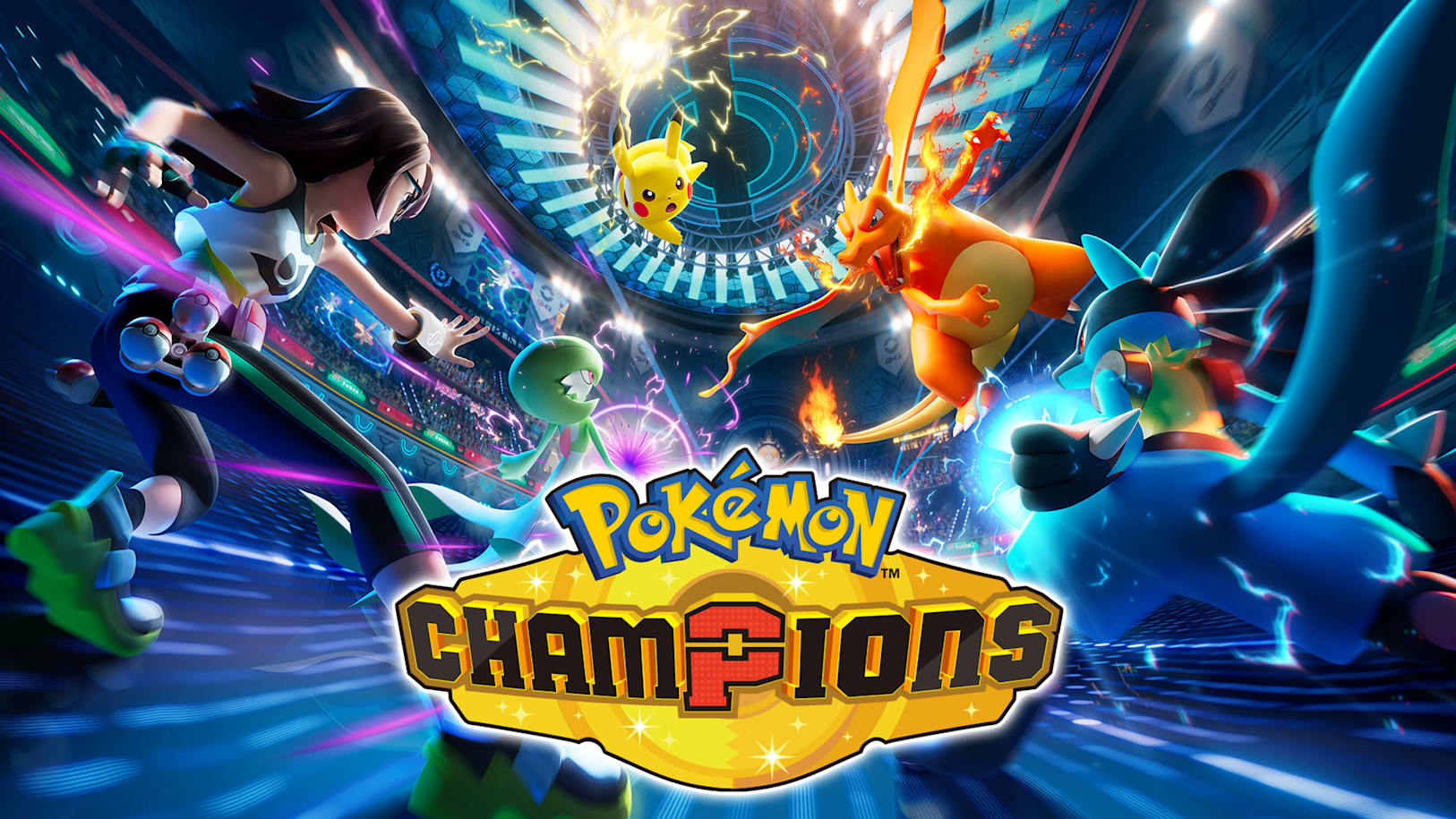
Pokémon Champions is Nintendo and The Pokémon Company's answer to a question competitive players have been asking for years: what would a Pokémon game look like if you stripped out everything except the fighting? The answer, released for Nintendo Switch and Nintendo Switch 2 on April 8, 2026 (April 7 in the evening for players in the US), is a free-to-start battle simulator built entirely around Single and Double Battles, with no gym badges, no overworld, and no narrative campaign to speak of. An iOS and Android version followed on June 17, 2026, extending the format to mobile. Whether that's a bold structural experiment or a franchise hedging its bets on live-service revenue depends, frankly, on which review you read, and I'll get into why both readings hold up.
Release Date and Platforms
The Switch and Switch 2 launch on April 8, 2026 is the anchor date here, confirmed directly by Pokémon's official news channel rather than pieced together from leaks. The mobile rollout landed roughly ten weeks later, on June 17, 2026, putting Pokémon Champions on effectively every screen a modern Trainer owns. That's a deliberate design choice, not an afterthought: a battle-only game lives or dies on how many people are in the matchmaking pool at eleven at night on a random Tuesday, and cross-platform reach is how you keep that pool full.

Free-to-Start, Not Full Price
Nintendo is careful with the term "free-to-start," and the distinction matters. Unlike Scarlet and Violet, which asked for full price up front in 2022, Champions is playable immediately at zero cost, with progression-tied offerings sitting on top rather than a paywall blocking entry. In practice, that means anyone can download the game and start battling the same afternoon, which is a genuinely different value proposition than anything the mainline series has tried. In theory, it also means the monetization layer has to do a lot of quiet work to fund ongoing development, and that's precisely where the early reviews start raising eyebrows.
Single and Double Battles: The Core Loop
Everything in Pokémon Champions routes through two formats. Single Battles are the classic one-on-one structure, and the developers have clearly built them as the on-ramp: status effects, EVs, move priority, the stuff that usually takes newcomers dozens of hours of mainline-game trial and error to internalize, gets taught here through direct, low-stakes reps. Double Battles are the other half of the equation, and they're aimed squarely at the VGC crowd: team composition, positioning, and combination moves matter in a way Single Battles simply don't ask of you. First you learn the fundamentals, then you're handed a format that assumes you already know them. That's a sound teaching structure on paper, and the core mechanics, stats, type interactions, the whole familiar skeleton, will feel immediately recognizable to anyone who's played a mainline entry.

No Campaign, No Badges, Just the Ladder
Here's the part that trips people up if they're expecting a mainline Pokémon experience: there isn't one. No overworld to walk around, no gym leaders, no scripted chapters or boss fights. What you get instead is Casual, Ranked, and Private Battles, full stop, run through simplified menus and automated battle elements meant to lower the entry barrier for newcomers. Early matchmaking throws easier bots and opponents your way, and the competition scales up as you climb the ranked ladder, but that's a difficulty curve generated by matchmaking, not a story beat somebody wrote. If you came in hoping for a narrative arc, you're going to be disappointed. If you came in for the battling, this is about as undiluted a version of that experience as the franchise has ever shipped.
Switch Online and Multiplayer Access
This is genuinely one of the murkier corners of the launch, and I'd rather flag the uncertainty than pretend it's settled. Some reporting holds that a Nintendo Switch Online subscription isn't required at all for Champions, not for Casual Battles, not for Ranked or Private Battles, not even for using Pokémon Home to trade or transfer, with NSO only entering the picture for separate, limited-time Online Competitions. That would be a real departure from how Switch multiplayer has worked for the better part of a decade. But that account traces back to a single outlet's coverage rather than a wall-to-wall official confirmation across every channel, so treat it as the current best understanding rather than gospel until Nintendo nails it down everywhere that matters.
What the Reviews Actually Say
Nintendo Life landed at 5 out of 10 and summed the game up as "the most accessible but flawed competitive Pokémon has ever been," which is about as precise a one-line verdict as you'll get. The praise is real: this is the easiest entry point competitive Pokémon has ever offered, full stop. The criticism is also real, and it's not nitpicking, convoluted monetization, disappointing performance, bugs that reviewers describe as inexplicable rather than merely annoying, a small Pokédex at launch, and missing content that leaves the whole package feeling unfinished. Multiple outlets independently reported performance drops on some systems, which suggests this isn't an isolated hardware quirk but something baked into the build itself. There's no level design to critique in the traditional sense, there's no level to design when the entire game is a battle screen, so every ounce of critical attention lands on interface, matchmaking, and mechanical polish instead. That's a far less forgiving spotlight than a sprawling RPG gets, and Champions hasn't fully passed under it yet.

Where to Play It
Pokémon Champions is available now as a free-to-start download on the Nintendo eShop for Switch and Switch 2, and on the App Store and Google Play for iOS and Android. There's no disc or cartridge version to track down, this is a live, connected service game by design, and the download itself is the whole up-front transaction, with progression-tied offerings appearing once you're actually in the ladder.
Learning Japanese Through Pokémon Champions
If you're using Pokémon as a way into Japanese, Champions is an efficient vocabulary drill precisely because it strips the language down to battle terminology instead of burying it in cutscene dialogue. 技 (Waza, move (technique)) (move), 特性 (tokusei, ability) (ability), タイプ (taipu, type) (type), 攻撃 (kougeki, attack) (attack), 防御 (bougyo, defense) (defense), and 速度 (sokudo, speed) (speed) are words you'll see on the battle screen dozens of times an hour, and that kind of forced repetition is genuinely one of the more effective ways to make vocabulary stick, arguably better than a flashcard app that shows you a word once a day and calls it done. 勝利 (Shouri, victory) (victory) and 敗北 (haiboku, defeat) (defeat) round out the results screen. Curious about the kanji behind terms like these? Waza and tokusei are normally written with kanji, while taipu, being a loanword from English, is written in katakana instead, which is itself a small, useful lesson in how Japanese absorbs foreign vocabulary. None of this replaces structured study, but if you're already grinding the ranked ladder, you may as well let the UI teach you something.
How It Fits Into the Wider Franchise
Champions doesn't replace mainline Pokémon, it sits next to it. Scarlet and Violet remain the full-price, story-driven entry point for players who want a region to explore; Champions is what you graduate to, or dip into in parallel, once battling itself is the draw. Developed in association with The Pokémon Company, it's also the clearest signal yet that Game Freak and its partners see competitive VGC play as a big enough audience to warrant its own dedicated, ongoing product rather than a mode bolted onto a mainline release. If that model sticks, don't be surprised when future competitive seasons and formats get announced independently of whatever the next core RPG is doing.