
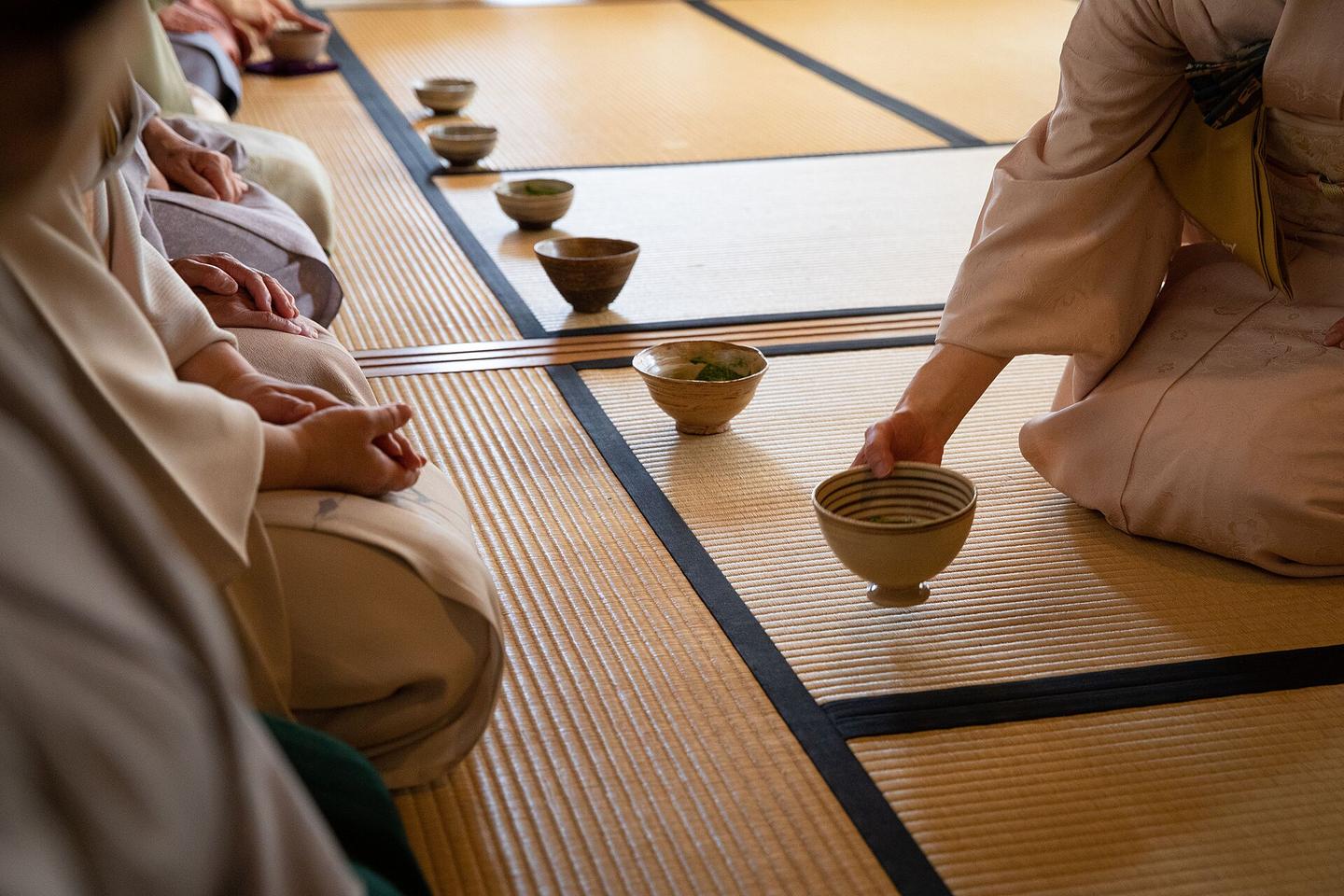
Guess what? This isn’t just about a cup of green things in a nice room. It’s about place, craft, and the slightly smug pleasure of realising that two prefectures can tell very different stories through 抹茶 (matcha, powdered green tea).
Fukuoka matcha at Hotel Oriental Express Nakasu Kawabata
Hotel Oriental Express Fukuoka Nakasu Kawabata sits in one of the city’s most convenient neighbourhoods, right in the middle of the food-and-train-station sort of Fukuoka that people actually use, not the polished brochure version. And that matters, because this matcha cafe concept feels like it belongs to travellers who want a proper pause rather than another themed dessert piled high with spun sugar and good intentions.
The hotel’s tea offering puts regional Japanese tea front and centre, with a clear focus on Yame matcha and Kagoshima matcha. What many overlook is that these aren’t interchangeable green powders; they come with different farming styles, aromas, and a very different sense of place. One is tied to Fukuoka Prefecture’s Yame area, the other to Kagoshima in southern Kyushu, and the contrast is half the fun. See what I mean?
Compared with back home, where tea can sometimes be reduced to “green” or “not green”, Japan treats tea like a map you can drink. Wild, isn’t it?
Yame matcha and Kagoshima matcha, side by side
Yame is one of the most respected tea-growing areas in Japan, and it has a long reputation for 玉露 (gyokuro, shaded premium green tea) as well as matcha. The region’s reputation comes from patient cultivation, shaded growth, and a rounded, elegant flavour that tends to feel rich rather than brash. If you’ve ever heard Japanese tea described as 旨味 (umami, savoury flavour)-rich, this is the sort of place people are talking about.
Kagoshima, by contrast, brings a different southern energy. It’s warm, productive, and increasingly important in Japan’s tea world, with a large share of the country’s tea output. Kagoshima matcha can taste fresher, more vivid, sometimes a little greener in the literal sense, with a brightness that stands up well in lattes, sweets, and modern cafe formats.
For example, if Yame matcha is the carefully tailored suit, Kagoshima matcha is the well-cut work jacket that can still go out for dinner. Both look good, but they don’t speak the same dialect. And for Japanese language learners, that’s useful too, because tea vocabulary often mirrors flavour in a beautifully precise way, with words like umami, 香り (kaori, aroma), 味 (aji, taste; flavour), and nikuomi (body) cropping up in tasting notes. Not exactly the sort of thing you get from a vending machine bottle.
How the flavour differences show up
Yame matcha usually leans towards depth, sweetness, and a gentle bitterness that feels polished rather than sharp. Kagoshima matcha often gives a fresher green note, a livelier aroma, and a more direct first impression. To be fair, both can be excellent, but they work differently depending on how the cafe prepares them.
If the hotel serves them as a straight tea, the differences become easier to notice. If they appear in a latte, parfait, or dessert, the milk, cream, and sugar will change the balance, but the underlying regional character should still peek through. That little peek is the good bit.



Why this tea story works in Fukuoka
Fukuoka is already one of those cities where food travel feels absurdly easy, because you can move from hakata ラーメン (ramen, ramen noodles; noodle soup) to 屋台 (yatai, street stall) stalls to polished hotel cafes without changing your whole mood. And then a place like Hotel Oriental Express Fukuoka Nakasu Kawabata adds a more deliberate regional story, one that nudges you to notice where ingredients come from instead of just admiring the garnish and calling it a day.
Seriously though: regional tea makes perfect sense in Kyushu. Fukuoka and Kagoshima are both part of a wider island food culture that values freshness, local identity, and a bit of friendly competition. Put Yame matcha and Kagoshima matcha on the same menu and you’ve got a conversation in flavour form. The sort of conversation I can get behind, especially before lunch.
Mind you, this also works as a travel stop for people who are learning Japanese. Tea menus are a neat way to pick up words like sencha, gyokuro, houjicha, and matcha without feeling like you’re revising for an exam. You’re just ordering dessert. Much nicer.
What to order, and how to taste like you mean it
My tip: if both teas are available, try them in a simple form first, then in a sweeter item. That gives you a clean reference point, and it stops the sugar from doing all the talking. I always think the best tea cafe experiences are the ones that let you compare, not merely consume.
Here’s the kicker: a side-by-side tasting is also the easiest way to train your palate. Start with aroma, then the first sip, then the aftertaste. Ask yourself whether the matcha feels creamy, grassy, nutty, or slightly astringent, and whether the finish lingers or disappears in a hurry. You don’t need to become a tea snob, heaven forbid, just paying attention is enough.
What I especially like about a setup like this is that it gives travellers a reason to slow down in a hotel lobby or cafe space, which isn’t always where the most memorable Japan moments happen. Sometimes they happen when you’re holding a small ceramic cup, mildly confused in the best way, and realising that two prefectures have just had a polite flavour argument on your behalf. Simply brilliant.
And if you’re building your Japanese vocabulary, this is a good place to notice the difference between osusume (recommendation), aroma, and ajiwawau (to savour). A tiny lesson, delivered with tea. Which is frankly far more civilised than most classroom methods. See what I mean?
While we're at it: if you’re in Fukuoka, keep an eye out for other local food stories too. The city is full of them, and they often sit in plain sight, waiting for someone to ask what the ingredients are doing there in the first place. This is my absolute hidden gem!
Frequently Asked Questions
Where is Hotel Oriental Express Fukuoka Nakasu Kawabata?
It is in central Fukuoka, near Nakasu and Kawabata, making it a convenient stop for travellers who want easy access to food, shopping, and transport.
What is the difference between Yame matcha and Kagoshima matcha?
Yame matcha is usually known for depth, sweetness, and a rounded flavour, while Kagoshima matcha often feels fresher, greener, and more vivid.
Why should Japanese learners care about tea cafes?
Tea cafes are a relaxed way to pick up food vocabulary, taste regional differences, and connect words to real experiences rather than memorising them in isolation.


