
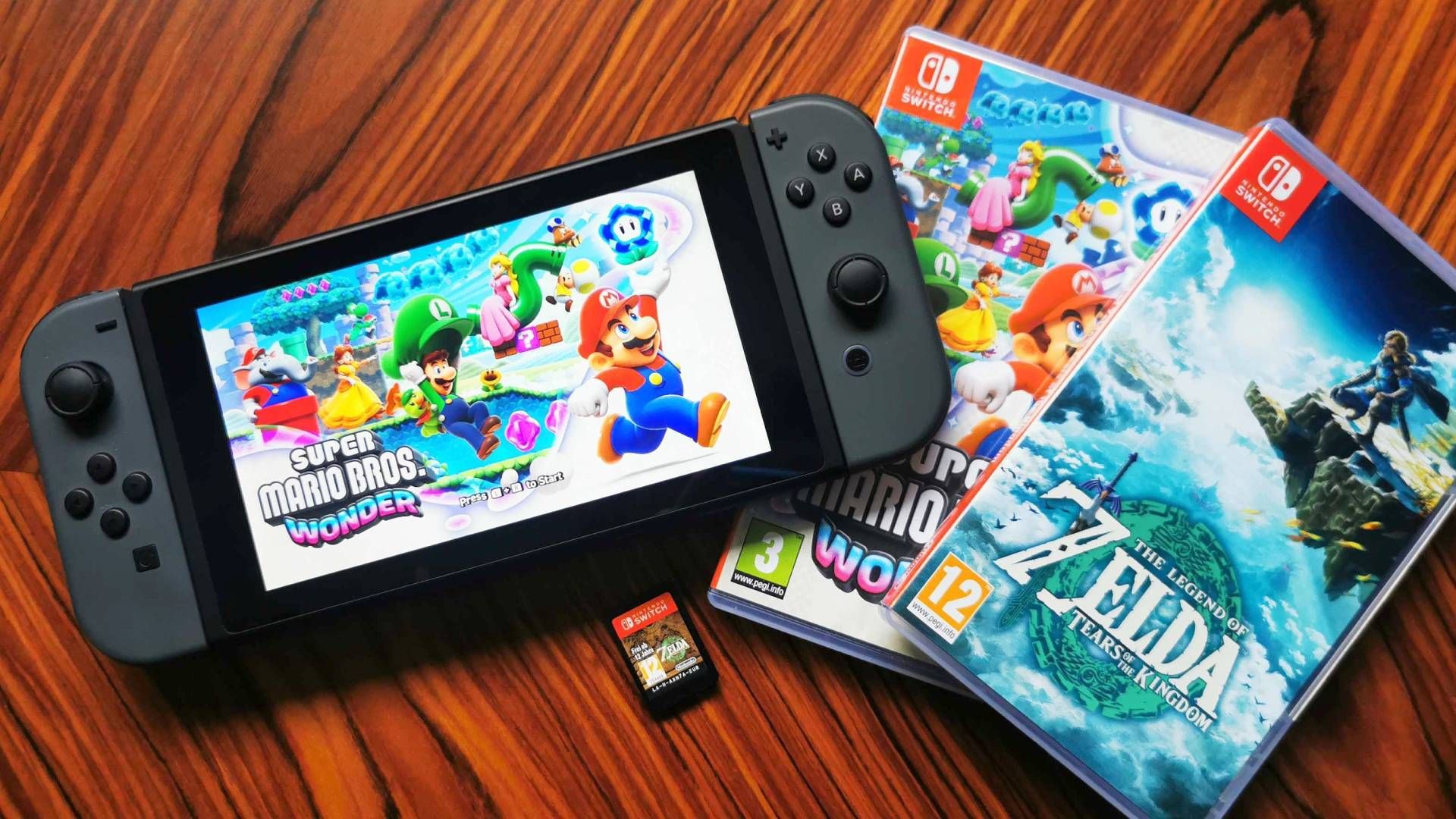
The first time I went to Japan, I noticed how often Nintendo sat at the heart of family life, not just gamer chat. That’s why this comment from Miyamoto hits harder than a standard corporate quote. It feels like a statement about memory, childhood, and what Japanese pop culture is supposed to do.
![Dragon Ball Z: Kakarot [Master Edition]](https://s.pacn.ws/1/p/1eh/dragon-ball-z-kakarot-master-edition-908785.1.jpg?v=t8ja8t&width=400)


Miyamoto and the Idea of Nintendo as a Rite of Passage
Shigeru Miyamoto has spent decades shaping how the world thinks about Nintendo, from Donkey Kong in 1981 to Super Mario Bros. in 1985, and now he’s talking about something even bigger than games. He wants Nintendo consoles to become a rite of passage, the kind of object you remember the way you remember your first school festival, your first train ride alone, or your first summer 祭り (matsuri, festival). Basically, this isn’t just about hardware, it’s about growing up with a shared cultural marker.
That idea makes perfect sense in Japan, where the phrase 成人式 (seijin shiki, coming-of-age ceremony) marks coming-of-age at 20, and where so many traditions are built around a moment that says, “you’re part of the next stage now.” Nintendo has already played that role for millions of people, just in a more playful way. A Famicom in the 1980s, a Game Boy in the 1990s, a Wii in the 2000s, each one became a family story. Personally, that’s a pretty compelling legacy.
And that’s the heart of Miyamoto’s vision. He isn’t saying every child must own a console, he’s saying Nintendo should be the thing people look back on and say, “That was my entry point.” Hand on heart, that’s a stronger cultural goal than chasing raw specs, frame rates, or the loudest launch campaign. Nintendo’s real power has always been emotional memory, not just technical muscle.
Why Nintendo Console History Matters So Much
Picture this: a living room in Japan in 1983, the Famicom arrives, and suddenly a TV becomes a social space for the whole family. Compare that with what happened later in 2006, when the Wii turned motion controls into something grandparents could try without fear, then in 2017 when the Nintendo Switch made handheld and home play feel like one smooth habit. No wonder, because Nintendo keeps finding ways to enter everyday life instead of staying locked inside “gamer” culture.
Compared with back home, where gaming brands often compete on power or realism, Nintendo has always leaned into ritual, routines, and repetition. You remember booting up a console after school, playing a little before dinner, then talking about it the next day. That’s not just entertainment, it’s a tiny life pattern, and Miyamoto seems to know that patterns are what become memories. My tip: if you’re learning Japanese, look at how often Japanese media uses words like 成長 (seicho, growth), 記念 (kinen, commemoration), and 体験 (taiken), because they all connect to lived experience, not abstract product talk.
What I especially like is that Nintendo’s catalogue naturally supports this family-style bond. Mario Kart turns friends into rivals, Animal Crossing mirrors daily habits, and Pokki-mon made collecting feel like a summer project shared on playgrounds and in schoolyards. The consoles are the stage, but the social memory is the real product. But that’s not all.
From Famicom to Switch, Nintendo Built the Coming-of-Age Machine
Trust me on this one: Nintendo’s history is basically a timeline of cultural entry points. The Famicom sold over 60 million units worldwide, the original Game Boy passed 118 million, the Wii reached about 101 million, and the Switch has already moved beyond 140 million. Those numbers matter, but the more interesting part is what they meant in homes across Japan, Europe, and the US.
Each console became a family memory
The Game Boy was a backpack companion, the Nintendo DS turned touch screens into something approachable, and the Switch made local multiplayer feel spontaneous again. And it gets better: Nintendo didn’t need to copy Sony or Microsoft to do it. It kept making machines that feel like invitations. If you know a little Japanese, the word taiken, meaning experience, is a good one to remember here, because Nintendo sells taiken as much as it sells software.
Unlike what we're used to with hardware launches that chase “power”, Nintendo often chases a feeling. That feeling can be nostalgia for older fans, or first discovery for younger players. Wild, isn’t it? A console can become a memory object, almost like a festival lantern you bring out every year, and Nintendo has been brilliant at making that happen over and over again. Personally, that’s part of why the brand still lands so strongly.
What Miyamoto’s Dream Says About Japan and Gaming Culture
Oh, and there’s another layer here: this is a very Japanese kind of ambition. Japanese culture often turns personal milestones into shared rituals, from school graduation to New Year visits to a shrine, and Miyamoto seems to want Nintendo to sit in that emotional category. Not formally, of course, but culturally. He wants the brand to be something people pass through on their way to adulthood, and then keep in their hearts after that.
That brings us to one big reason the quote matters. Nintendo is no longer just a company that makes toys for children, it’s a company that can define how people remember childhood itself. When a brand reaches that level, it stops being a product and becomes a reference point. Simply brilliant. For Japanese learners, this is a great example of how pop culture and language overlap, because terms like おもちゃ (omocha, toy), 子供 (kodomo, child), and taiken are never just literal, they carry emotional weight too.
My verdict: Miyamoto’s dream is ambitious, but it’s also completely on brand. Nintendo doesn’t need to become the most powerful console maker to stay culturally huge. It just needs to keep being the machine people grow up with, then grow nostalgic about later. That’s a rare kind of success, and one reason Nintendo still feels more like a life chapter than a hardware cycle.
Frequently Asked Questions
What did Miyamoto mean by a rite of passage?
He meant Nintendo should be a shared milestone in people’s lives, something they remember as part of growing up.
Why does Nintendo fit this idea so well?
Because its consoles and games have long been tied to family play, nostalgia, and first experiences across generations.
Which Nintendo systems best support this idea?
The Famicom, Game Boy, Wii, and Switch each became major entry points for different generations.


