Overview
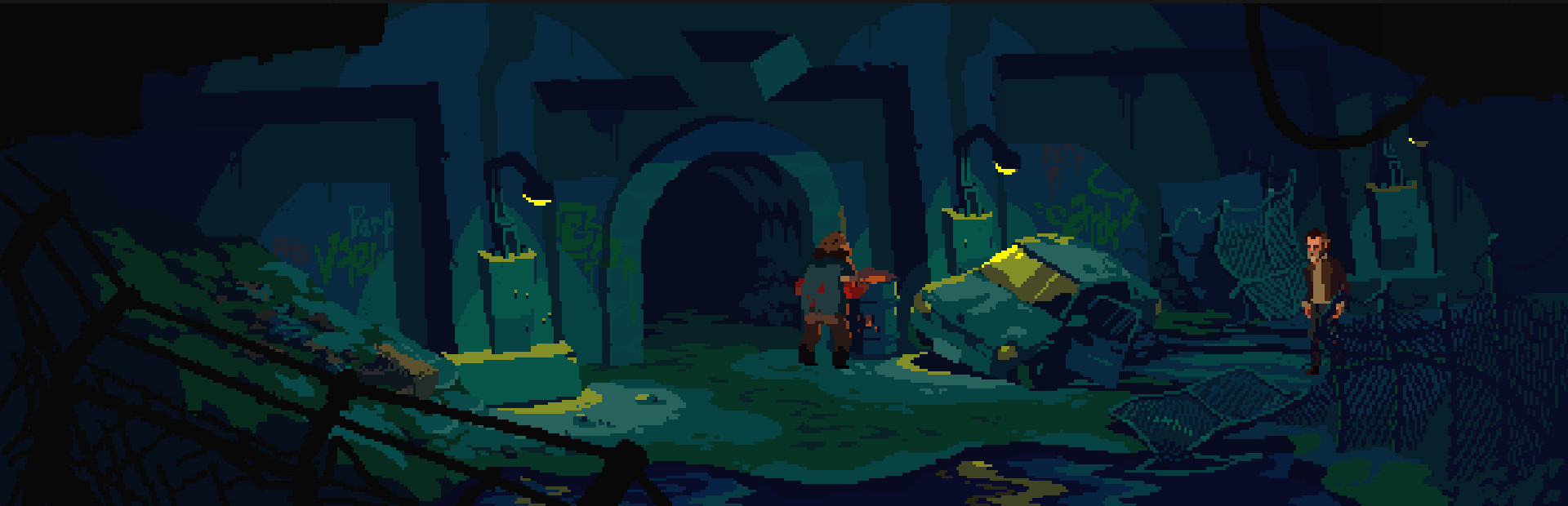
You've probably heard that The Drifter is a Devolver Digital game. That's a reasonable assumption, Devolver's fingerprints are on half the pixel-art oddities worth playing this decade, but it's wrong, and it's worth correcting before it calcifies into fact online. The Drifter is developed and self-published by Powerhoof, the small Australian studio that's spent years building a reputation for tight, character-driven design rather than volume output. There's no publisher taking a cut of the risk here, which tells you something about how much confidence Powerhoof has in the project. The game itself is a 2D pixel-based investigative adventure with a noir tone and a self-described pulp sensibility, and it's confirmed for Nintendo Switch. Here's everything that's actually locked down, and everything that still isn't.
What Kind of Detective Story Is This, Exactly?
The Drifter sits in the investigative-adventure lane: you're reading scenes, piecing together contradictions, and moving through a world built to look like it was inked for a cheap paperback and then digitized. Noir gets thrown around loosely in games marketing, so let's be precise about what it means here, because the pulp label matters. This isn't prestige detective fiction with a moody score and an unreliable narrator monologuing about the human condition. Pulp is faster, cheaper, meaner, and more interested in plot momentum than literary ambiguity. Pairing that sensibility with pixel art is a smart production choice, in theory and in practice: pixel art hides budget constraints well, and a noir palette of hard shadows and limited color plays directly to pixel art's strengths instead of fighting them. Whether the writing holds up its end of that bargain is the one thing nobody outside the studio can verify yet.
Powerhoof's Track Record
Powerhoof isn't a debut studio flailing at its first project. This is a team that has built its identity around polish over scale, small catalogs, high craft, character work that actually lands. That's the context worth keeping in mind: The Drifter isn't a first-timer's swing at genre pastiche, it's a known team applying its usual discipline to a new tone. Self-publishing reinforces that reading. Without a publisher setting the calendar, the release date you're about to read is Powerhoof's own call, not a marketing department's.
Release Date: What's Confirmed and What's Just Noise
The confirmed date is June 22, 2026, on Nintendo Switch. That's not a leak, not a datamine, not a placeholder page that got indexed early, it came from an official release-date trailer that Powerhoof published themselves. Which brings us to the actual problem with a lot of the Drifter news floating around: some searches and speculative threads have attached the game to a 2027 window instead. There's no confirmed source behind that number, and given that a dated trailer already exists for June 2026, treat any 2027 claim as unconfirmed noise until Powerhoof says otherwise. The short version: there's no leak history to untangle here, just one direct announcement that did its job cleanly.
Where to Play The Drifter
On Switch, this lands through the Nintendo eShop, and that's the version currently confirmed, so plan your pre-order or wishlist around that platform rather than assuming a day-one release on other systems will materialize alongside it. Because Powerhoof is self-publishing, expect the studio's own channels, meaning its site and social accounts, to be the most reliable place to confirm pricing and any last-minute date shifts, rather than third-party storefront pages that sometimes get ahead of the actual announcement.
A Vocabulary Detour for Genre Fans Learning Japanese
If pixel-art detective fiction is your thing, there's a good chance you've also spent time with Japanese mystery games and visual novels, and that overlap is worth using deliberately. A few genre words worth having in your pocket: 探偵 (tantei, detective) (detective), 事件 (jiken, case, incident) (a case or incident), 闇 (yami, darkness; underworld) (darkness, often used figuratively for the criminal underworld), and 告白 (kokuhaku, confession) (a confession), vocabulary that shows up constantly across Japanese detective fiction, from Famicom Detective Club to the Ace Attorney series. Learning genre-specific words through media you're already emotionally invested in genuinely works better than flashcard grinding in a vacuum, and noir-pulp detective stories hand you a tight, reusable vocabulary set almost by accident.
Related Titles Worth Knowing
If you want a sense of Powerhoof's design instincts before committing, their back catalog is the place to look, the studio built its name on tightly scoped, mechanically confident projects rather than sprawling open-world ambition. That restraint is exactly what you'd want going into a detective game, where pacing and clarity of information matter more than raw content volume. The Drifter reads, on paper, like a natural extension of that philosophy into a new genre rather than a swing at something the studio has no feel for. Which is why the Devolver assumption was always a little too neat, and now you know exactly why that is.