
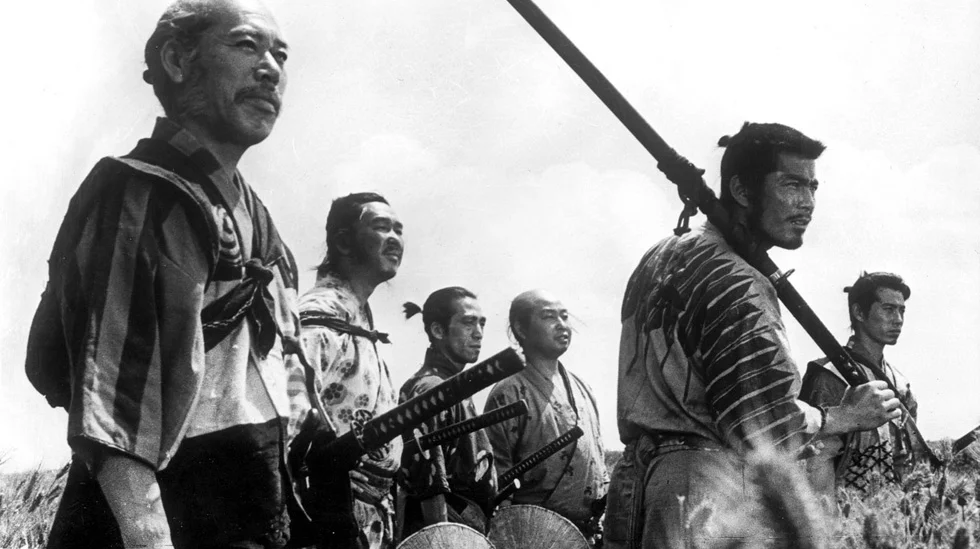
If you've ever wondered how Kurosawa's humanism still feels so alive, this is where you’ll find the answer. I love that a TV programme can still create a proper film event, and this one has real classics at its core.
Akira Kurosawa is the focus of a TVCine marathon this August, and that is the sort of programming I always like to notice. It’s not just a random late-night repeat. The channel is centring a major Japanese filmmaker, and it’s doing so on the first Sunday of the month, which gives the whole line-up a proper event feeling.
For Japan fans, that matters. Kurosawa is one of the names that keeps opening doors, whether you came to Japanese cinema through 侍 (samurai, samurai warrior) epics, post-war drama, or film school canon. And if you’re learning Japanese, his films are also a quiet lesson in culture, speech rhythm, and social values. You hear levels of formality, watch hierarchy play out, and notice how much can be said without being said. That's very Japanese, and very Kurosawa.
TVCine's August marathon puts Akira Kurosawa first
The big draw here is simple. TVCine is dedicating a marathon to Akira Kurosawa on the first Sunday in August, and that makes the schedule worth checking carefully. These marathons can disappear into background television if you’re not paying attention, but this one has real weight because the films aren’t filler. They’re landmarks.
Kurosawa made 30 feature films over a career that stretched from the 1940s to the 1990s. He worked with Toho, built a lasting visual language, and influenced directors far beyond Japan. George Lucas has spoken openly about his debt to Kurosawa, and that influence runs through film culture in Europe too. So when a channel gives him a spotlight, it’s not just nostalgia. It’s stewardship. Simply brilliant.
What I especially like is the timing. The first Sunday of August is the kind of slot that invites you to settle in, rather than just sample a scene or two. You can make an afternoon of it. Tea, notebook, maybe even a pause to look up a few Japanese terms. My tip: keep a small list of words you hear often, like 社長 (shacho, company president), 先生 (sensei, teacher; instructor), or お客様 (okyaku-sama, honoured guest; customer), and notice how social relationships shape every conversation. Wait, there’s more.
Vivre from 1952: Kanji Watanabe and a quiet masterwork
Among the titles associated with the marathon, Vivre from 1952 deserves special attention. In Japanese, the film is Ikiru, and its central figure, Kanji Watanabe, is one of Kurosawa's most unforgettable characters. He is played by Takashi Shimura, an actor who became one of the director's most trusted collaborators. If you know Kurosawa only for swords and storms, this is the film that corrects that impression.
Ikiru follows a municipal bureaucrat who learns he has stomach cancer and tries, very late in life, to find meaning. The film is quiet, painful, and deeply human. It spends time in offices, with paperwork, with delay, with the small humiliations of administration. Then it opens into something larger. That shift is why the film still lands so hard. I first watched it after a long day in a Tokyo ward office, and the bureaucracy scenes felt almost uncomfortably exact. Compared with back home, the precision of social process in Japan can feel both efficient and exhausting. Kurosawa understands that tension completely.
Why Kanji Watanabe still matters
Kanji Watanabe is not a hero in the usual sense. He is a man who has lived by routine, then finds routine has hollowed him out. His arc is powerful because it is so ordinary. Many Japanese viewers know the film as a meditation on 生きがい (ikigai, reason for living; life purpose), though that concept is often simplified abroad. Kurosawa isn’t selling a slogan. He is showing what happens when a person finally sees the value of one day, one small park, one promise kept.
To be fair: the film isn’t light viewing. But it’s rewarding in the strongest way. If you’re learning Japanese, listen for how the office workers defer, dodge, and soften their language. The script is full of polite evasions, which means you get a real sense of 敬語 (keigo, honorific speech) in action. Not textbook keigo. Human keigo. That is different. And that brings us to why this marathon is so useful for learners as well as film lovers.
Why Kurosawa still rewards Japan fans and language learners
What most people don't know: Kurosawa's films are often discussed for their visual power, but they’re also great listening practice if you already have some Japanese under your belt. The dialogue is clear, the emotional stakes are high, and the social settings are easy to follow. You can track rank, family pressure, and workplace behaviour just from the way people speak. That is gold for a learner.
On the flip side: these aren’t classroom recordings, so you will miss things. That is fine. I still have a long way to go myself, and that is part of the pleasure. Film gives you texture, not perfection. You hear how people interrupt, how they pause, how respect can be folded into a sentence without sounding stiff. If you have studied words like 義理 (giri, duty; social obligation), 思いやり (omoiyari, empathy; consideration), or seishin, Kurosawa helps you feel them, not just define them.
Oh, almost forgot: his films also tell you a lot about post-war Japan without turning into lectures. You see crowded streets, public institutions, family expectations, and the pressure to keep moving even when life has stopped making sense. That is culture in motion. And because the marathon includes a title as substantial as Ikiru, the programme feels like a serious invitation rather than a casual nostalgia trip.
Insider tip: if you plan to watch more than one film, start with the most emotionally accessible title and save Ikiru for when you can give it your full attention. It deserves that. And if TVCine is showing other Kurosawa titles around it, even better, because you can watch how his style shifts from period drama to modern city drama. Wild, isn't it?
This is your chance to discover Kurosawa again, or for the first time, through a curated August marathon that treats him with the respect he deserves. Spreading my love and admiration for Japanese cinema to the rest of the world: that's what moments like this are about. And a film like Ikiru, with Kanji Watanabe at its centre, is an experience so rich it’d be worthy of a whole afternoon. more Japan news on jpnerd.com. Sounds good, right?
Frequently Asked Questions
When is the TVCine Akira Kurosawa marathon?
It is scheduled for the first Sunday in August.
Which film is especially important in the line-up?
Vivre from 1952, known in Japanese as Ikiru, is a key title and features Kanji Watanabe.
Why should Japanese learners care about Kurosawa?
His films offer strong listening practice, clear social dynamics, and a vivid view of Japanese culture.


