
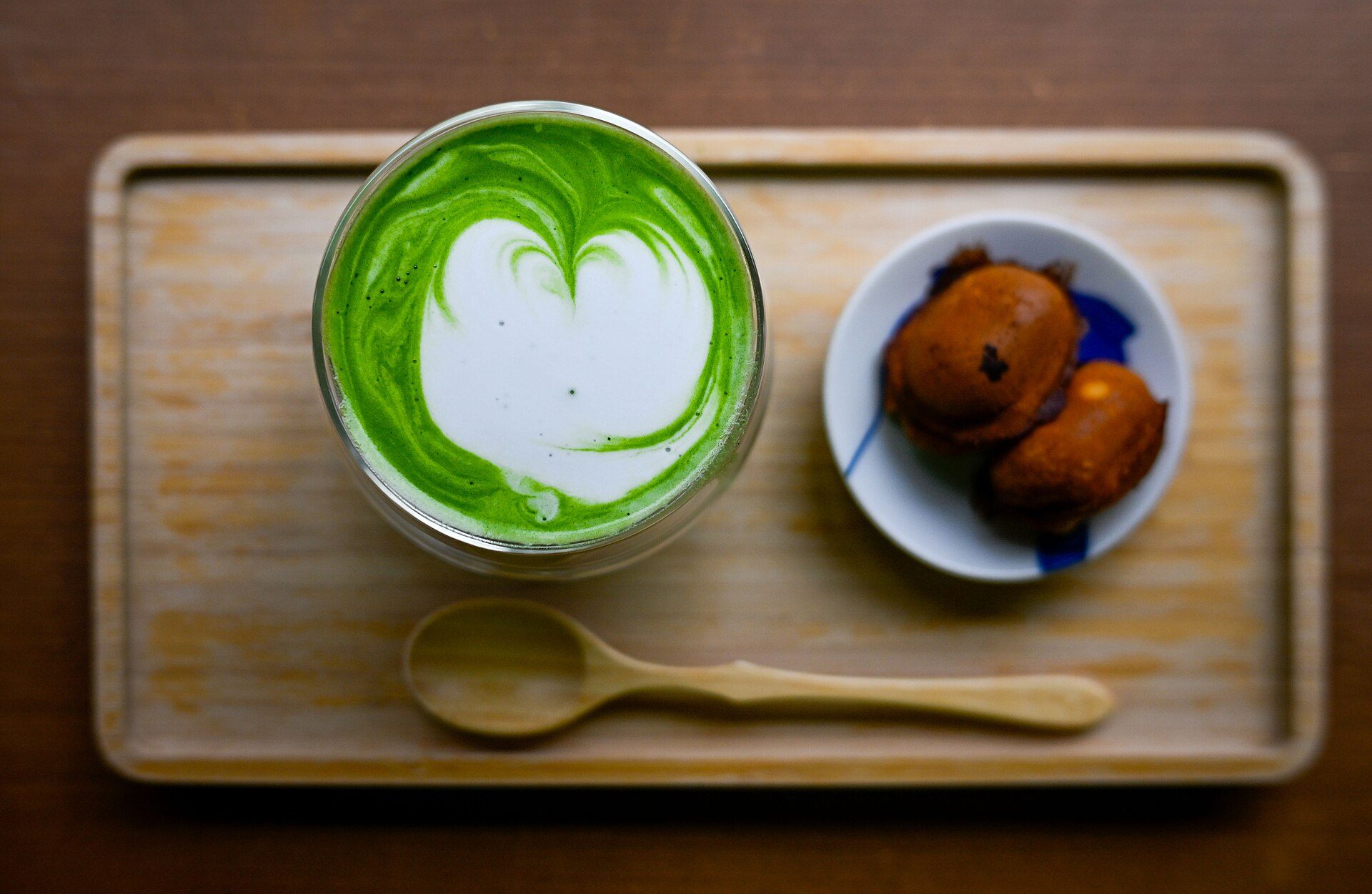
That quiet attention is what drew me to the 抹茶 (matcha, powdered green tea) Hunter Box and its idea of mindfulness through tea. It felt less like a product and more like an invitation to slow down with craft, sound, and place.
Did you know that Uji has been one of Japan’s most respected tea-growing regions for centuries? The area sits just south of Kyoto, along the Uji River, and its name has become almost shorthand for fine matcha. When I first started paying attention to Uji tea, I expected flavour. I didn’t expect to end up listening for it.
No exaggeration: the link between tea and sound in Japan runs deeper than a charming detail. In the language of tea, 松風 (matsukaze, pine wind; the sound of wind in the pines) refers to the sound of water heating, a wind-through-pines kind of hush that belongs to the room as much as the tea bowl does. For me, that sound changes the atmosphere straight away. The kettle begins to sing, the mind loosens its grip, and the room becomes a little more honest.
Uji Matcha, Kyoto’s Quiet Standard
Let me show you why Uji matcha carries such weight. The region’s tea history reaches back to the 13th century, when tea cultivation took root in the Kyoto area and later became central to Japanese tea culture. Today, Uji is still known for shaded cultivation, careful processing, and a standard that many tea lovers, myself included, treat with a kind of reverence.
That reverence is earned. Good matcha from Uji tends to have a vivid green colour, a deep aroma, and a rounded bitterness that doesn’t feel harsh. When whisked properly, it can taste of grass, chestnut, seaweed, and a sweetness that arrives quietly rather than announcing itself. I’ve had cups that felt almost architectural in their balance. Not bad, right?
Unlike what we’re used to with coffee, where loudness can be part of the appeal, matcha often asks for restraint. The tea is ground from 碾茶 (tencha, tencha; tea leaves used to make matcha) leaves, then whisked with water around 70 to 80 degrees Celsius, depending on style. In that small temperature window, the drink opens. Too hot, and the bitterness can bite. Too cool, and it never really wakes up.
Matsukaze and the Water-Boiler Sound
Here’s the thing: matsukaze isn’t a machine sound. It’s a cultivated sound, the kind that makes silence feel designed rather than empty. In the tea room, the kettle’s murmur can be compared to pine wind, and that image matters because it frames boiling water as part of the experience, not just a utility step.
That reminds me: when I first heard Japanese tea practitioners talk about sound, I assumed they meant the practical noises, the whisk, the scoop, the pour. But matsukaze belongs to a more patient layer of listening. It invites presence. The water comes to life, the room settles, and the tea becomes something I’m preparing with my ears as much as my hands.
A tea room lesson in attention
In a formal tea ceremony, or chadō, every gesture is pared down but never casual. Water, bowl, whisk, cloth, all of it has a place. The sound of the kettle is part of the choreography, and the rhythm of the room can change depending on whether the heat is gentle, the season is cold, or the host is using charcoal instead of an electric source. I’m a beginner in this world, and I still make clumsy mistakes. I accidentally slam doors and bump into things. The tea people around me are patient anyway.
Pro tip: if you’re learning Japanese, matsukaze is a lovely word to file away. Matsuku means pine tree, 風 (kaze) means wind, and together they create an image rather than a definition. Japanese often does this so well, and tea vocabulary is full of these compact little worlds. 茶筅 (chasen, bamboo tea whisk), 茶碗 (chawan, tea bowl), tencha, usucha. Each word carries a practice, not just an object.
Matcha Hunter Box and the Ritual of Mindfulness
Picture this: a compact tea box, a quiet room, and everything needed for one precise moment of matcha. The Matcha Hunter Box, from Adamas Gold’s Matcha Hunter line, brings together the tools and tea that let that moment happen at home. It’s not about collecting things for their own sake. It’s about creating conditions for attention.
That is what I found most compelling in the way the box was presented. The idea isn’t to recreate a tea ceremony in a museum-like way, frozen and distant. It’s closer to learning how to sit with a daily ritual. A good chawan, a bamboo whisk, fine Uji matcha, hot water, and a few unbroken minutes can become a small watershed in the middle of a noisy day.
What I especially like is that this kind of set lowers the barrier without flattening the tradition. You still have to learn the motion, the temperature, the timing, the calm. But the kit gives a person a starting point. For someone new to matcha, that matters. It is both practical and respectful, which is harder to achieve than it sounds. Personally, I think that balance is the whole story.
Why Sound Matters in Tea Culture
While we’re at it: Japanese tea culture has always treated atmosphere as part of the craft. A tea bowl is judged for how it sits in the hand, a room is shaped by light and season, and the sound of boiling water can guide the pace of a gathering. This isn’t decoration. It’s a form of awareness.
That’s where mindfulness becomes more than a modern label. In a tea setting, mindfulness is embodied. It happens through posture, timing, and repeated care. The host’s attention supports the guest’s calm, and the tea itself becomes the point at which craft and daily life meet. I find that deeply moving, maybe because it asks so little and yet changes so much.
And so it became a plan. I want to keep learning Uji teas, keep listening for matsukaze, and keep treating a simple bowl of matcha as something made by shokunin hands and patient culture. If I’m lucky, I’ll taste a little more clearly each time.
From my experience, the best tea moments are rarely loud. They come with steam, restraint, and a sound that makes the room feel inhabited. That’s my hidden gem.
Frequently Asked Questions
What is Uji known for?
Uji is one of Japan’s most respected tea regions and is strongly associated with high-quality matcha.
What does matsukaze mean in a tea context?
It describes the soft, pine-wind-like sound of water heating in a kettle.
Is a matcha box useful for beginners?
Yes. A well-made set can make it easier to learn the basic tools and rhythm of preparing matcha at home.


