
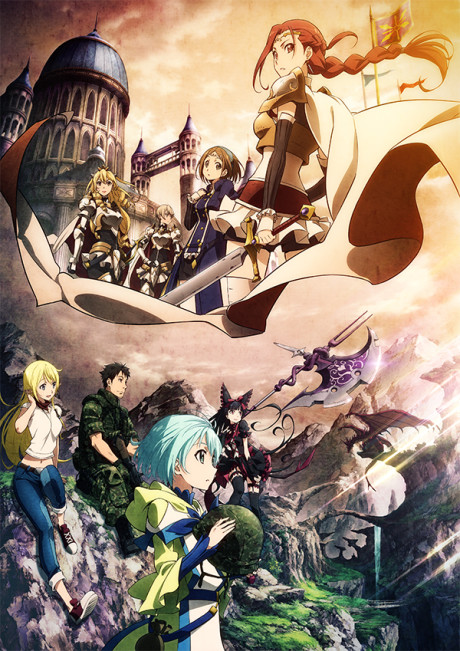
Plot twist: this isn’t just another sequel announcement. It also shows how Japanese anime projects sometimes let outside artists self-apply, or 自分で応募する (jibun de 応募 (oubo, application; submission) suru, to apply on one's own), for a very specific creative role.

GATE Season 2 and the ending theme open call
GATE Season 2 is back in the spotlight, and the big talking point is not only the sequel itself, but the open call for its ending song. No joke: the production team is looking for a new ending theme through public submission, so musicians can apply directly with their own work. That’s a pretty bold move, even by anime industry standards.

The original Gate: 自衛隊 (Jieitai, Self-Defense Forces) Kanochi nite, Kaku Tatakaeri anime aired in 2015, and it quickly stood out because it mixed fantasy with the Japan Ground Self-Defense Force, or Jieitai. Fans have been waiting a long time for a follow-up, so the sequel alone is news. But let’s stick with the song competition for now. The reason is simple: an anime ending theme can shape how the whole series feels after each episode, and this project is asking creators outside the usual studio circle to help define that mood.
According to the announcement on PR Times, the ending theme is being selected through an open call tied directly to GATE Season 2. That means the music isn’t an afterthought; it’s part of the campaign. Wild, isn’t it? For Japanese music fans, this is a nice example of oboegaki culture in action, where a project gives clear rules, a deadline, and a chance for outside creators to submit work on their own.
Why this anime sequel matters to Japan fans
Here’s the thing: GATE was never a small title. The anime adaptation came from Takumi Yanai’s light novel series, and the first season brought the setting of Tokyo’s Ginza district together with another world, dragons included. That contrast made it easy to recommend to viewers who like military detail, politics, and fantasy worldbuilding in one package. For learners of Japanese, it also offers a lot of everyday vocabulary mixed with formal military terms, so you hear both 日本語 (nihongo, Japanese language) and specialist language in the same story.
The sequel matters because it comes after a long gap, which always changes the mood around a franchise. Fans don’t just ask what happens next, they ask whether the staff can recapture the tone that made the first run memorable. My tip: if you want to understand the buzz, watch a few clips from the 2015 series and pay attention to the contrast between casual speech and official-sounding lines. That contrast is one reason GATE works so well for language learners.
What makes the series a good language-study pick
GATE gives you real conversational Japanese, but it also throws in military rank names, location names, and fantasy terms that often appear in a more formal register. You’ll hear words like 戦車 (sensha, tank), 隊長 (taichou, unit leader; captain), and 異世界 (isekai, another world; otherworld) context without the usual soft-focus fantasy style. That brings us to another reason fans are talking: a sequel usually means new dialogue, new openings, and new music to study and repeat.
Trust me on this one: anime ending songs are great listening practice because they’re shorter than openings, and they often repeat key phrases. If GATE Season 2 chooses a song through open call, the final result may feel closer to indie music culture than to a standard commercial anime tie-in. Sounds weird, but it’s true. And for learners, that can mean more natural phrasing and clearer pronunciation in the lyrics.
What an open call means for musicians
Let’s be honest: self-application for anime music isn’t the most common route. In many projects, the label, committee, or music director picks an artist through existing industry contacts. But here, the production is effectively saying, “Send us your ending theme.” That opens the door to composers, singers, and indie creators who might never otherwise land an anime credit.
That matters in Japan, where creative contests often work as a bridge between hobby and profession. A strong submission can become a calling card, especially if the anime is connected to an established title. Think about it: an ending theme attached to GATE Season 2 would be heard by a built-in audience that already knows the franchise. For a new artist, that exposure is huge. For a fan who follows Japanese music scenes, it’s a reminder that anime still acts like a launchpad.
Self-application, or jibun de oubo suru
Basically, jibun de oubo suru means applying on your own, without waiting to be invited. That’s a useful phrase for learners, because you’ll see it in contest notices, auditions, and job postings. In this case, it describes the spirit of the campaign very well. Instead of just hiring a name artist, the project is asking people to step forward and prove they can match the world of GATE.
What I especially like is this setup rewards originality. Anime theme songs are often remembered long after the episode ends, and a strong ending track can become part of the series identity. If the selected song lands well, fans may associate it with the sequel the same way they remember a favourite scene or a catchphrase. My verdict: that’s a smart way to build momentum around a returning franchise.
What fans should watch for next
So what happens now? The first thing to watch is the application window and the judging criteria, because open calls live or die by the details. If the rules favour a specific vocal style or production format, that will shape the kind of music that gets submitted. The second thing is how the sequel itself is positioned, because the ending theme will probably reflect the tone of the new season, not just the old one.
For Japan fans, there’s also a nice cultural angle here. Anime isn’t only something you watch, it’s something you can sometimes participate in, even from outside Japan. That feeling is part of the appeal of the medium, and it fits GATE especially well because the series already plays with the idea of crossing worlds. From my experience, projects like this are worth following closely, because they show how fandom, music, and industry can overlap in real time. But that’s not all.
If you follow anime music, keep an eye on the official updates from the production side, and compare them with fan discussion on sites like r/anime when the news spreads. The conversation usually gets lively fast, and that helps you see what international fans think of the song choice. And if you’re studying Japanese, this is a great chance to learn practical words like oubo, 結果 (kekka, result), and saishuu in a real entertainment context.
In pictures
Frequently Asked Questions
What is special about the GATE Season 2 ending song call?
It lets outside musicians submit their own songs instead of relying only on industry insiders.
Why is this sequel getting attention now?
Because the return of a long-awaited anime franchise, plus an unusual music selection method, makes it stand out.
Can Japanese learners get anything out of this news?
Yes, especially vocabulary around auditions, applications, and anime music culture.

