Overview
My Hero Academia: All's Justice is a console release built around the endgame of the series, and that already gives it more narrative weight than the average crossover fighter. Bandai Namco has set the Nintendo Switch 2 version for September 4, 2026, so this is not some vague window or wishful rumor, it is an actual release date. And yes, I am aware how rare it is for anime games to get to the point without wandering off into nonsense. Here, the pitch is pretty clean: the final battle setting, a roster anchored by Class 1-A, and a package that also includes a dedicated minigame mode on Switch 2.
If you are keeping up with My Hero Academia news, this is the kind of announcement that matters because it tells you where the game is going and where you will be able to buy it. If you are the sort of person who tracks My Hero Academia coming to Switch 2 coverage, this is the confirmed version, not a leak or a maybe. And because fandom loves turning every tiny tease into prophecy, let me be clear, there is a lot of room for speculation around extras, but the actual facts here are the release date, the platform, the final battle framing, and the added modes and characters already announced.
What the game is built around
The story setup centers on the series' final battle, which is a smart choice because My Hero Academia lives and dies on the emotional weight of its climactic fights. A game based on that material does not need to reinvent the wheel, it needs to land the feeling of escalation, consequences, and all the messy hero stuff that makes the series click. That is the whole appeal, honestly. You want the big clashes, the team-ups, the pressure, and the sense that everyone is fighting like their lives depend on it, because in this franchise, they usually are.
From a fandom perspective, this is where terms like 先攻 (senkou, taking the first move; decisive opening strike), meaning a decisive clash, and 勝負 (shobu, match; contest; battle), meaning a match or battle, start to fit naturally, because the appeal is not just spectacle, it is the rhythm of confrontation. The final battle framing also means the game should matter to viewers who care about the endgame energy of the manga and anime, not just people who want to mash buttons with recognizable faces.
The roster and why Class 1-A matters
One of the most notable details is that all students of Class 1-A are included on consoles for the first time in My Hero Academia: All's Justice. That is a big deal. Not in the fake marketing way where everything is declared a big deal, but genuinely, because Class 1-A is the emotional spine of the franchise. If the game is going to sell the fantasy of the series, it needs the group dynamic, the rivalries, the messy loyalty, and the constant back-and-forth that makes the cast feel alive.
And here's where it gets interesting, because fans always argue over who gets enough screen time and who gets left behind. Having the full class on consoles is the kind of move that feels obvious in hindsight, but games do not always do the obvious thing. Sometimes they fumble it. This one, at least from the confirmed information, seems to understand that the ensemble is the point.
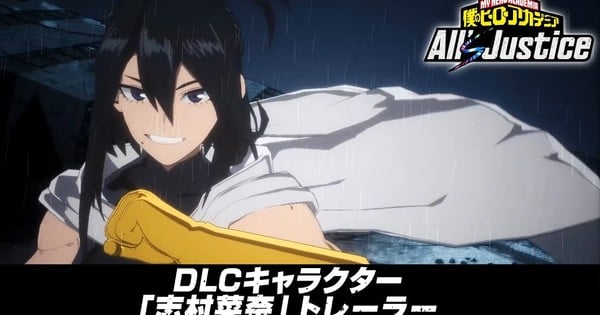
There is also DLC in the mix, with Nana Shimura being added later. If you have been following My Hero Academia news, you may have already seen the discussion around her addition, including coverage like the Nana Shimura DLC announcement. That kind of post-launch support suggests the game is not being treated like a one-and-done novelty, which, good. Licensed anime games need to stop acting like they are allergic to longevity.
Switch 2 version details and extra modes
The Nintendo Switch 2 version includes a dedicated minigame mode, which sounds like a small note until you remember how often licensed games forget to give players anything to do beyond the obvious combat loop. Minigames can be the difference between a game that feels like a quick content dump and one that has a little texture, a little room to breathe. Not everything has to be a boss rush. Sometimes you want the weird side stuff. The stuff that gives the world a pulse.
The PAC-MAN collaboration is another of those details that could have felt random in a bad way, but in practice it just gives the whole package a little extra identity. Crossover content can be goofy, sure, but goofy is not automatically bad. Sometimes it is the only reason a licensed release sticks in your head after launch week.
Why this release matters for anime game fans
My Hero Academia is a franchise that already has a huge cast, a loud fandom, and a very specific emotional flavor, which makes it ideal for a game that leans into team-based spectacle and climactic storytelling. The fact that this release is landing on Nintendo Switch 2 also matters, because platform availability shapes who actually gets to play, not just who gets to tweet about it. If you are deciding where to play or buy it, the straightforward answer is Nintendo Switch 2, at least for this announced version.
For anyone who likes following anime games alongside the source material, this is also a nice entry point for some low-stakes learning. You will see names, abilities, and battle terminology that can double as My Hero Academia 漢字 (kanji, Chinese characters used in Japanese writing) practice if you are studying Japanese, and that same kind of fan-driven context can make My Hero Academia japanisch lernen searches feel less random and more useful. A franchise like this is full of vocabulary that sticks because it is attached to emotion, and that is honestly the best way to remember anything.
If you are browsing broader My Hero Academia release date updates, this is the one to keep in mind: September 4, 2026, on Switch 2. That is the anchor point. Everything else, the extra mode, the collaboration, the DLC chatter, is built around it.
Related titles and what to look at next
If this game is your lane, you will probably also want to keep an eye on other My Hero Academia releases and related coverage as they develop, especially anything that clarifies roster content or post-launch additions. Fans of the franchise usually split into two camps, the people who want faithful character representation, and the people who want the systems to actually feel good. Ideally, a game does both. Wild concept, I know.
For now, the useful takeaway is simple: My Hero Academia: All's Justice has a set release date, a Switch 2 platform target, a final battle premise, full Class 1-A inclusion on consoles, a dedicated minigame mode, PAC-MAN collaboration content, and Nana Shimura DLC already in the mix. That is enough to justify paying attention without pretending we know more than we do. And at the end of the day, that is what a good announcement should do, make you interested, not confused.
Frequently Asked Questions
When is My Hero Academia: All's Justice releasing on Switch 2?
Bandai Namco has announced September 4, 2026 for the Nintendo Switch 2 version.
What story part does the game focus on?
The game is set around the series' final battle, so the focus is on the climactic endgame of My Hero Academia.
Does the Switch 2 version have extra content?
Yes, the Switch 2 version includes a dedicated minigame mode, and the game also has a PAC-MAN collaboration.
Are all Class 1-A students in the game?
Yes, all students of Class 1-A are included on consoles for the first time in My Hero Academia: All's Justice.
Is there DLC planned?
Yes, Nana Shimura is being added as DLC.