
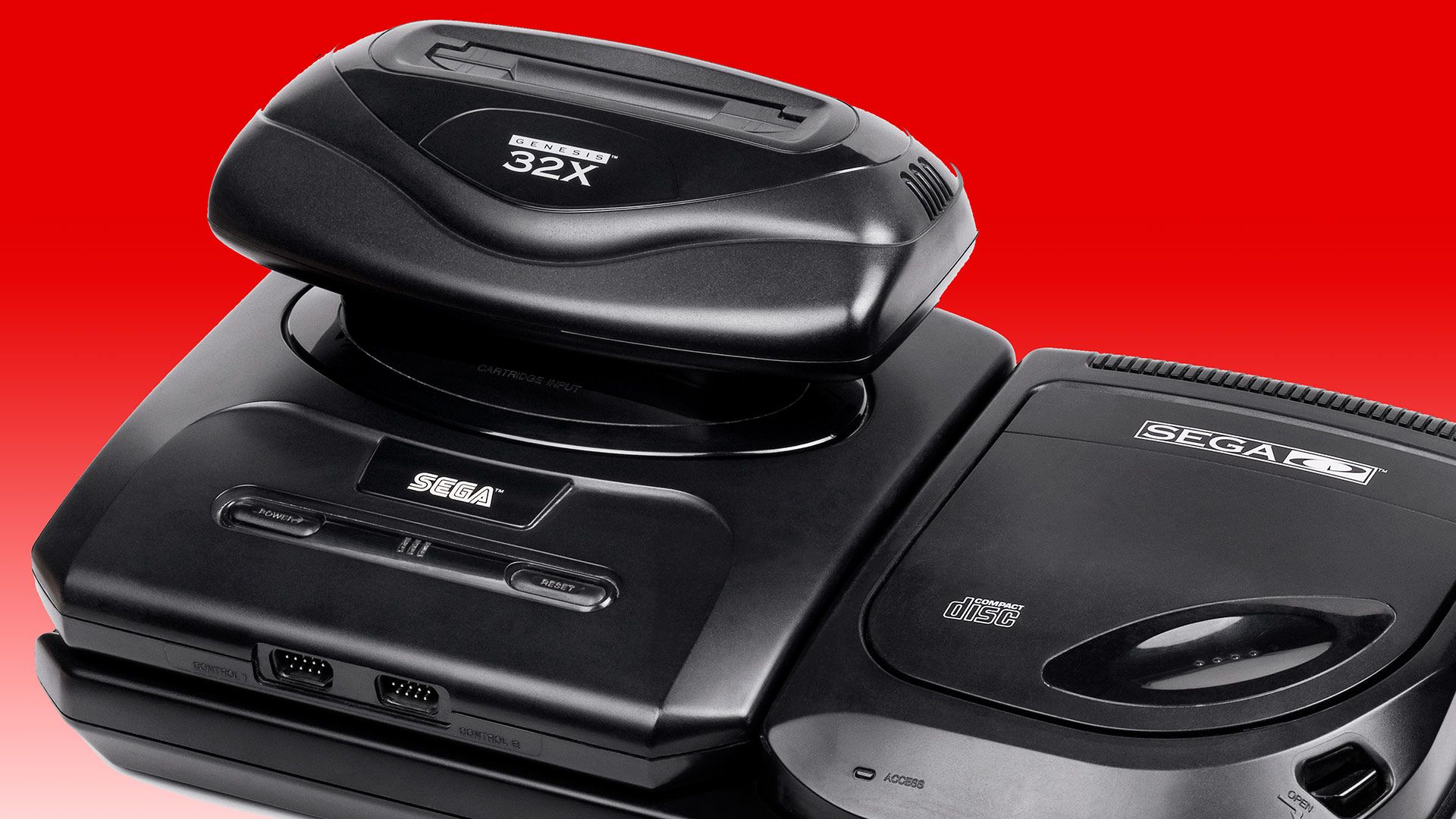
What makes it so good is the sheer contrast: an operating system famous for servers and modern hardware, running on a tiny console expansion with 23MHz processors and just 256KB of RAM. Wild, isn’t it?
![Dragon Ball Z: Kakarot [Master Edition]](https://s.pacn.ws/1/p/1eh/dragon-ball-z-kakarot-master-edition-908785.1.jpg?v=t8ja8t&width=400)


Know that feeling when a project sounds impossible before you even open the article? This is one of those. Linux on a Sega 32X feels like a joke at first, then you realise someone actually made the joke boot, and suddenly the whole thing becomes oddly inspiring.
The story has a very Japan-friendly kind of charm too, because Sega hardware still has that strong retro aura for fans who grew up with Mega Drive games, arcade ports, and the endless debate over which 16-bit machine had the better library. That’s why this hack lands so well: it’s not just engineering, it’s nostalgia with a soldering iron. Simply brilliant.
Sega 32X: the odd 1994 add-on that never stopped being interesting
It’s early morning in Kyoto, and I’m still impressed that the Sega 32X exists at all. Released in 1994, it was an add-on for the Mega Drive in Japan, and for the Genesis in North America, meant to push Sega’s 16-bit era into something closer to 32-bit territory without abandoning the base console. The idea was bold, the timing was rough, and the market was already moving fast towards Saturn and PlayStation.
Technically, the 32X used two Hitachi SH-2 processors at 23MHz, plus a modest amount of memory. By modern standards, 256KB of RAM is tiny. No wonder, because the hardware was designed for games, not for booting a full operating system with a shell and tools. Yet that limitation is exactly what makes the Linux port so fun to watch.
What many overlook: the 32X was not just a plastic add-on. It sat between eras, bridging cartridge-based console design and the early days of more complex game hardware. For retro fans and Japanese learners alike, that makes it a neat cultural artefact. If you like collecting Japanese vocabulary, words like 幽玄 (yuugen, subtle profundity) from aesthetics discussions or 先輩 (senpai, senior; upperclassman) from fan communities show how deep these fandoms can get, but here the real keyword is 物作り (mono-zukuri, craftsmanship; making things), the craft of making something with care. My tip: this is the kind of project that makes retro hardware feel alive again.
How Linux ended up running on Genesis and Mega Drive hardware
Trust me on this one: getting Linux onto a 1994 Sega 32X is not a simple emulator trick. The project uses the actual old hardware, and that means dealing with painfully limited resources, awkward memory layouts, and a processor setup that was never meant for an open-source kernel. The breakthrough is that Linux can be scaled down far enough to boot in very constrained environments if someone’s willing to strip away the fluff and write a lot of custom support code.
Take the CPU setup, for instance. The 32X’s dual SH-2 chips are fast enough for their era, but they’re nowhere near what most people picture when they hear “Linux machine.” The kernel has to communicate with a display path, input, and storage options that fit the console’s reality, not a PC’s. That means careful porting, patience, and a strong tolerance for weirdness.
Compared with back home, where most fans think of Linux as a desktop or server OS, this is a reminder that Linux is really about adaptability. It can be trimmed, bent, and made to run where it has no business running. What I especially like: this turns a dusty piece of Sega history into a living platform for experimentation. Sounds good, right?
Why the numbers matter
Those 23MHz processors and 256KB of RAM are not trivia, they’re the whole punchline. A modern phone laughs at those specs, but the achievement here isn’t raw speed. It’s proof that old systems still have room for new ideas when homebrew developers get creative.
On a related note: this kind of work is also why retrocomputing communities stay vibrant. People aren’t only preserving hardware, they’re extending it. Emulator fans get to test ideas quickly, while real hardware hackers chase the satisfying clunk of the original machine booting something unexpected. Convinced yet?
Retrocomputing, emulators, and the homebrew hacking mindset
Let’s be honest: most people first see a project like this through a video clip, a forum post, or a news write-up, and then they go hunting for the technical details. That’s part of the fun. Retrocomputing thrives on that chain reaction, where a strange demo leads to documentation, then to experimentation, then to someone trying it on their own machine.
Emulators make the discovery phase easier, because they let developers test code without risking rare hardware. But the real magic happens when the code finally runs on original gear. That bridge between emulation and physical hardware is where homebrew culture feels most alive. You get the preservation side, the tinkering side, and the “can this really work?” side all at once.
For Japan fans, there’s also a nice cultural echo here. Japanese game history is full of machines that were pushed beyond their intended use, from Famicom disk experiments to modern mod scenes around handhelds and mini consoles. The 32X Linux port fits that tradition perfectly. It’s playful, stubborn, and technically elegant. Highly recommended: if you enjoy this kind of maker energy, you’ll probably enjoy following Japanese retro repair and mod communities too.
Why this Sega-Linux experiment matters
What many overlook: the value of projects like this isn’t just that they look cool on social media. They keep knowledge alive. Someone has to understand old buses, boot sequences, memory maps, and the culture around them, otherwise that knowledge disappears with the last working console and the last forum archive.
No wonder, because this also speaks to the spirit of Japanese fandom itself. Whether you’re into anime, games, trains, or retro tech, there’s a shared appreciation for detail, persistence, and craft. In Japanese, you might call that 解説 (kaisetsu, explanation; commentary) when you want a clear explanation, or simply enjoy the dani of a good technical mystery, but the emotion is the same: respect for the people who make difficult things work.
My verdict: Linux on a Sega 32X is one of those projects that sounds absurd until you see the evidence, then it becomes unforgettable. It’s a hardware hack, a history lesson, and a tiny celebration of what open-source curiosity can do. And yes, it makes an old Sega box feel cooler than it has any right to be.
Frequently Asked Questions
What is the Sega 32X?
It is a 1994 add-on for the Sega Mega Drive and Genesis that added extra processing power and support for more advanced games.
Why is Linux on the Sega 32X such a big deal?
Because the hardware is extremely limited by modern standards, so getting a full operating system to run on it is a serious technical achievement.
Do people still use original retro hardware for projects like this?
Yes. Many retrocomputing fans prefer real hardware, even if they also use emulators for testing and development.

